

I have one cat. ONE. And somehow my apartment looked like I was running a feline shedding factory. Tufts on the dark couch. Tufts on the black sweater I wore to a meeting. Tufts floating in the sunlight like tiny white and grey tumbleweeds drifting across the kitchen. Tufts welded to the carpet corners by the front door like little felted animal nests that nobody asked for and nobody is allowed to touch.
I started where every renter starts — I bought a lint roller. Then a second one when the first ran out in a week. Then a third, the brand-name one with the ergonomic handle, convinced that the tool was the problem. It was not the tool. The tool was always going to lose. I was fighting the wrong fight on the wrong surfaces with the wrong expectation.
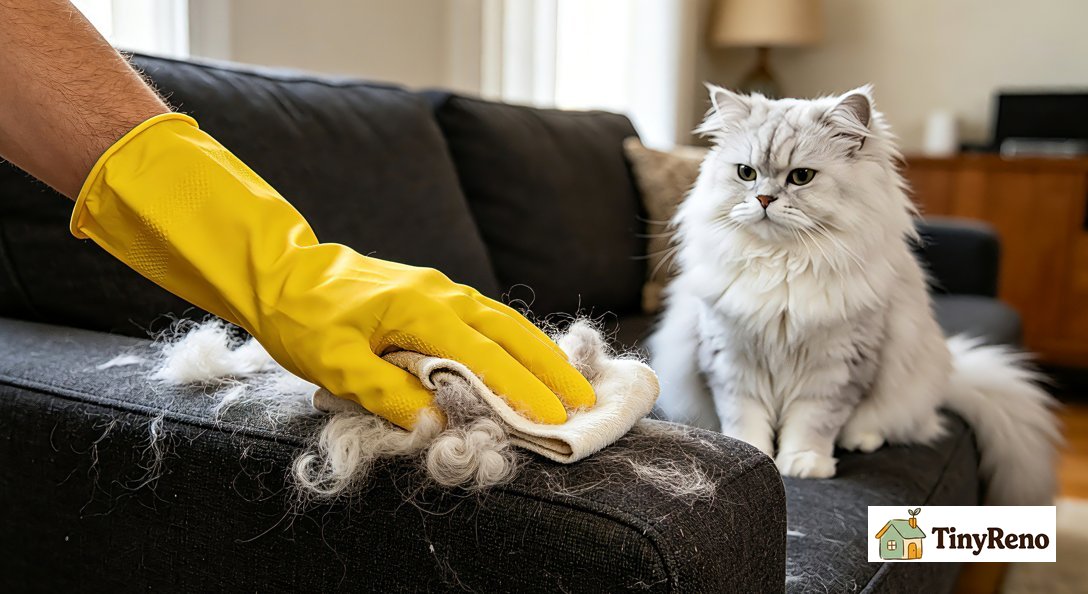
Then one Tuesday night my roommate left a yellow rubber dishwashing glove by the sink. I put it on, dampened it under the faucet, and wiped down the couch arm out of pure idleness. The cat hair came off in rolls. Actual rolls. Little orange wool balls gathering under my palm like I was carding a sweater. I did the whole couch in four minutes. I did my black sweater in two. I sat on the floor and laughed.
If your rental looks like the cat won the lease dispute — same energy as when my cat scratched the door frame apart last winter — here are seven things, here are seven things I do now that actually move fur off surfaces and out of the air. None of them require buying new furniture, calling the landlord, or owning anything that costs more than a sponge.
1. The Rubber Glove Trick (Clothes + Upholstery)
A plain yellow rubber dishwashing glove. Damp it under the faucet. Wring it out so it is barely wet — if water drips when you shake your hand, it is too wet. Run your gloved palm along the couch arm, the chair back, the duffel bag by the door, the sweater draped over the doorknob because you wore it for ten minutes and gave up. The cat hair clumps up under your palm and rolls off in little balls that you can pick up and throw away.
Why it works: the rubber creates friction that pulls loose fur the way a stiff brush would, but it is gentle enough not to pill a knit sweater or scratch a couch fabric. The water adds just enough surface tension to make the hair stick to the glove instead of floating off into the air.
What I used to do wrong for months: I used a dry glove. Dry rubber does almost nothing. I thought the glove was broken. The glove was not broken. The water is what makes the hair lift and stick.
What to do with the hair once it clumps: peel it off the glove with your other hand, drop it in the trash, rinse the glove, move on. If you try to rinse the hair down the sink it will clog the drain within a month. Ask me how I know.Pro tip: Use a sink strainer. It catches the hair clumps and saves your pipes. Your future plumber will thank you.
2. The Damp Sponge for Bedsheets
A clean kitchen sponge — the kind you would wash dishes with. Damp it, then wring it as hard as you can. The sponge should feel cool and slightly heavy, not drip when you hold it over the sink. Pat the bedsheet with the flat of the sponge in short presses. Do not scrub. Scrubbing pushes hair deeper into the weave. Just press, lift, rinse the sponge in the basin, repeat.
The cat hair lifts off the sheet onto the sponge in a single press and the sponge rinses clean in two seconds under the tap. I do this every other morning before making the bed and the sheet stays actually sleep-on-able instead of prickly with hidden fur.
Why a sponge and not a lint roller: a lint roller on a queen bedsheet would take a full refill roll and ten minutes of your morning you do not have. The sponge takes ninety seconds and zero consumables. The sponge will also outlast three lint roller refills, which means less plastic trash and less running to the store.
Use a dedicated sponge — even a trace of dish soap leaves a film that attracts the next round of hair faster.
3. The Lint Roller on the Wall (Yes, the Wall)
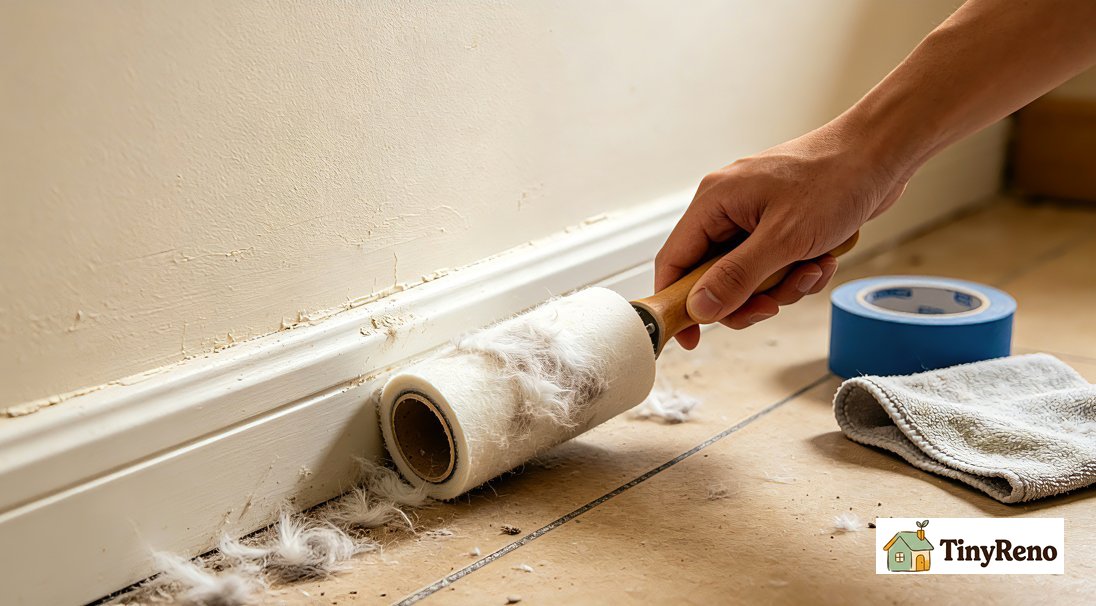
This one sounds wrong until you try it. Run a sticky lint roller along the baseboard where the wall meets the floor. Run it up the inside corner where two walls meet. Run it along the picture frame edges and the top of the door trim. Run it along the edge of the bookshelf where the wall shows behind the books.
There is always a faint grey-orange dust line of cat hair on those surfaces that you do not consciously see until you roll over it and the roller sheet comes back noticeably grey. It is disgusting. It is also the easiest fix in this list.
Use a high-tack roller, not the gentle one marketed for delicate fabrics. The cheap generic refills from the dollar store actually grip better than the brand-name ones, because the brand-name ones are engineered to not damage silk blouses, which is the opposite of what you want when you are scraping hair off a baseboard.
If your walls are textured (orange peel, knockdown), the roller will not reach into the dips. For textured walls, the rubber glove method works better, and you accept that some hair lives there permanently.
4. The Vacuum Brush for Curtains
Do not take the curtains down. Do not wash them. Do not call your landlord about replacing them because they look dusty even when they are clean. Take your vacuum cleaner hose, snap on the upholstery brush attachment, and run it down each curtain panel from top to bottom in slow passes. The brush lifts the hair off the fabric and the suction pulls it into the canister.
If you do not have an upholstery brush attachment — some stick vacuums do not come with one — a clean dry paintbrush works almost as well. Brush downward with the paintbrush, then vacuum up what falls onto the floor. Two tools, one motion, zero curtain removal.
How often: once a week keeps the curtains from looking like they are made of cat. Every other week is fine if your cat does not sleep on the curtain rod (some do, mine does not, but I judge) — same lesson I learned from solving my cat litter smell problem: treat the smell source as a separate cleaning zone, not part of the general room.
Do not run the bare vacuum nozzle along the curtain — the plastic edge can snag the fabric and pull a thread.
5. The Dryer Sheet Emergency Fix
You are walking out the door. You pull on the black sweater or the navy blazer. It looks like a Chia Pet that lost a fight with a stuffed animal.
Grab a used dryer sheet from the laundry basket. If you do not have a used one, a fresh one works the same. Wipe it across the sweater in long strokes, going in one direction, not back and forth. The anti-static softener coating grabs loose fur in three seconds flat. Not as thorough as the rubber glove method, but fast enough to not be late for the thing you are already late for.
The trick is specifically a dryer sheet. Paper towel does nothing. Tissue does nothing. A microfiber cloth does nothing. The dryer sheet has the static-charged softener residue from the laundry cycle that pulls hair off fabric on contact. That residue is the whole point.
The other trick: keep a dryer sheet in your work bag. One in the car. One in the desk drawer at the office. The emergency is never at home where your full kit is. The emergency is always at 8:47 AM in the office bathroom mirror.
6. The Tape Method for Carpet Corners
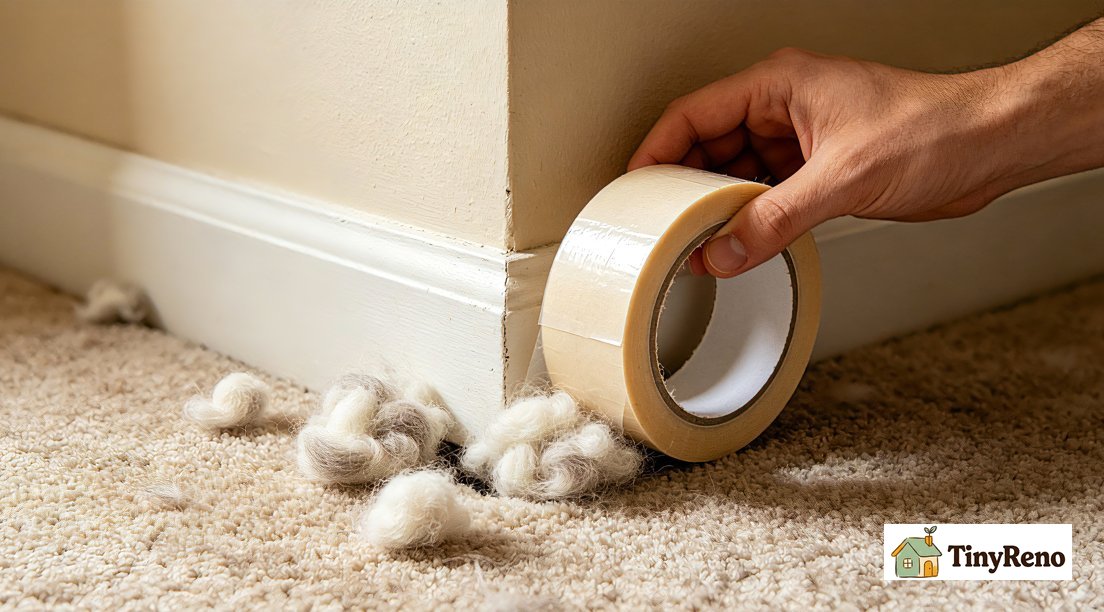
This is for the felted mats of cat hair that collect in carpet corners, under the couch, along baseboards, and behind the toilet. The kind that look like small animal nests, hold together with static and willpower, and have probably been there for three weeks.
Take a strip of wide packing tape or duct tape. Fold it into a loop with the sticky side facing out. Press it down firmly on the hair mat, then peel. The mat comes up with the tape like a tiny carpet of its own. Repeat until the corner is bare.
Why this beats the vacuum: the vacuum brush just rolls over the top of a felted hair mat and barely touches it. The vacuum was designed to pick up loose debris, not to dig into a felted mass that has bonded with the carpet fibers. Tape gets under the fibers and yanks the whole thing out in one motion.
The downside: you go through a lot of tape. A single corner of my bedroom takes four or five strips. The upside: that corner has not had a felted mat in eight months because I taped the original one up so aggressively that the carpet fibers themselves are now slightly less grabby.
7. The Air Purifier for Floating Fur
None of the above fixes airborne fur. The hair you see floating in the sunbeam at 4 PM is the hair that has not landed yet. It will land tonight, on your pillow, on the kitchen counter, on the laptop screen. A small HEPA air purifier in the main room pulls a surprising amount of it out of circulation before it lands.
You do not need a whole-house unit. You do not need the expensive one with the app. A single bedroom-sized purifier in the room where the cat spends the most time cuts the visible floating hair by maybe 80 percent in my apartment. I run it on low during the day and medium when I am home.
The HEPA filter itself does not need changing often — every year or two — but the pre-filter needs monthly rinsing because it will clog with hair fast. That clog is not a defect. That clog is the purifier working. If the pre-filter never got dirty, the purifier would not be doing anything.
Bonus: the air purifier also helps with cat dander, which is the actual allergen, not the hair.
What I Won't Do Anymore
A few things that are popular online that I tried and stopped:
Scotch-Brite scrub pads on the couch. They do pull hair, but they also pull the couch fabric into visible pills. My landlord noticed when I moved out. I had to explain. The explanation was not fun and cost me part of the deposit. Do not Scotch-Brite your couch.
This falls under 'damage to premises' in most leases. A $4 sponge isn't worth a $150 deduction.
Duct tape on black pants. Works once for about thirty seconds. Then it leaves a sticky residue that attracts MORE hair next time you wear the pants. The trade is worst in this entire list. You trade hair for stickiness for more hair.
Vacuuming the cat directly. Some people swear by it. My cat hates it and I value my forearms. There is a professional groomer two blocks from my apartment who charges twenty dollars and does not draw blood. I see her monthly now.
Lint roller on the cat. Same problem. The cat tolerates it for about four seconds and then the cat wins the negotiation.
Closing
You will never fully win against cat hair. I tried every method on the cat scratching wall surfaces first (see my cat-scratching-wall fixes) before realizing the same lint-roller logic applies to fur drift along the baseboards. in a rental. The cat is shedding right now while you read this sentence. Somewhere in your apartment a hair is detaching itself from the cat and beginning its slow migration toward your black sweater. The goal is not zero fur. The goal is not even less fur. The goal is fur being on your terms — in the trash, on your schedule, before guests arrive — instead of on its own terms.
Think of it like the cat-scratch repairs or the litter-box smell—consistent, low-effort maintenance beats a panic-driven deep clean every time.
These seven fixes get me from "this apartment is uninhabitable" to "okay, fine, I can have people over" in about twenty minutes on a Saturday morning. No special equipment. No replaced sofa. No apologies to the landlord at move-out.


Discussion (0)
Sign in to join the discussion