

The door frame between my bedroom and the living room started showing bark patterns. Not actual bark — five deep vertical gouges in the wood where my cat had been pulling herself up to look over the door when she heard my keys. The top scratch was 4 inches long and deep enough that I could feel the raw wood with my fingernail.
Six months in, the landlord's quarterly inspection was coming up. And the frame wasn't a wall corner I could hide behind a couch — it was the first thing you saw walking in the door.
If your cat is scratching door frames instead of (or in addition to) the wall corners, this is the version of the cat-damage problem you actually have. The fix is different from wall scratches because the surface is wood, the angle is vertical, and the height is climb-level. Here's what I tested over 90 days.
Why Door Frames Are Cat Magnets (And Walls Aren't Quite the Same)
Cat scratching has a few common drivers — territory marking, claw maintenance, attention-seeking, anxiety. Door frames hit every single one harder than walls do, for three specific reasons.
Height match. A standard interior door frame runs 80 inches tall — exactly the height a fully grown cat reaches when standing on hind legs. Cats are built to climb and survey, and the door frame is the only vertical feature in most apartments that's exactly the right height to "see over."
Wood texture. Door frames are almost always bare or stained wood (not painted), which gives claws a much better grip than painted drywall. Cats can dig into wood and feel the satisfying pull of a splinter yielding. Painted walls don't give the same feedback.
Visual target. A wall corner is a wide area where the cat makes multiple shallow scratches in a fan pattern. A door frame is a narrow vertical strip, so the cat makes one deep scratch that runs the length of the frame. The result looks more dramatic and harder to fix, even when the actual damage area is smaller.
This is why the same cat who scratches the door frame probably also scratches the wall corners, but the wall scratches are easier to live with. I covered the wall-corner version in detail in Cat Scratched the Corner of My Wall — 6 Renter Fixes That Saved My Deposit. The principles overlap but the materials are different, because wood behaves differently than paint.
The 6 Fixes I Tested (Same Frame, 90 Days)
I marked six 6-inch sections on the door frame at cat-climbing height and applied one fix per section, then tracked what happened over 14, 30, and 90 days.
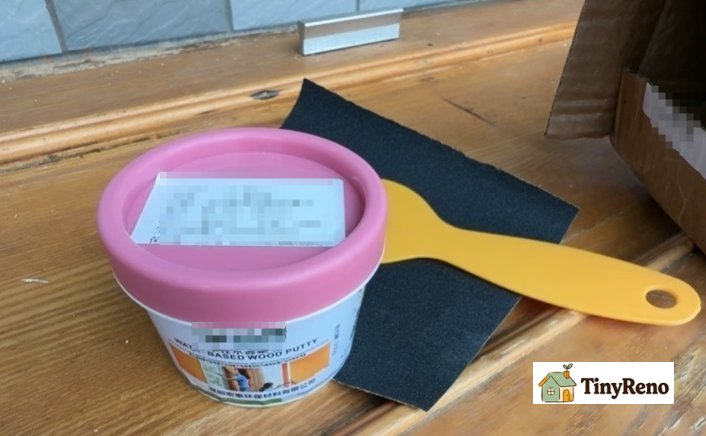
Fix #1: Wood Filler + Sand + Stain (The Baseline)
Press wood filler into the scratch, let it dry 24 hours, sand flush with 220-grit sandpaper, then apply matching wood stain with a small brush.
- Price: $5-8 for filler + a stain pen
- Time: 30 minutes active, 24 hours including dry time
- Effect: looked almost perfect if color-matched correctly
- Side effect: Getting the stain color right is the hard part. Most frames are a custom honey-oak or walnut tone. Home Depot can mix a custom color from a chip you bring in.
Gold-standard fix if you can nail the color. Not my top recommendation because color-matching is harder than it looks.
Fix #2: Wax-Based Wood Filler Stick (Quick Cover)
Marker-shaped wax sticks you rub into the scratch, sold in multi-color packs at any hardware store. Rub into the gouge, smooth with a plastic scraper, buff off the excess.
- Price: $6-10 for a 6-color pack
- Time: 5 minutes
- Effect: passed the casual glance test from 3 feet away
- Side effect: Wax is soft. If the cat scratches the same spot again, the filler pops out in 1-2 weeks.
Best for the 24-hour-before-inspection panic. Not a permanent fix.
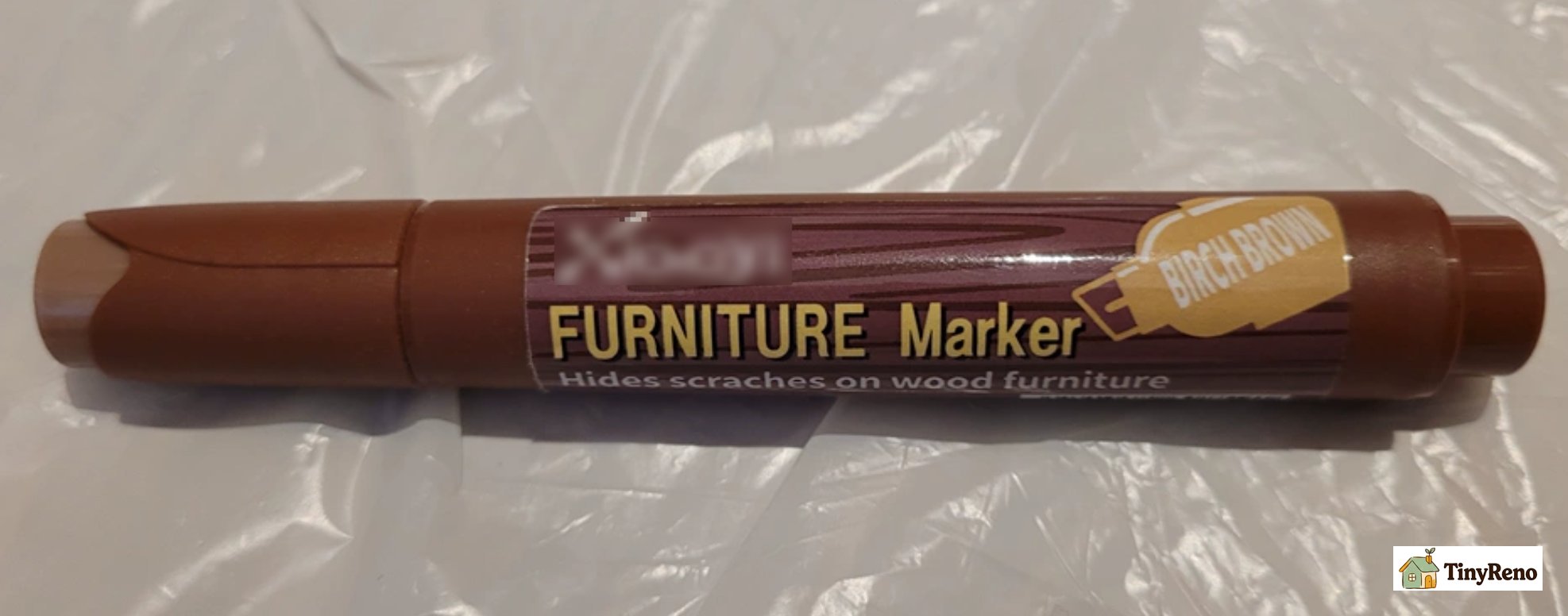
Fix #3: Furniture Touch-Up Pen + Felt Marker Combo (Best Repair)
Two-step combo. First, a Minwax or Varathane wood touch-up pen in a matching base color fills the scratch. Second, a fine-tip felt marker in a matching grain color draws a few thin lines along the wood grain pattern over the filled area.
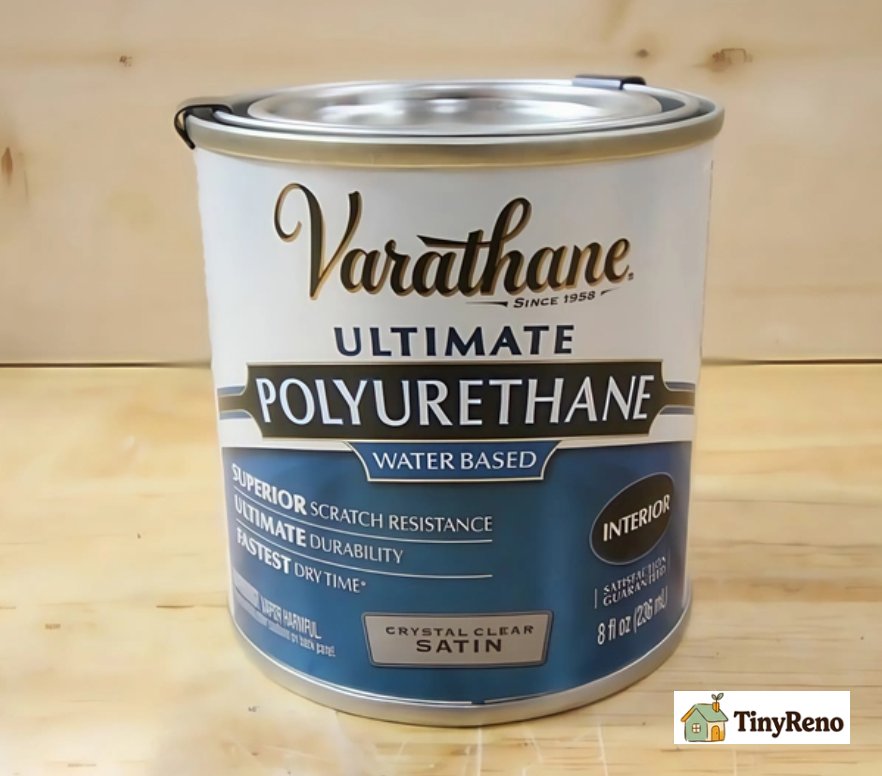
- Price: $8-12 for a basic touch-up pen + marker set
- Time: 10 minutes
- Effect: 90% invisible at any distance
- Side effect: Requires finding the right color combo. Bring a photo to the hardware store, or buy 3-4 shades and test on a hidden corner first.
My favorite repair. Took the most time to dial in (about 30 minutes across two test attempts), but once I had the right colors, it covered the deepest scratch in a way that the landlord's maintenance guy walked right past without noticing.
Finding the right pen color took two trips to Home Depot and three test swipes on the back of the frame. But once I nailed it, the repair was so good I had to point it out to my roommate for her to see it.
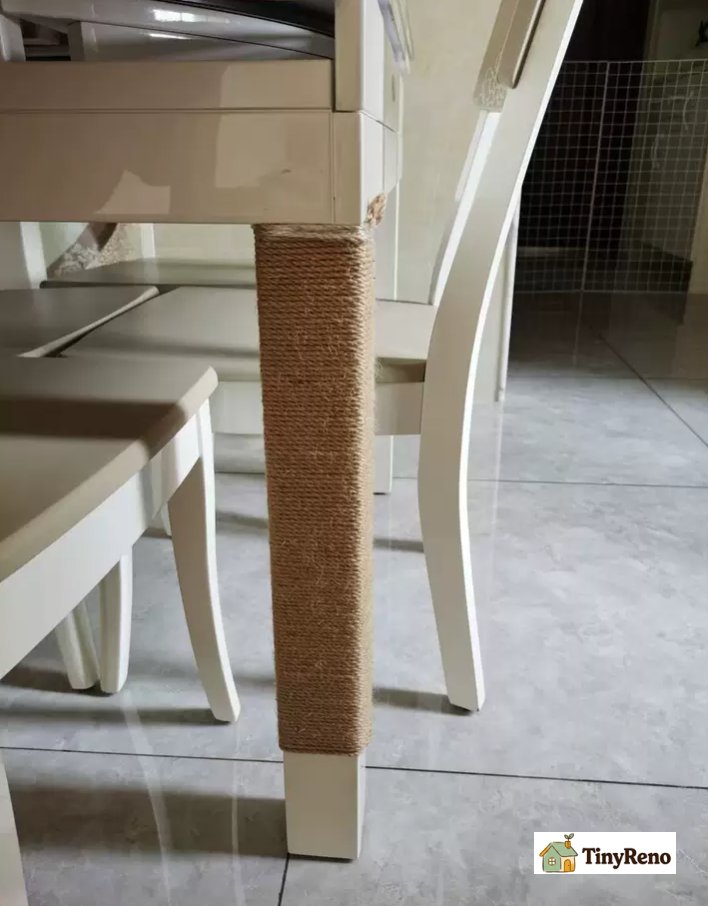
Fix #4: Sisal Rope Wrap (Physical Barrier)
Wrap the damaged section in 1/2-inch sisal rope, secured at top and bottom with clear cable ties. The rope becomes the new scratching surface.
- Price: $10-15 for 10 feet of rope + cable ties
- Time: 60 minutes
- Effect: 100% stops scratching on the wrapped section
- Side effect: Visually changes the frame. Most landlords will notice and may flag it as a "modification." When you remove the rope, the cable-tie holes remain in the frame.
Emergency measure only. Bad for the move-out photo record.
Fix #5: Clear Double-Sided Tape on the Frame (Deterrent)
Apply clear double-sided packing tape along the cat-climbing height. Cats hate sticky paws and will avoid the area after 1-2 encounters.
- Price: $4 for a roll
- Time: 5 minutes
- Effect: She gave it a wide berth after that within 48 hours
- Side effect: Can pull up wood finish when removed, especially on stained frames. Test on a hidden corner first.
The single most effective deterrent I tested. My cat avoided the frame entirely within 48 hours and didn't return for the rest of the 90 days. Key was applying at the exact height she was scratching (about 5-6 feet up).
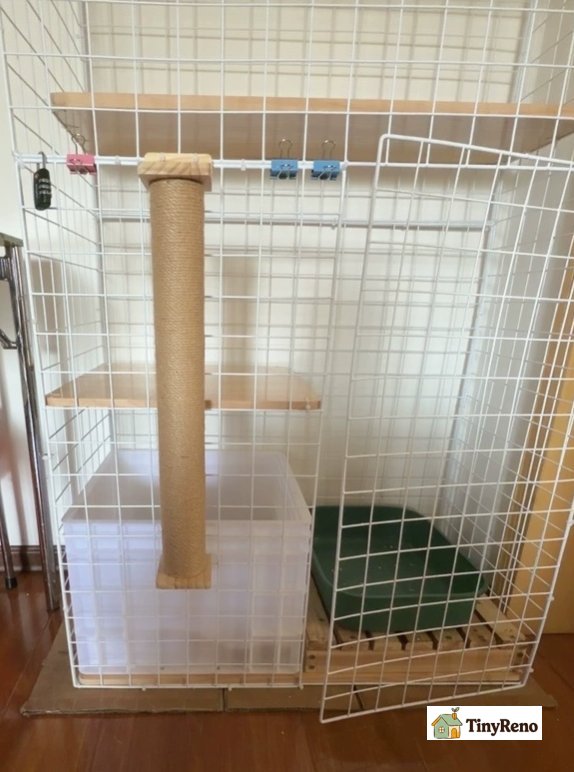
Fix #6: Tall Vertical Scratcher Next to the Frame (Redirect)
Place a 3-foot-tall vertical sisal scratcher directly beside the door frame, leaning slightly toward it so the cat has a choice between the two surfaces.
- Price: $25-40 for a basic vertical scratcher
- Time: 5 minutes to position
- Effect: Long-term redirect — most cats prefer a dedicated scratcher over a door frame once both are available
- Side effect: Takes about 1 square foot of floor space. Must stay in place permanently.
The "cure" rather than the "treatment." The combination of repair (Fix #3) + deterrent (Fix #5) + redirect (Fix #6) is what stopped the damage long-term.
The 3-Step Combo That Worked
The winning combination was Fix #3 (touch-up pen repair), Fix #5 (clear tape as a deterrent), and Fix #6 (a vertical scratcher as the new target). Total cost: about $40, total time: about an hour over one weekend, result: zero new damage at 30, 60, and 90 days.
The order matters. Don't put the scratcher in place until you've repaired the existing damage (the cat notices fresh filler). Don't put the tape on until the scratcher is in place (otherwise the cat has nowhere else to scratch). The sequence: repair → redirect → deter.
The least effective combination was using wax filler alone (Fix #2). The filler looked fine for a week, then the cat re-scratched and the wax popped out. I had to redo it twice before switching to the touch-up pen. Skip the wax unless you're 24 hours from an inspection.
4 Mistakes That Will Cost You Your Deposit
I made one of these. My neighbor made the other three. All avoidable.
Mistake #1: Using spackling paste on a wood frame. Spackling is white, even when "stained" over. The repair will be a different color and visible from across the room. Use actual wood filler, never drywall patching compound.
Mistake #2: Using super glue or wood glue directly in the scratch. Both dry to a hard plastic-looking finish that doesn't match wood grain. For deep gouges, fill with wood filler first, then top with a touch-up pen.
Mistake #3: Painting over the entire door frame. This is a modification, not a repair. The landlord will notice a freshly painted frame and may flag it as unauthorized work. Stick to spot repairs that preserve the original finish.
Mistake #4: Leaving tape residue or sisal rope on the frame at move-out. Tape residue costs about $50 to have professionally removed, and sisal rope with cable-tie holes can run $150 for a frame refinish.
The 90-Day Update + Move-Out Cheat Sheet
Day 7: Cat uses the new scratcher once a day, avoids the door frame entirely. Tape still in place.
Day 30: Cat uses the scratcher 3-4 times a day, frame still has no new scratches. Tape removed for a 24-hour test — cat does not return.
Day 60: Repair from Fix #3 still looks good. Cat has not touched the frame in over a month.
Day 90 (inspection): Took photos from the same angles as move-in baseline. Landlord walked through without commenting on the door frame. Full deposit returned.
If your lease mentions "woodwork" or "door frame" in the pet damage clause, the move-in baseline photos are essential. Photograph the door frame (and every other wood surface the cat can reach) on day one from the same four angles: straight on, left close-up, right close-up, and one overhead shot of the top. Email the photos to yourself so the timestamp is on a server you control.
For a complete pet-damage checklist (wall scratches, litter box odor, carpet stains, and now door frames), start with the wall-scratch piece — Cat Scratched the Corner of My Wall — 6 Renter Fixes That Saved My Deposit — and treat both articles as one combined move-out defense plan.
FAQ
Can you paint over cat scratches on a door frame?
Technically yes, but almost always the wrong move for a renter. Painting the entire frame changes the original finish and most landlords will notice during inspection. Spot repair with color-matched wood filler and touch-up pen is invisible from any distance and preserves the original finish. Reserve full-frame painting for properties you've bought or have explicit landlord permission.
Will a landlord charge for cat scratches on door frames?
Most leases with pet clauses will. Typical charges run $100-300 per damaged frame for refinishing or replacement, depending on wood species and damage extent. Door frames cost 3-4x what a wall scratch costs to fix because they're more visible and more expensive to repair.
How do you fix deep cat scratches in wood?
Two-step process for scratches deeper than 1mm. First, fill the gouge with wood filler pressed firmly, slightly overfilling (the filler shrinks as it dries). Let dry 24 hours, then sand flush with 220-grit sandpaper. Second, apply a color-matched touch-up pen, then use a fine-tip felt marker to draw a few thin lines along the existing wood grain pattern. The grain-marking step is what makes the difference between "obvious repair" and "invisible repair."
Do cats scratch door frames more than walls?
Yes, for most cats. Door frames are at exactly the right height for a climbing cat (about 6 feet for an adult), they have better claw grip than painted drywall, and they sit right at the boundary the cat wants to see through. Walls get scratched at corners, not across the broad surface. The motivation is different — wall corners are territory marking, door frames are surveillance/climbing.
What's the best cat scratch deterrent for rental doors?
Clear double-sided packing tape applied at the exact height the cat is scratching. Most cats avoid the area after 1-2 encounters. Key is applying at scratch height (5-6 feet for adult cats), not at the base. Citrus sprays fade within hours. Tape is the cheapest, fastest, and most reliable.
How do I get my security deposit back with a cat?
Two factors: actual condition and documentation trail. For condition, walk-through on move-in day and note every pet-accessible surface with timestamped photos. For the trail, take monthly photos from the same angles so you can show the condition was actively maintained. The combination of baseline photos, monthly updates, and thorough final cleaning is what returns the full deposit — neighbors lose $400-800 for skipping one of these steps.


Discussion (0)
Sign in to join the discussion