

The Corner My Cat Marked as Her Own
Three months into this apartment, I came home and saw five parallel scratches in the paint of the living room corner, where the two walls met. Each one was about two millimeters deep. The cat had been working on this corner for a while.
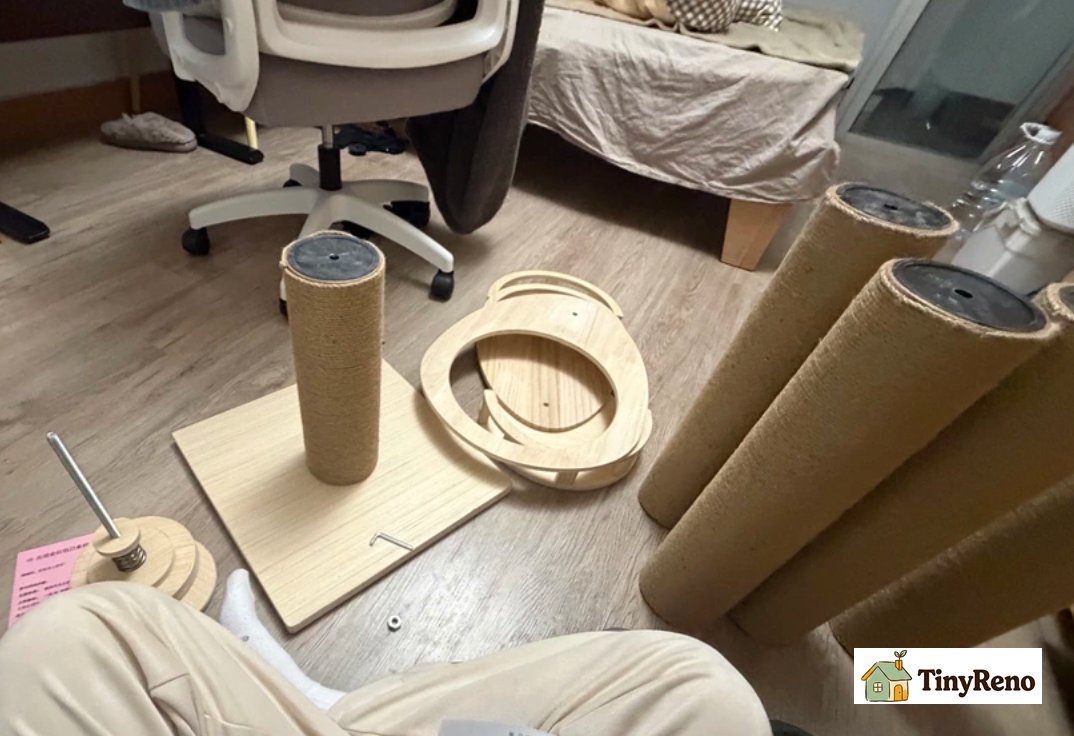
I had already bought her a cat tree. Six feet tall, sisal rope, in the bedroom corner. She ignored it. She slept on the couch. When she needed to scratch, she walked past the tree and dug into the living room corner.
By month four, eight scratches in that corner and three in the hallway. I panicked. A paint touch-up of an apartment corner runs $200 to $400 here. Then I taped aluminum foil on every corner of the apartment. It looked ridiculous. It worked.
Why Buying a Cat Tree Is Not the Fix
Every guide on cat scratching says the same first thing: buy a cat tree. Most of them do not mention that a cat tree, the way most people set it up, is the wrong shape for the scratching the cat actually wants to do.
Cats scratch for two reasons: claw maintenance (pulling off the outer sheath) and territory marking (visible scratches plus scent from glands in the paws). Both favor a tall vertical surface the cat can lean into and stretch along.
Most cat trees are vertical posts. Wall corners are also vertical. The difference is orientation. A cat tree post is a thin cylinder the cat wraps her front paws around and pulls down. A wall corner is two flat walls meeting at a right angle. The cat puts her front paws on one wall, kicks back paws against the other, and stretches her whole body. The wall corner gives the cat the stretch. The post does not.
The fix was not a different tree. The fix was making the corners unattractive and the tree a better alternative. Both at once.
The 6 Fixes I Tested
I ranked these by what worked fastest. The top three together changed the behavior in two weeks. The bottom three were marginal or actively disappointing.
1. Aluminum foil on the corners — $0
Cut sheets of aluminum foil the size of a placemat, fold the edge over for strength, tape them to the corners with painter's tape. Cover the living room corner where the scratches started, the hallway corner, and the bedroom corner.
Foil works because of texture and sound. Cat claws do not like the crinkly unstable surface. When the cat leans in, claws slip and the foil makes a sharp metallic sound. After two or three tries, she stops.
I left the foil up for thirty days. It looked ugly. The deposit was more important than the décor.
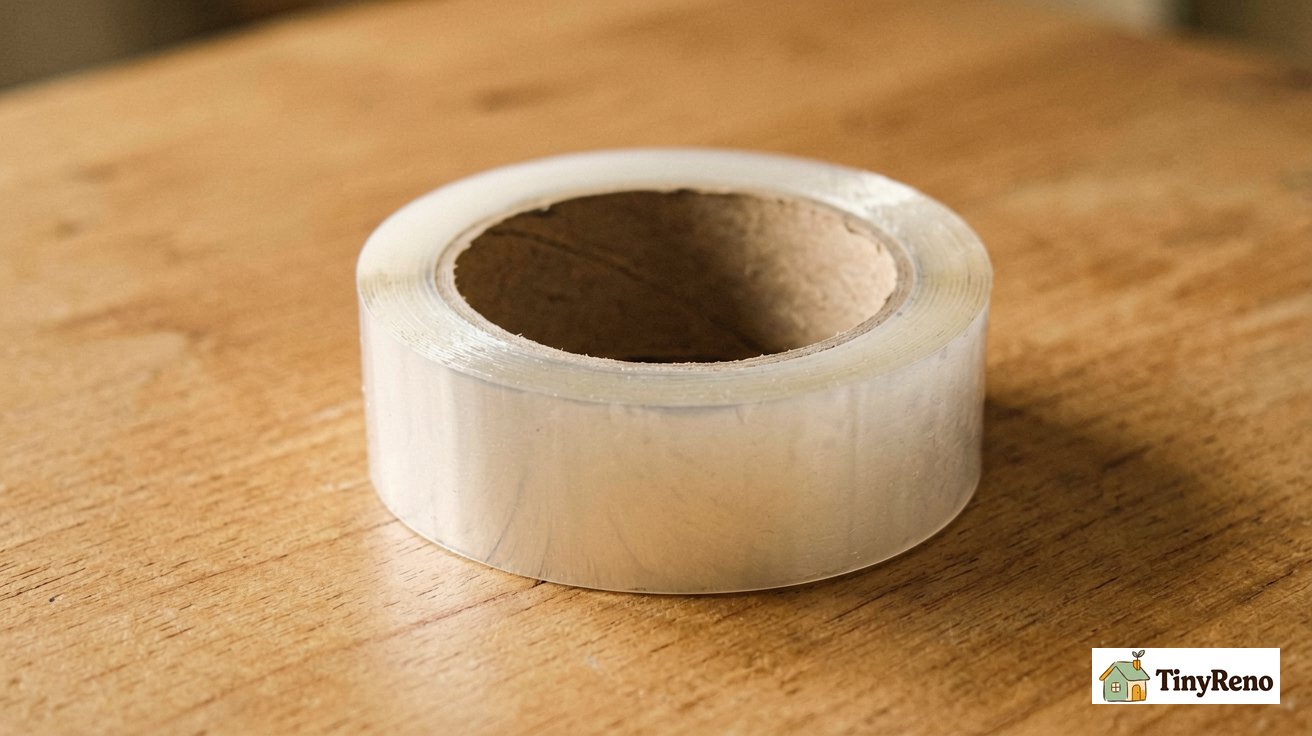
2. Sticky Paws tape on the surviving corners — $12
Sticky Paws is double-sided tape designed for corners cats scratch. The cat steps on it, paws stick, cat does not like the feeling, cat stops. Renter-safe. The adhesive comes off paint with no damage. I tested it on a small spot behind a chair first.
I replaced the foil with Sticky Paws on the corners the cat was still approaching. Clear tape, less visible than foil. Works for cats that did not fully stop with foil alone. Mine stopped within a week.
$12 to $15 per roll covers a handful of corners. Replace strips every two to three weeks as they collect dust.
3. Citrus spray deterrent — $6
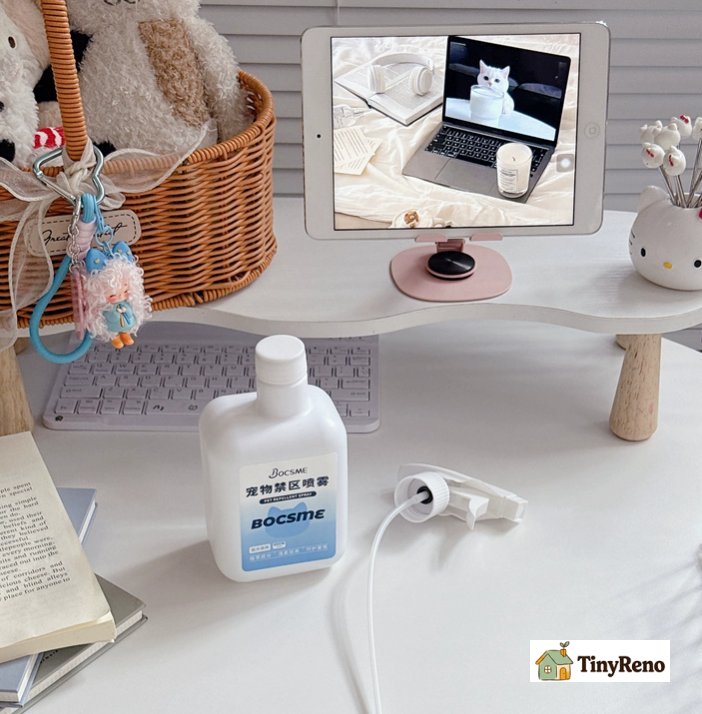
Cats dislike citrus smells. A spray bottle with water and a few drops of lemon or orange essential oil, misted on the corners and on the bottom of the cat tree, creates a scent barrier. The cat walks up to the corner, smells the citrus, and leaves.
I sprayed the corners twice a week. It is not the strongest deterrent on its own, but combined with foil and Sticky Paws, it adds a third layer. The cat learns the corner smells wrong, feels wrong, and sounds wrong. All three at once is too much for her to push through.
A quick Google told me lemon and orange are safe in tiny doses, but I still held my breath the first time I sprayed it. When in doubt, ask your vet — I'm just a guy with a scratched-up wall, not a veterinarian. Do not use any essential oil at higher concentration than a few drops per cup of water.
4. Move the cat tree to the corner — $0
This was the fix that mattered most. I moved the cat tree from the bedroom corner to the living room corner, the exact corner the cat had been scratching. Tree sits against one wall, a few inches from the corner.
Within a week, the cat was scratching the post. Within two weeks, she had chosen it as her primary scratching surface. Within three weeks, the foil came down and stayed down.
The fix was not the tree. The fix was the location. The cat wanted the living room corner. She got it. Scratches went to the post.
5. Acrylic corner protectors — $15
Clear acrylic panels that fit into the corner and screw into the wall with very small screws. They are designed for childproofing sharp corners. They also work for cat scratch protection.
I tried these in the hallway corner. The cat could not scratch through the acrylic. But they were ugly, caught light in ways that made the corner look broken, and required drilling two small holes per panel. Drilling into walls is something I avoid as a renter.
If the deposit is not a concern, these work. For a renter, foil and Sticky Paws are better.
6. Soft fabric wall panel — $20
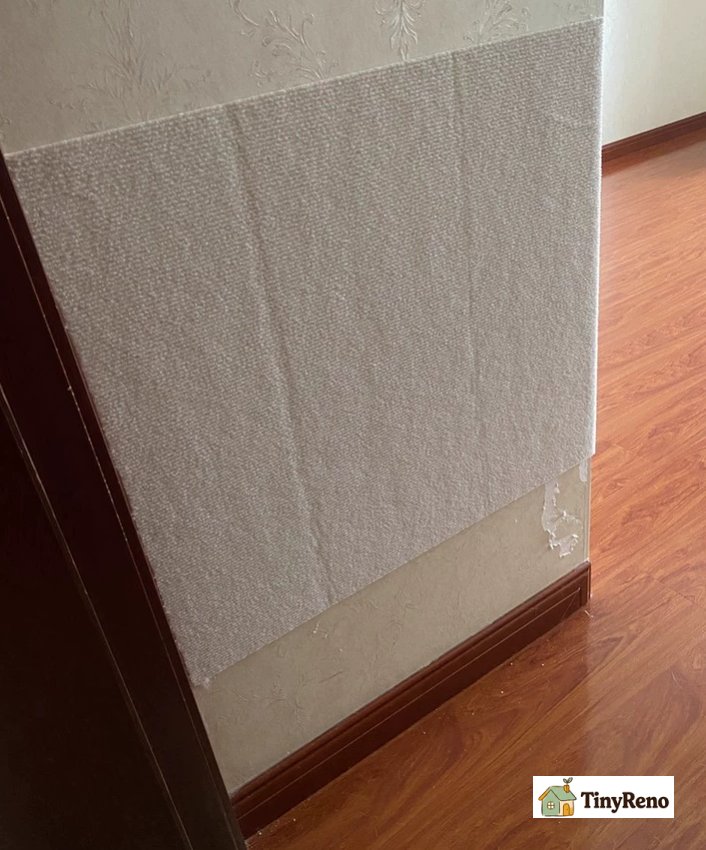
A fabric-covered panel that attaches to the corner with command strips or removable adhesive. Designed to absorb cat scratches and double as a decorative element.
I tried one on the bedroom corner. The cat loved it. She scratched the fabric panel. She ignored the wall. The fix worked.
The problem: my cat preferred the fabric to the wall so much that she started trying to pull the fabric panel off the wall to get to the structure behind it. Command strips do not hold up to a determined cat. The panel came down after four days, half attached, with scratches on the wall behind where the adhesive had failed.
If you secure the panel with screws, this works. As a renter, I went back to foil.
Which Fixes Actually Stopped the Scratching
The three that mattered: foil (Fix 1), Sticky Paws (Fix 2), moving the cat tree (Fix 4). Together they changed the behavior in three weeks. Cat uses the post daily now.
The one that helped marginally: citrus spray (Fix 3). Still use it twice a week as an extra layer. On its own, does not stop a determined cat.
The two that did not work: acrylic (Fix 5) and fabric panel (Fix 6). Both physically protected the wall but neither solved the actual problem — cat wants a particular surface in a particular location. Move the alternative there and the cat takes it.
One cat, one corner: Fix 1 + Fix 4. Cost: foil roll. Time: under an hour. Multiple corners, escalating: add Fix 2 + Fix 3. Total under $30.
What Most Stop-Cat-Scratching Guides Get Wrong
Four pieces of advice I read on five different ‘stop your cat from scratching the wall’ articles, plus what to do instead.
Wrong #1: ‘Declaw your cat.’ Declawing is not a nail trim. It is the surgical amputation of the last bone of each toe. Most veterinary associations, including most national veterinary associations, oppose the procedure except in rare medical cases. Cats that have been declawed often develop biting and litter box avoidance behaviors because they have lost their primary defense mechanism. As a renter, the declawed cat will still damage your wall with the teeth and the remaining paw pads if it is stressed. The fix below works without surgery.
Wrong #2: ‘Buy a bigger cat tree.’ A bigger tree is still a vertical post. The cat wants the wall corner. A taller post in the wrong location is still the wrong location. The fix is moving the tree to where the cat is already scratching, not buying a different tree.
Wrong #3: ‘Spray the cat with water when it scratches.’ The cat learns that scratching the wall when you are watching gets sprayed. The cat does not learn that scratching the wall is wrong. The cat learns to scratch when you are not watching. You now have a hidden behavior problem instead of a visible one. Spray bottles make the problem worse, not better.
Wrong #4: ‘Just accept the scratches as a cost of having a cat.’ Some damage is unavoidable with a cat. Most damage is avoidable. The corner-scratching behavior that drove me to put foil up everywhere was completely fixable in three weeks with the steps above. The wall behind the foil still has the original eight scratches, but I will have those touched up for less than $150 when I move out. The deposit will cover it. The deposit would not have covered it if the cat had continued for another year.
1-Month, 3-Month Update
One week after the foil went up: the cat walked up to the foil-covered corner, sniffed, put one paw on it, pulled back when the foil crinkled, and walked away. She did not try again that day. By the end of the week she had stopped approaching the foil corners entirely.
Two weeks after moving the cat tree to the corner: the cat was scratching the post daily. The post now has visible wear on the sisal rope, which is what you want. The wall has no new scratches.
One month after the foil went up: I removed the foil from the living room corner and the hallway corner. I left Sticky Paws tape on the bedroom corner as a backup. The cat did not return to any of the corners. The post was her scratching surface from then on.
Three months in: still no new scratches. The cat tree post is the most scratched thing in the apartment. The deposit situation is stable. I repaint the original eight scratches myself before move-out with a $20 sample pot of the wall color from the hardware store.
Total cost of what worked: one roll of aluminum foil ($3), one roll of Sticky Paws ($13), one bottle of citrus spray ($6), and the cat tree I had already bought. Twenty-two dollars total. Three weeks of behavior change that has held for three months and counting.
If your cat is marking a specific corner of your apartment, do not buy a fourth cat tree. Buy foil. Move the existing tree to that corner. Give it two weeks. Three months later, the tree is shredded and the walls are pristine. She's happy, I'm happy, and my security deposit is safe. Sometimes the best pet solutions are the ones that look the most ridiculous.
FAQ
Okay, the question I get asked the most: Does the aluminum foil thing actually work, or is it just Instagram nonsense?
Yes, for most cats. Foil works because of texture and sound. The crinkly unstable surface catches the cat's claws and makes a sharp metallic sound when touched, which most cats dislike enough to avoid. Leave the foil up for two to four weeks while the cat learns a new scratching surface, then remove it. Some cats are stubborn and ignore the foil. For those cats, double-sided tape like Sticky Paws is the next step.
Is declawing a cat safe or humane?
Declawing is the surgical amputation of the last bone of each toe. It is not a nail trim. Most national veterinary associations, including the AVMA, consider it an elective procedure with significant welfare concerns. Cats that have been declawed often develop litter box avoidance and biting behaviors because they have lost their primary defense mechanism. Most cities in the U.S. and many landlords ban the practice. The fixes in this article work without surgery and address the behavior, not the claw.
Where should I put a cat scratching post?
In the exact corner or surface the cat is already scratching. Most cat scratching posts are sold as freestanding pieces for the corner of the room, but people often put them somewhere out of the way, like the bedroom or the laundry room. The cat ignores them. Move the post to the corner the cat is marking, leave a few inches between the post and the wall, and the cat will usually switch to the post within a week or two. The fix is the location, not the size of the post.
Will citrus spray hurt my cat?
At the dilution in this article (a few drops of lemon or orange essential oil in a cup of water), no. Cats dislike the smell but the spray is not toxic at that concentration. Some essential oils are toxic to cats at higher concentrations, including tea tree, peppermint, and wintergreen. Do not use those. Stick to lemon or orange, mist lightly twice a week, and do not spray directly on the cat. Keep the spray bottle out of reach when you are not using it.
How much does cat scratching damage cost from a security deposit?
It depends on the depth and the wall. Surface scratches that have not broken the paint can usually be touched up with a $20 sample pot of matching wall paint from the hardware store, taking under an hour. Deeper scratches that have gone through the paint and into the drywall may need a small patch, sand, and repaint, which a handyman charges $100 to $200 per corner. If the landlord has to repaint the entire wall corner-to-corner, the cost can run $300 to $600 depending on the city.
Will the landlord charge me for existing scratches when I move out?
Probably, yes, if the scratches are visible at move-out. Most leases include a ‘normal wear and tear’ clause, but cat scratches are usually considered damage rather than wear and tear because they are intentional marks. The fix is to touch up or repaint the corners yourself before the move-out inspection. A $20 paint sample and an hour of your time usually clears the charge. Document the before-and-after with photos and provide the receipt for the paint to the landlord if the charge appears anyway.


Discussion (0)
Sign in to join the discussion