

The Ceiling Tile I Wiped and Found Black Under
The first month I cleaned the bathroom twice. Tile, tub, vent cover, floor. Looked clean. The second month I noticed a dark spot on the grout line between two ceiling tiles. I wiped it. It came back darker.
That was mold, not dirt. Bathroom ceiling grout is warm, dark, and damp after every shower. The vent fan had been spinning the whole time. I assumed it was working. It was not. Three weeks later, with a paper towel, I found out.
Six steps fixed it. No landlord call. No drilling. Under thirty dollars. The order matters — skipping step one is why most guides fail.
Why Opening a Window Only Works for Half the Year
Most ‘steam in the bathroom’ guides start with opening a window. This works in July and fails in January. In winter, opening the bathroom window for twenty minutes after a shower drops the room temperature by ten degrees and runs the heating system for the next hour to recover. The cost on the heating bill is real, and the cold draft lands on whoever walks out of the bathroom next.
A dehumidifier condenses water out of the air after it is already in the room. The problem in a bathroom is not the leftover moisture. The problem is the steam coming off the shower in real time. A vent fan pulls the steam out at the source. A dehumidifier is a backup.
The fix that matters is the vent fan working for the right amount of time after the shower. Everything else is layered on top of that.
The 6 Fixes I Tested
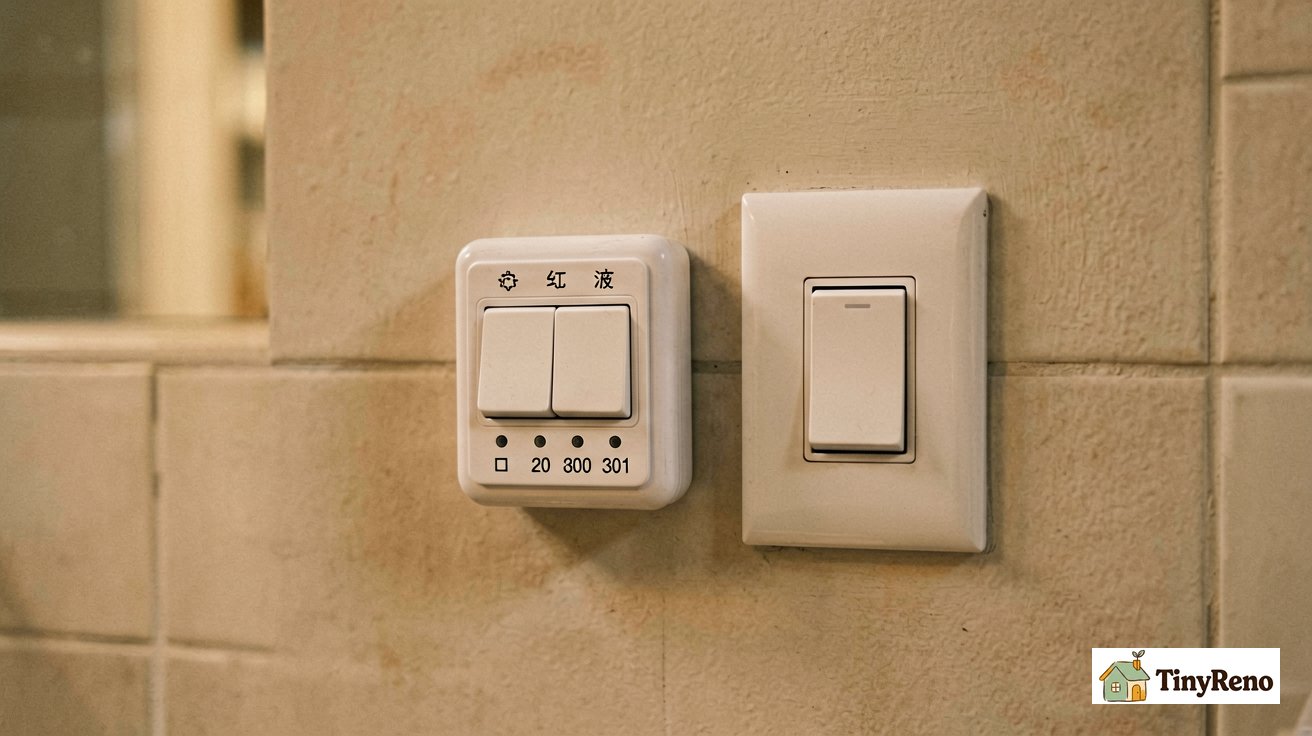
Ranked by order of operation. Fix 1 took ten seconds and changed everything. Fix 6 locks the gains in. Doing them out of order is the mistake.
1. The ten-second paper towel test — $0
Hold a single sheet of paper towel flat against the vent cover while the fan is running on its highest setting. If the paper towel sticks in place by suction, the fan is pulling air. If the paper towel falls or flaps loosely, the fan is not pulling air. The motor might be turning, but the fan is doing nothing useful.
My fan failed. The paper towel did not twitch. I had been showering twice a day in a bathroom with a decorative fan. Two months of unvented showers is enough to start a colony in the grout.
A failed vent fan is structural, not maintenance. Most leases require the landlord to repair it. Mine sent someone within a week and installed a new fan.
2. Clean the vent cover and the visible duct — $0
Once the new fan was in, I took the cover off and found a thick grey mat of dust and lint on the inside. The duct behind it had not been cleaned in what looked like years. I vacuumed what I could reach with a narrow crevice attachment, then wiped the inside of the duct as far as my arm could go with a damp microfiber cloth.
Renter-safe. You do not need to remove the fan housing or touch wiring. Unscrew the cover, clean what is visible, put it back. Twenty minutes.
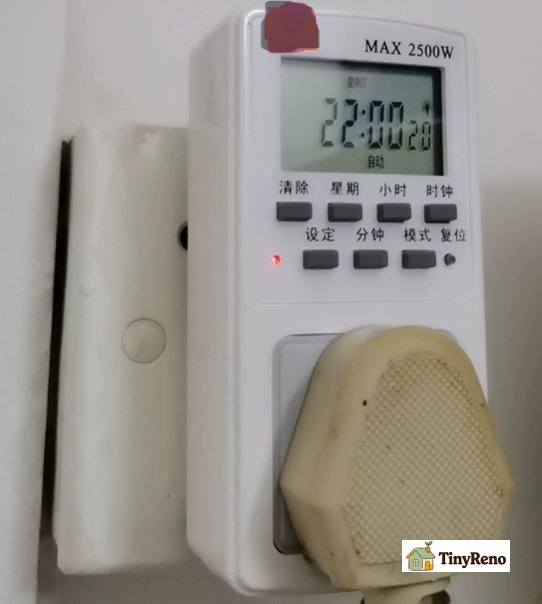
3. Install a programmable countdown timer switch — $12
This is the fix that actually changed my daily routine. A countdown timer switch replaces the existing fan switch. You set it for twenty or thirty minutes, press the button when you start the shower, and it turns the fan off automatically. You do not have to remember to come back and turn it off. You do not have to guess if twenty minutes is enough. The timer does it for you.
No complicated installation needed for this timer. Simply unplug your fan, plug the timer into the wall outlet, then slot the fan’s power cord into the timer’s socket.
One caveat though: If your fan is hardwired directly to a wall switch without a plug, you’ll have to modify the switch wiring. Installing the timer in this case gets way trickier.Renter-friendly if you can use a screwdriver. Turn off the breaker, swap the switch, restore power. Most timers are marked ‘neutral required’ or ‘no neutral required.’ Read the package. Older bathroom wiring may need the no-neutral version, a few dollars more.
Timer cost: around fifteen bucks. Cost of leaving a fan on for an hour is real electricity. Cost of forgetting to turn the fan on is mold. The timer solves both.
4. Add a humidity-sensing upgrade — $30
Some vent fans have a humidity sensor built in or available as a module. The fan turns itself on when humidity crosses a threshold and runs until it drops back. You never touch the switch.
Most renter-friendly upgrades are modules that wire into an existing fan rather than replacing it. Swapping the housing needs landlord permission. A clip-in module is reversible.
I added one to my new fan. After two weeks I had not touched the switch. The fan ran with the shower, ran for twenty minutes after, and turned off. Electricity did not move. Grout did not get darker.
5. Caulk the seams around the tub and shower — $6
Mold does not grow on grout because the grout is dirty. Mold grows on grout because water sits on it for hours after the shower. If the caulk seam where the tub meets the tile wall has a gap, water gets behind the tub and into the wall cavity, which is much harder to clean and much harder to dry. A six-dollar tube of removable silicone caulk and a wet rag is the entire tool list.
Pull out old caulk with a utility knife, wipe the seam with rubbing alcohol, run a new bead of removable silicone, smooth with a wet finger. Twenty minutes. Dry in an hour. Next shower no longer soaked into the seam.
Use removable silicone, not regular bathroom caulk. Removable peels off in one strip. Regular caulk has to be cut out and leaves residue.
6. Monthly grout and curtain mildew routine — $0
Once the fan is working and the caulk is sealed, the last layer is a five-minute monthly routine that keeps new mold from getting a foothold. The routine has three parts.
Wipe the ceiling grout with a cloth dampened in white vinegar. Vinegar kills surface spores without bleaching the grout. Wipe the bottom of the shower curtain or the edge of the glass door, where water sits. Run the fan during the shower and for the timer length after.
First weekend of every month. Five minutes. No new dark spots since I started.
Which 3 Steps Actually Stopped the Mold
Fix 1 revealed the problem. Without it I would have kept assuming the fan worked. Fix 3 removed the human element — I used to forget to turn the fan on. Fix 5 stopped water going where it should not.
Fixes 2 and 4 were real improvements but not the ones that mattered most. Worth doing after 1, 3, and 5. Not worth skipping Fix 1 to get to them.
Fix 6 locks the gains in. Five minutes a month. Skip it and the mold returns in six to twelve months regardless of the fan.
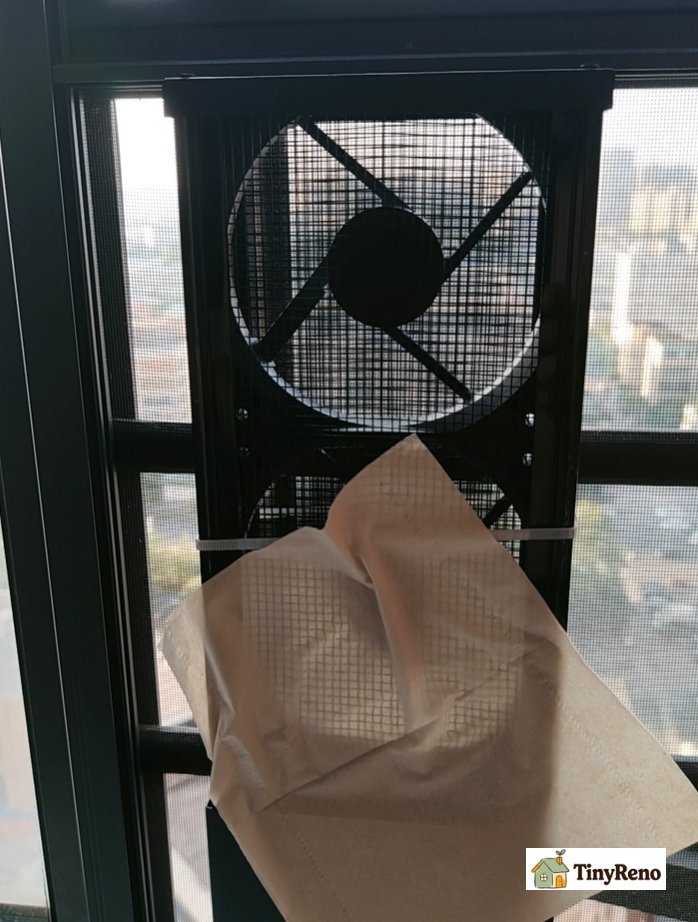
If your bathroom has no built-in vent at all, the fix list changes shape. Older apartments and converted buildings sometimes have a window but no exhaust fan in the ceiling. In that case, the best renter-safe option is a stretchable no-drill window fan that mounts in the lower sash of the bathroom window and pulls air out the same way a ceiling fan would. I wrote a long-term review of one of these that I have been using as a backup for over two months now, and you can read it here: no-drill window exhaust fan review. The same fan that pulls cooking smoke out of a kitchen pulls shower steam out of a bathroom. It is not as quiet as a ceiling fan, but it works in apartments where there is no other option.
What Most Bathroom Mold Guides Get Wrong
Three pieces of advice I read on four different ‘get rid of bathroom mold’ articles, plus what to do instead.
Wrong #1: ‘Just spray bleach on the mold.’ Bleach kills what it touches, not the roots in the grout or the drywall behind. Two weeks later the dark spot returns. Bleach is cosmetic, not structural.
Wrong #2: ‘Leave the bathroom fan on 24/7.’ This wastes electricity, shortens the fan motor, and adds noise you do not need. Twenty to thirty minutes after a shower is enough. The timer switch handles this for you. If you find yourself wanting to leave the fan on all day, the underlying problem is not the fan. It is the moisture source you have not addressed.
Wrong #3: ‘Buy a dehumidifier.’ A dehumidifier condenses water out of the air in a closed room. It does nothing about the steam coming off a hot shower in real time. The fan is what handles the steam. The dehumidifier is a backup for any residual moisture. If you do not have a fan and you do not have a window you can open, a dehumidifier alone will not fix the mold problem.
Wrong #4: ‘It is the landlord’s problem.’ Here's how I split it: the fan dying? Landlord's problem. I called, they sent someone within a week. The mold on the shower curtain? That was 100% on me. I stopped blaming the building and started wiping the curtain once a week. Problem solved.
1-Month, 3-Month Update — Mold-Free or Came Back
One week after the new fan was installed and the timer was in, the dark spot on the ceiling was visibly lighter. By the end of week two it was gone. I did not have to scrub it. The fan doing its job for twenty minutes after each shower was enough to dry the grout before the mold could re-establish.
One month in, no new dark spots anywhere. The shower curtain bottom had a thin line of discoloration that I wiped with vinegar and have not seen since. The timer was still working. The new fan was still pulling air. I had not thought about the bathroom mold in three weeks, which was the point.
Three months in, still nothing. Grout looks the same as move-in. Vinegar wipe first Saturday of every month. Timer to thirty minutes in winter, twenty in summer.
Total cost of what mattered: timer ($12), removable caulk ($6), white vinegar I already had. Landlord covered the new fan. Paper towel test was free.
The dark spot looked permanent. It looked like the kind of thing you wipe forever and never get rid of. It was not. The problem was upstream. Once I found it, the downstream issue resolved itself.
FAQ
How do I know if my bathroom vent fan is actually working?
Hold a single sheet of paper towel flat against the vent cover while the fan is on its highest setting. If the paper towel stays in place by suction, the fan is pulling air. If it falls or flaps loosely, the fan motor is turning but moving almost no air. A fan that fails this test needs either a deep clean or a replacement, which is usually the landlord's responsibility.
How long should I run the bathroom fan after a shower?
Twenty to thirty minutes is enough for most bathrooms. Running the fan longer wastes electricity and shortens the motor. A programmable countdown timer switch handles this for you: set it for twenty or thirty minutes when you start the shower and it turns itself off. Twenty minutes in summer, thirty in winter is a good starting split.
Can mold in a bathroom make you sick?
Yes, especially for people with asthma or allergies. Bathroom mold releases spores into the air, which can trigger respiratory symptoms, eye irritation, and skin reactions in sensitive individuals. Even for people without allergies, prolonged exposure to mold spores in an enclosed space can cause coughing and congestion. The fix is not bleach — bleach kills the surface mold but leaves the roots. The fix is to stop the moisture that lets the colony establish in the first place.
Is a bathroom vent fan the landlord's responsibility?
When the fan is broken or missing, yes. A failed vent fan, a broken motor, or a vent that has never been installed in a building that should have one are structural issues. Most leases require the landlord to maintain habitability, and a bathroom without working ventilation falls under that. Routine cleaning of an existing working fan is on the tenant. Email the landlord with a short video if the fan fails the paper towel test.
What's the cheapest way to prevent bathroom mold?
Run the existing vent fan during the shower and for twenty to thirty minutes after. That is free once the fan works. The next cheapest step is a monthly wipe of the ceiling grout and shower curtain edge with white vinegar. Total ongoing cost is essentially zero. If you do not have a vent fan at all, a stretchable no-drill window fan in the bathroom window does the same job for a one-time cost of around forty to sixty dollars.
Do humidity-sensing bathroom fans really work?
Yes. The fan turns itself on when the humidity crosses a set threshold and runs until it drops below that threshold. You never touch the switch. They cost more than a basic fan and require either a module that wires into the existing fan or a full replacement. For renters, the module approach is better because it is reversible. The fan still does its job; you just stop being the one who has to remember to turn it on.


Discussion (0)
Sign in to join the discussion