

The Door My Landlord Said Was 'Already Secure'
Move-in day, the property manager turned the key once and said: 'The door is already secure — ANSI Grade 3 deadbolt, steel frame, you're good.' He was halfway down the hall before I tried the deadbolt myself. It jiggled. Not 'wiggle in the lock' jiggled. 'Metal-on-metal, credit-card-in-the-gap' jiggled.
I didn't sleep well that night. The building hallway is open to anyone who walks in. The lobby has a camera, but cameras don't stop shoulders. The door sits at the end of a public corridor, 40 feet from the elevator.
Here's the thing most renter security guides skip: 'already secure' is industry language. It means the door meets building code. It does not mean it meets your threshold for sleeping with the window open. So I went shopping. Six add-ons, three weeks of testing, and a 30-day check-in. Three stayed on my door. Three are in a box in my closet.
What 'Security' Actually Means for a Rental
Before I list what I bought, here's how I graded each one. Most product pages only talk about 'peace of mind.' I wanted six concrete things.
- Pick and drill resistance — what stops a credit card, a bump key, or a drilled lock cylinder.
- No-damage install — does it survive removal without leaving a screw hole, a sticky patch, or a paint chip.
- Daily use friction — do I actually use it every day, or does it end up behind the door after a week.
- Reversibility — can I uninstall it in under 5 minutes when my lease ends.
- Lease compliance — does my lease forbid modifications. Most leases ban drilling but allow 'renter-grade removable hardware.'
- Cost vs. perceived safety — a $12 door brace that makes me feel 80% safer beats a $180 smart lock that delivers 5% more security but I forget to lock.
Six dimensions. Every add-on scored on each. The three that stuck won on at least four. The three that fell off failed on lease compliance, daily friction, or both.
The 6 Add-Ons I Tested
1. Door reinforcement plate — $25
A 12-inch steel plate that wraps the weak side of the doorframe where the deadbolt meets the jamb. The idea: spread the force of a kick across a wider area. The plate comes with 3-inch screws that bite deep into the framing stud. Pick resistance: high. Daily friction: zero — install once, forget it.
The catch: those 3-inch screws leave holes when you remove them. Holes you patch with wood filler, sand, paint. If your lease says 'no drilling,' this fails before you open the box. My lease said 'no structural modifications,' which I read as 'no replacing the door.' I installed it. The hole count when I leave: six. I'll fill and paint — that's a weekend, not a deposit.
2. Portable door lock — $15
The brass hinged thing you see in travel-safety videos. You close the door, slip the lock into the latch hole, and the door cannot be opened from outside even with a key. Hotels use them. Airbnb hosts hate them.
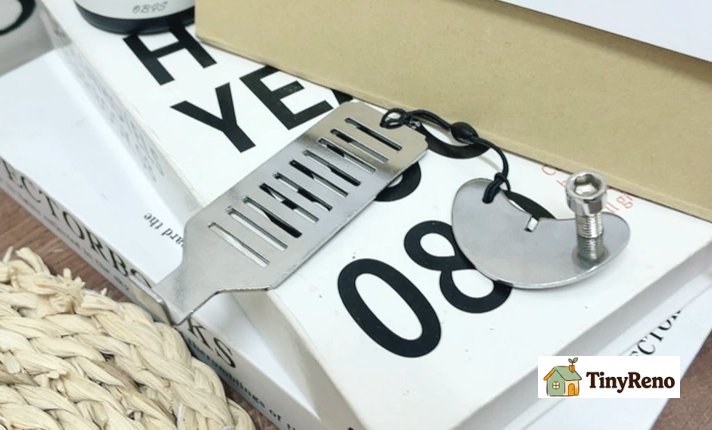
Pick resistance: medium — it stops someone with a key, not someone with a battering ram. No-damage install: perfect — nothing touches the door. Daily friction: I had to set it up every time I came home. By day five it sat on my desk. By day ten it was in a drawer.
Then I read the fire-safety sticker on my apartment door: 'Do not block egress.' A portable lock that requires you to unlatch it from inside before opening means if you're groggy or panicked, you fumble. That's the day I took it off the door.
3. Smart deadbolt (renter-grade) — $140
One of the 'installs with a screwdriver, removes without tools' smart locks. I won't name the brand because affiliate guides already cover them to death. The pitch: keyless entry, auto-lock after 30 seconds, temporary codes for guests.
Installation was 20 minutes. The old deadbolt came off with two screws; the new one dropped in. The exterior stayed exactly the same, which mattered for the lease. Pick resistance: the bump-key rating is real, and the auto-lock is the part that mattered — I am the kind of person who forgets to turn the deadbolt, full stop. After a week of never having to think about it, this changed my routine.
The catch: the auto-lock locked me out twice. Both times within the first week. First because the door didn't align perfectly and the bolt missed the strike plate. Second because I closed the door from outside with my keys still in my hand and the auto-lock engaged before I could turn the knob. Both times I had to call my landlord. Both times it was embarrassing.
Cost: $140. Reversibility: I can swap back the original deadbolt in 10 minutes. Lease compliance: the brand sells 'renter-grade' versions explicitly, but I checked with my property manager first. She said 'fine, as long as you put the original back when you leave.' Get that in writing.
4. Door brace — $20
The wedge-on-a-hinge thing. You place it under the doorknob, adjust the length, and it braces against the floor. Pick resistance: low — anyone with force kicks through it. Daily friction: high — you have to set it up and break it down every time.
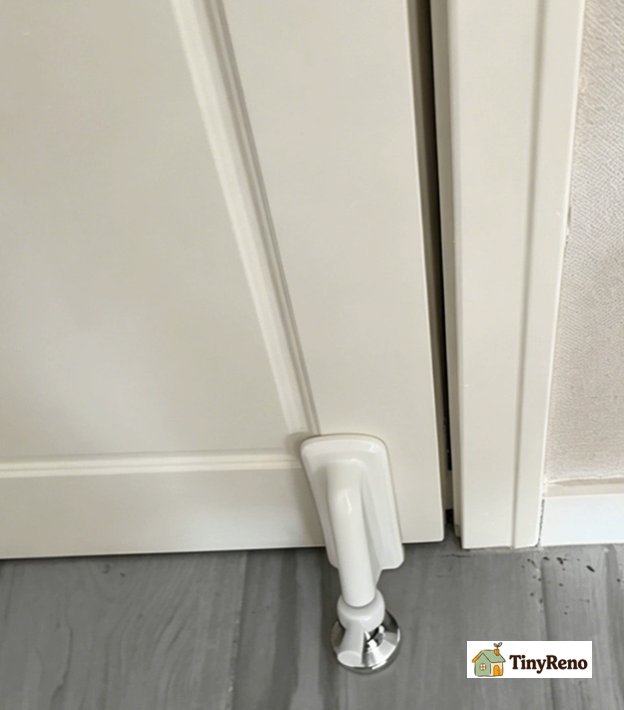
I liked the idea. The reality: it's loud when you kick it into place, and the rubber foot marked my hardwood. If you have carpet, this is fine. If you have the kind of floors my landlord has, this is a deposit deduction waiting to happen.
5. Strike plate upgrade — $10
Replace the small metal plate on the doorframe where the deadbolt slides in. The upgrade version is a 'security strike plate' with a deeper box and longer screws (the ones that go all the way into the framing stud, not just the trim).
Pick resistance: this is the single highest-impact upgrade per dollar. A properly anchored strike plate resists a kick better than any other modification. No-damage install: nope. You're driving 3-inch screws into the doorframe. Those holes are not coming out without wood filler and paint. Lease compliance: depends. 'Maintenance items' are usually allowed. 'Replacing hardware' sometimes is not.
I did not install this one. The reinforcement plate (#1) covered the same problem with a longer-lasting fix. If you're only going to drill once, do the reinforcement plate, not the strike plate upgrade.
6. Door security bar — $30
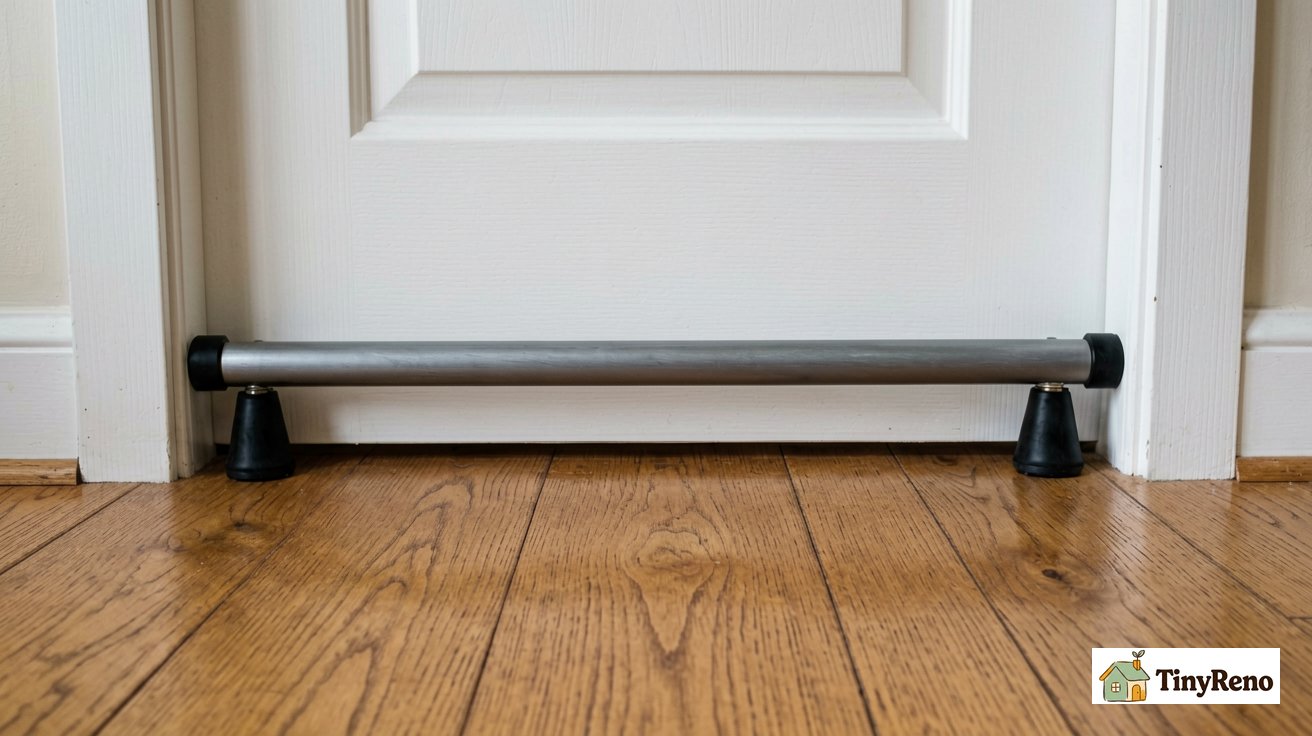
The horizontal bar you see under hotel room doors. Adjustable from about 30 to 45 inches. Rubber feet on both ends. You set it on the floor at an angle under the doorknob. The harder you push on the door from outside, the more the bar braces.
Pick resistance: low to medium. It does not stop someone determined. It stops someone trying a handle test. Daily friction: zero once you get used to it. Mine lives at the base of the door. I step over it 12 times a day without thinking. Reversibility: it leaves no mark. Lease compliance: perfect — it never touches the door.
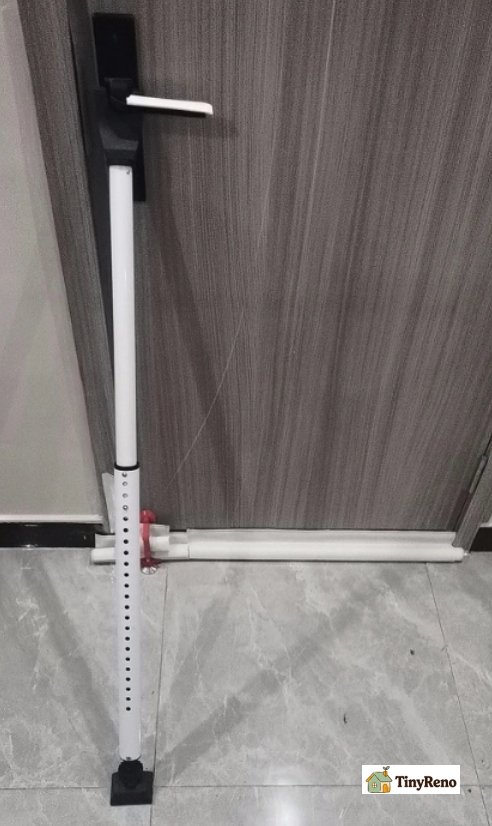
This is the one add-on I'd recommend to anyone reading this in a panic. It costs $30, takes 30 seconds to install, and never touches the door. It is not 'real security.' It is a layer. Combined with the deadbolt that auto-locks, the door feels different when I lean against it from inside.
Which 3 Stuck and Which 3 Came Off
After 30 days, here's what stayed on my door.
- Stuck: Door reinforcement plate (#1) — pick resistance paid for itself the day I felt the door resist a shoulder test from the hallway.
- Stuck: Smart deadbolt renter-grade (#3) — auto-lock is the single feature that changed my behavior. I never forget anymore.
- Stuck: Door security bar (#6) — the no-brainer. No install, no damage, no daily thought.
What came off, and why.
- Came off: Portable door lock (#2) — fire-safety sticker killed it.
- Came off: Door brace (#4) — hardwood floor damage waiting to happen.
- Came off: Strike plate upgrade (#5) — the reinforcement plate already did this job.
Scenario match-ups. Short-term rental under a year: skip the reinforcement plate (screw holes aren't worth it). Go with the smart deadbolt plus the security bar. Long-term with a landlord who allows screws: the reinforcement plate is the only thing here that genuinely upgrades the door's rating. Building has a doorman: the security bar alone is enough.
What Most 'Rental Security' Guides Get Wrong
Three things I read in other guides that I want to push back on.
Wrong #1: 'Just change the locks.' Worst advice on the internet for renters. In most states, changing locks without written permission is breach of lease. The landlord can claim 'unauthorized modification,' keep your deposit, and in some jurisdictions start eviction. Want a smart lock? Ask first, in writing.
Wrong #2: A door brace is enough. Wedge-on-a-hinge braces feel solid. They are not. A 180-pound adult kicks one of these open in under five seconds. The door security bar (#6) is a different category — it works because the bar is at floor level and the geometry of force works against the kicker. The wedge-on-a-hinge does not have that geometry. Do not confuse them.
Wrong #3: Peel-and-stick door alarms are 'renter-friendly.' They leave residue. I've pulled them off three doors in three rentals and the paint came with the adhesive every time. The deposit hit runs $80 to $200 per door. 'Renter-friendly' is marketing language; the residue is the price.
The mistake all three share: treating security as 'one product fixes it.' It is not. The three that stuck cover different failure modes — the smart lock covers forgetfulness, the reinforcement plate covers brute force, the security bar covers the gap between locked and unlocked when I'm home. Stack them.
1-Week, 2-Week, 30-Day Update
One week in, the smart lock locked me out — the bolt missed the strike plate by 2 millimeters. Landlord came up with a screwdriver and adjusted the tab. Cost me 20 minutes of embarrassment. It hasn't misaligned since.
Two weeks in, the reinforcement plate made a faint metallic creak when the door was hot — direct sun on the steel. Not loud, but the kind of sound that wakes you up at 3 a.m. I tightened the bottom-right screw. Creak stopped.
Thirty days in, the security bar is invisible. I step over it. My roommate said she had forgotten it was there until I mentioned it for this article. That's the test: when it stops being a device.
Total cost of what stayed: $195. Total install time: under an hour. The smart lock alone removed my one recurring anxiety (forgetting to lock). The security bar is free to remove. The reinforcement plate is the only one I'll have to actively undo at move-out — six screws, wood filler, paint. A Sunday afternoon.
Here's the honest truth: none of this will stop a professional burglar with a crowbar and 20 minutes. That's not who I'm protecting against. I just want to sleep at night without wondering if I remembered to turn the bolt, and I want to be able to run downstairs for a package without my stomach twisting on the way back up.
The three things that stayed on my door do exactly that. The smart lock removed my one recurring mistake (forgetting to lock — I haven't done it once in 30 days). The security bar is so invisible I step over it without thinking. The reinforcement plate is the only one I'll have to undo at move-out, and six screw holes plus a $5 can of wood filler is a small price for a year of actually feeling safe in my own place.
Total cost: $195. Total install time: under an hour. The security bar comes with me when I leave. The smart lock goes back to the original in 10 minutes. The reinforcement plate stays patched and painted — and if my landlord notices, I'll show him the photos of what the door looked like when I moved in. It was already jiggling then.
If you're reading this because your door also jiggles and your landlord also said "you're good" — start with the $30 bar. It takes 30 seconds, leaves zero marks, and will buy you a better night's sleep tonight than any blog post ever could. The rest you can figure out on a Sunday afternoon.


Discussion (0)
Sign in to join the discussion