

About three weeks into my last lease, my kitchen drain started smelling like a sewer. Not a faint, "is that me?" smell — a real, walk-into-the-kitchen-at-7am-and-want-to-leave smell. I figured it was a one-time thing. I poured boiling water down the drain. The smell came back the next morning. I tried baking soda. Same thing. After two weeks of pretending the smell wasn't there, I went online and bought two different things: a silicone drain stopper that's supposed to mechanically block the odor, and a liquid drain cleaner that's supposed to chemically neutralize it. Three months later, both products are still in my kitchen — but only one of them is doing any actual work.
This isn't a "best drain product" listicle. There are plenty of those, and they all say the same thing. This is what it's like to actually live with both products for a season, which one actually kills the smell, which one just covers it up with a different smell, and what nobody tells you about either one before you buy.
Why I ended up with two of them
The short version: I bought the stopper first because I thought the problem was a one-time thing and I wanted the cheapest possible fix. I bought the cleaner two months later because the stopper turned out to be only half the solution. That's it. No deep reason. The apartment came with a faint cigarette smell from the previous tenant (I wrote about how I dealt with that here), and once that cleared, the drain smell was the only thing left that made the kitchen feel off.
If you live in a rental, the appeal of the stopper is obvious: you stick it in the drain, you forget about it, you don't have to do anything else. The appeal of the cleaner is also obvious: it's a one-time pour, and the smell goes away for a few hours. Both products promise the same thing — "no more drain smell" — and they go about it in completely different ways. That difference is the whole reason this article exists.
The stopper is mechanical, the cleaner is chemical — here's what that actually means
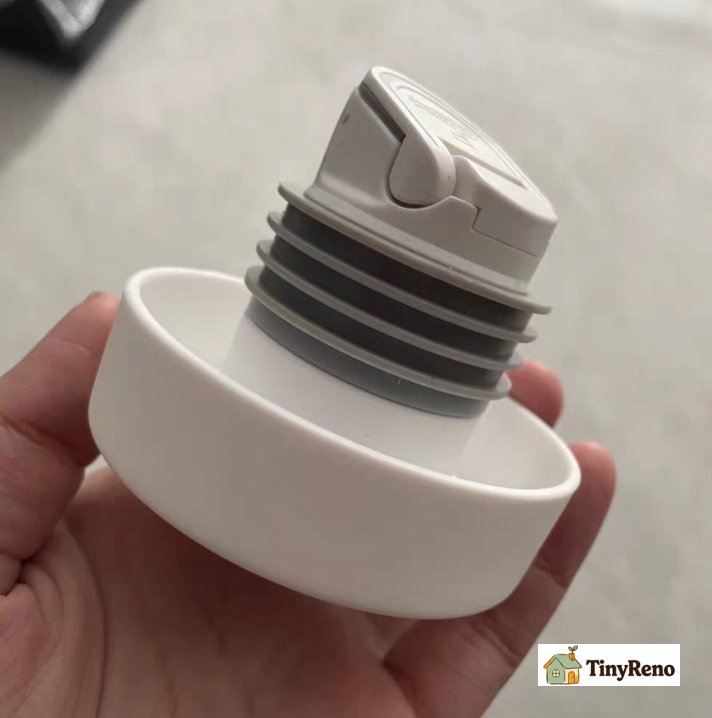
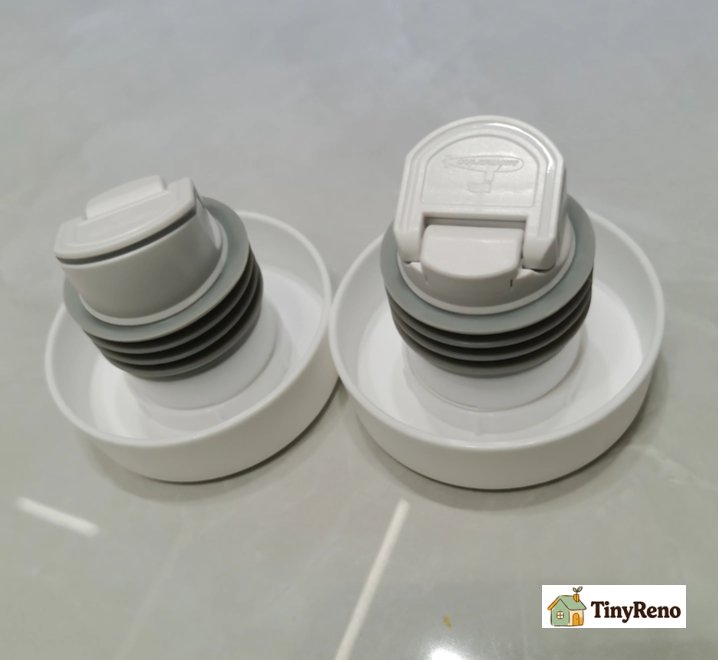
The stopper I bought is a small plastic-and-silicone piece that sits inside the drain opening. It has a flap that opens when water flows down (so the sink still drains normally) and closes when the water stops (so the drain pipe is sealed off from your kitchen air). No power, no chemicals, no refills. You put it in once.
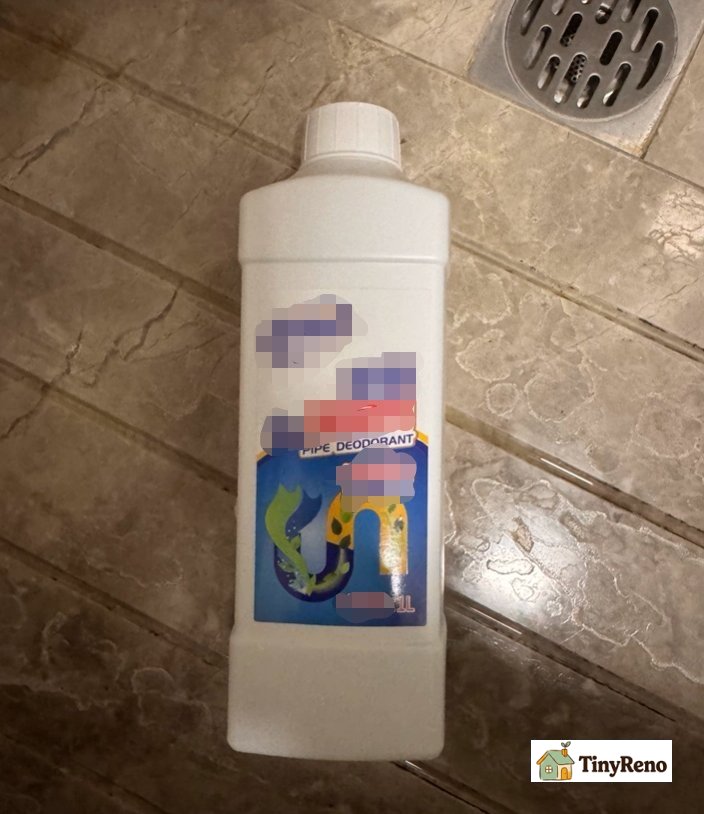
The cleaner is a liquid you pour down the drain, wait 30 minutes, and flush with water. The active ingredients are supposed to break down whatever's causing the smell — the label says "plant-based" and "pipe-friendly," which is nice in theory, but the safety warnings on the back (gloves, ventilation, don't get it on your skin) are not what you expect from something plant-based. We'll get to that in a minute.
The mechanical vs chemical difference matters more than it sounds. The stopper is doing one job: keeping sewer air from coming up through the drain when you're not using the sink. It doesn't clean anything, it doesn't dissolve anything, it just blocks. The cleaner is doing the opposite job: it goes into the pipe and tries to break down the gunk that's causing the smell in the first place. One is a wall. The other is a mop. You can see how this leads to different results.
The smell comes back, but only one of them is to blame
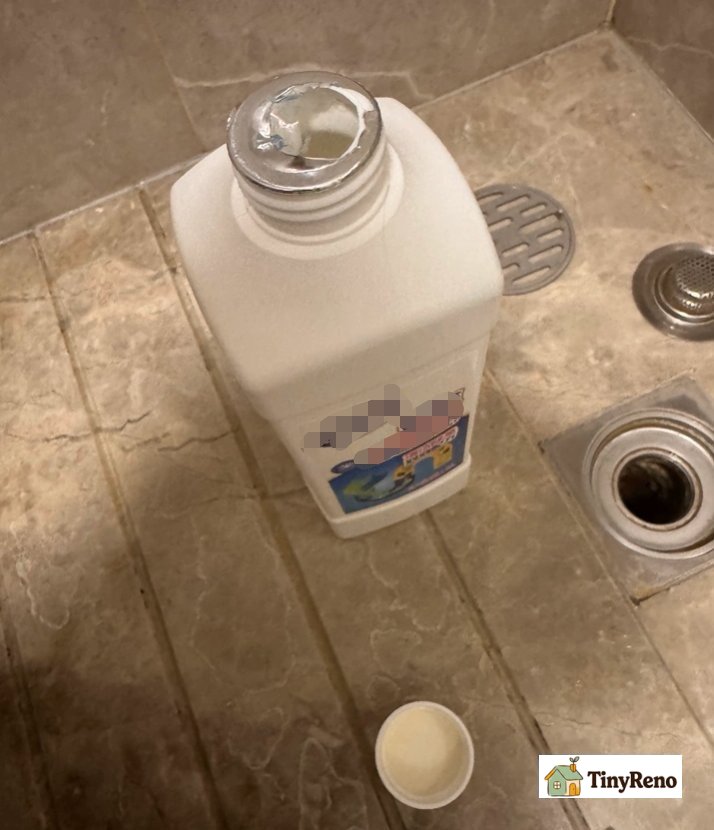
The first time I poured the cleaner down the drain, the kitchen smelled like fake pine forest for about four hours. I thought: this is great, problem solved. The next morning, the smell was back. Not as strong as before, but back. I poured the cleaner again. Same result: four hours of fake forest, then the old smell creeps back in. The product description says "long-lasting fragrance" — which it is, technically, until the fragrance evaporates and you're back to the original problem.
The stopper, once I finally got the right size (more on that in a minute), worked immediately and kept working. The drain stopped smelling. It has not come back. I clean the stopper itself every few weeks when I pull it out to clean hair out of the drain — there's some buildup on the silicone, but the seal still works. Three months in, the stopper is still doing the job the cleaner could not: keeping the actual source of the smell out of my kitchen air.
Here's the thing the product listings don't tell you: the cleaner's "fresh scent" is essentially a perfume covering up the original smell. It doesn't actually neutralize the source. If the source is organic buildup in the pipe — food residue, grease, biofilm — the cleaner might break some of it down over time, but the smell will come back as soon as the fragrance fades. The stopper doesn't pretend to fix the source. It just stops the source's air from reaching your nose. Different problem, different solution.
The stopper has one problem nobody talks about: pipe size
The first stopper I bought did absolutely nothing. I installed it, I waited, I went back to the kitchen the next morning — the smell was exactly the same. I thought the product was broken. Then I read the fine print: the stopper comes in two sizes, 50mm and 75mm outer diameter, and my kitchen drain is neither. It's about 45mm. Too small for the 50mm version (the seal doesn't engage) and too small for the 75mm version (it just falls through into the pipe). I had to buy the next size down, which is not actually sold for this drain type in most places. I ended up improvising with a different brand and some plumber's tape.
If you're renting, you probably don't know your exact drain diameter. Most landlords don't tell you, the original lease paperwork doesn't include it, and the drain itself is usually hidden under a strainer basket you can't measure without removing. The product listings assume you already know. This is, in my opinion, a massive gap in the user experience — the entire point of the stopper is that it works without you having to do anything, and the first thing you have to do is figure out which of two sizes fits your drain.
The cleaner has no such problem. You pour it down any drain, any size, any material. It works (or doesn't work) regardless of pipe diameter. The trade-off is that you have to keep buying it, keep pouring it, keep dealing with the gloves and the ventilation and the four-hour fake-fragrance window. But at least you don't have to measure your drain first.
The cleaner comes with a safety warning most people skip
The first time I used the cleaner, I didn't read the back of the bottle. I poured about 200ml down the drain, waited 30 minutes, flushed with water. The kitchen smelled great. Then I went to wash my hands, and my fingers felt weird — kind of slippery, kind of tingly, kind of "did I just chemically burn myself?" I went back, read the bottle. "Wear gloves. Use in a well-ventilated area. If contact with skin occurs, rinse immediately with plenty of water." Right. The product that says "plant-based" and "pipe-friendly" on the front is also strong enough to make your fingers feel weird if you forget the gloves.
I'm not saying the cleaner is dangerous. Plenty of household cleaning products come with similar warnings. But the marketing language ("plant-based," "natural," "safe for pipes") doesn't match the safety language ("gloves," "ventilation," "rinse immediately"). If you're a renter with a small kitchen and no easy way to open a window while you pour this stuff in, the ventilation warning is worth taking seriously. I made the mistake of using it in winter with the windows closed, and the fake-forest smell mixed with the actual cleaner fumes gave me a headache for two hours.
The stopper has none of this. No fumes, no gloves, no ventilation. You stick it in the drain and walk away. If you have pets or small kids, this matters more than the product listings make it sound. The stopper is inert silicone and plastic. The cleaner is a chemical product that requires the same caution as any drain cleaner you've ever used, regardless of what's on the front label.
Who should buy which (and who should skip both)
Three months in, here's how I'd split it:
| Situation | Pick | Why |
|---|---|---|
| Kitchen sink that occasionally smells | The stopper | Install once, forget about it for a year |
| Bathroom floor drain with a faint sewer smell | The stopper | Same job, no chemicals, no fumes |
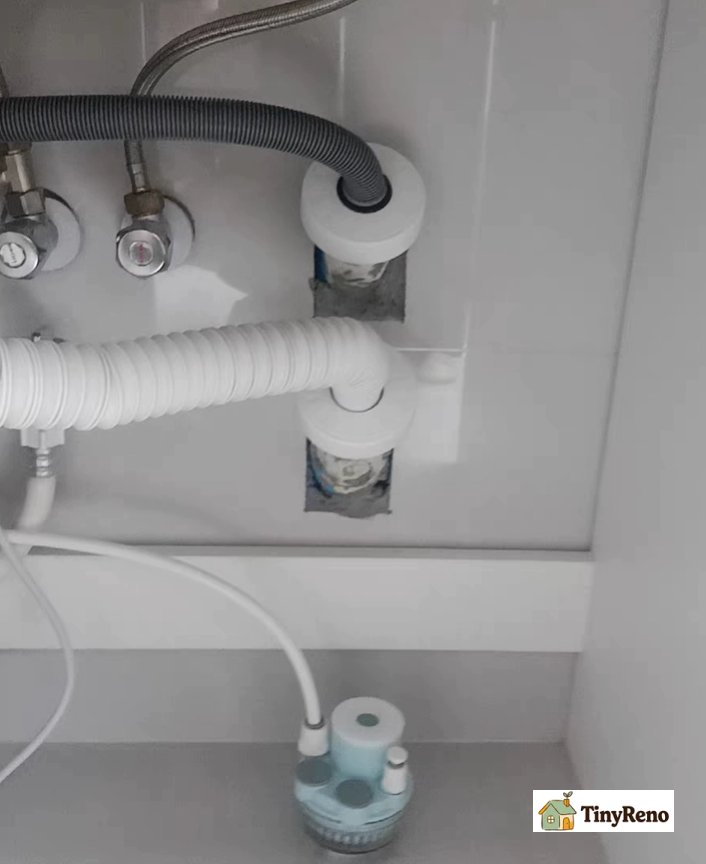
| Balcony washing-machine drain that attracts small flies | The stopper | Stops both the smell and the bugs |
| Kitchen sink with actual grease/food buildup causing the smell | The cleaner | You need to dissolve the source, not just block it |
| Rental move-out cleaning sprint | The cleaner | Short-term fresh smell for landlord walkthrough |
| Apartment with shared plumbing and weird smells from the floor drain | Either, but call the landlord first | Probably a building issue, not a unit issue |
| Small studio with no window in the kitchen | The stopper only | No ventilation = no chemical drain products |
Now the part the product listings don't tell you: who should skip both.
If your apartment already has a water-seal floor drain (the kind with a built-in trap that holds a little bit of water in the pipe at all times), the stopper won't help and the cleaner is probably overkill. That built-in trap is already doing the stopper's job. The smell from those drains is usually a sign the trap has dried out — pour a cup of water down it and the smell goes away for free. You don't need a product for that.
If your drain smell is strong, constant, and comes with gurgling sounds or slow drainage, you have a plumbing problem, not a product problem. The stopper will block the smell temporarily. The cleaner will mask it temporarily. Neither one will fix a blocked vent stack or a cracked pipe. Call your landlord or a plumber. Yes, even as a renter. Yes, even if you think you can fix it yourself. If the smell is coming from a drain that's actively broken, you need a person with tools, not a bottle or a $5 silicone insert.
And if the smell only shows up when the wind is blowing a certain direction — this is a real thing, I learned it from someone who deals with old building plumbing — neither product will fully solve it. That's a building ventilation issue. The smell is being pushed up through the drain by outside air pressure, and no consumer product is going to fix that. A plumber or your building maintenance team might be able to add a proper backflow preventer, but that's a fix, not a purchase.
I'm writing this down because I keep recommending one of these two products to friends, and the answer is always the same: it depends on the cause, not the product. The stopper is the one I trust now. The cleaner is still in the cabinet. I use it once a month, mostly out of habit, mostly because the bottle is half full. The stopper is the one doing the actual work — the cleaner just makes the kitchen smell like a fake forest for a few hours and then we're back where we started.


Discussion (0)
Sign in to join the discussion