

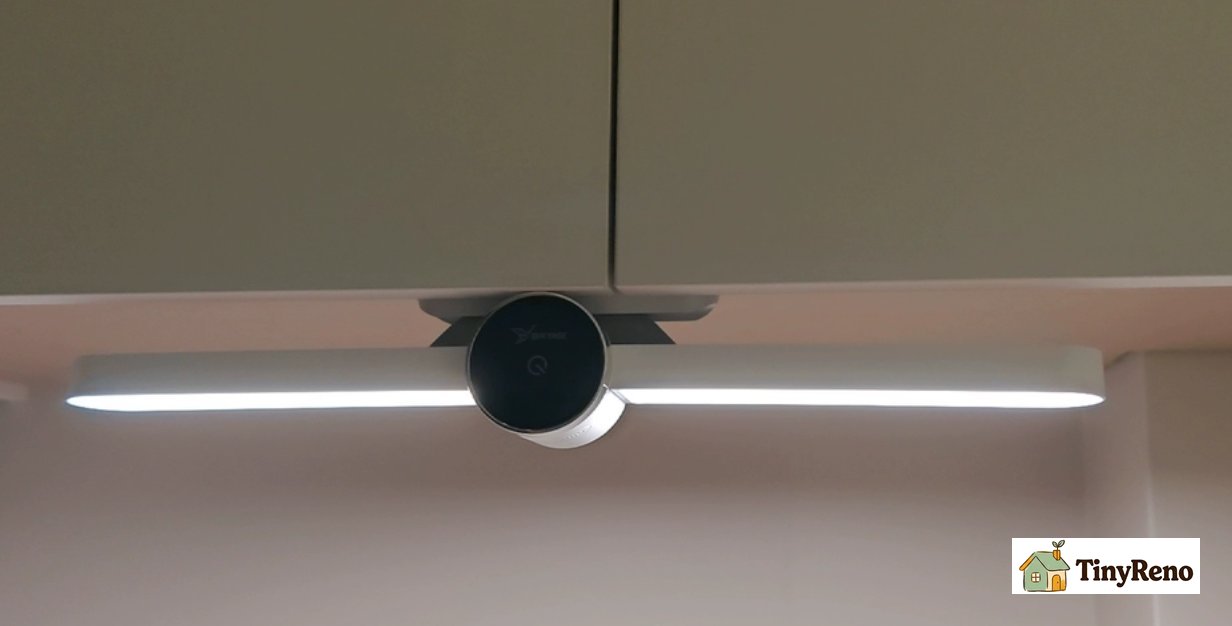
I moved into this rental last spring with exactly one lamp — a magnetic strip light I'd stuck above my desk so it wouldn't eat into the 60cm of usable surface. That worked for a while. Then the second bedroom lamp gave up, and the kitchen light started doing that dying-bulb flicker thing every landlord ignores, and I realized one lamp is never enough when you live in a small apartment with a desk, a bed, and a kitchen counter that all need different lighting at different hours.
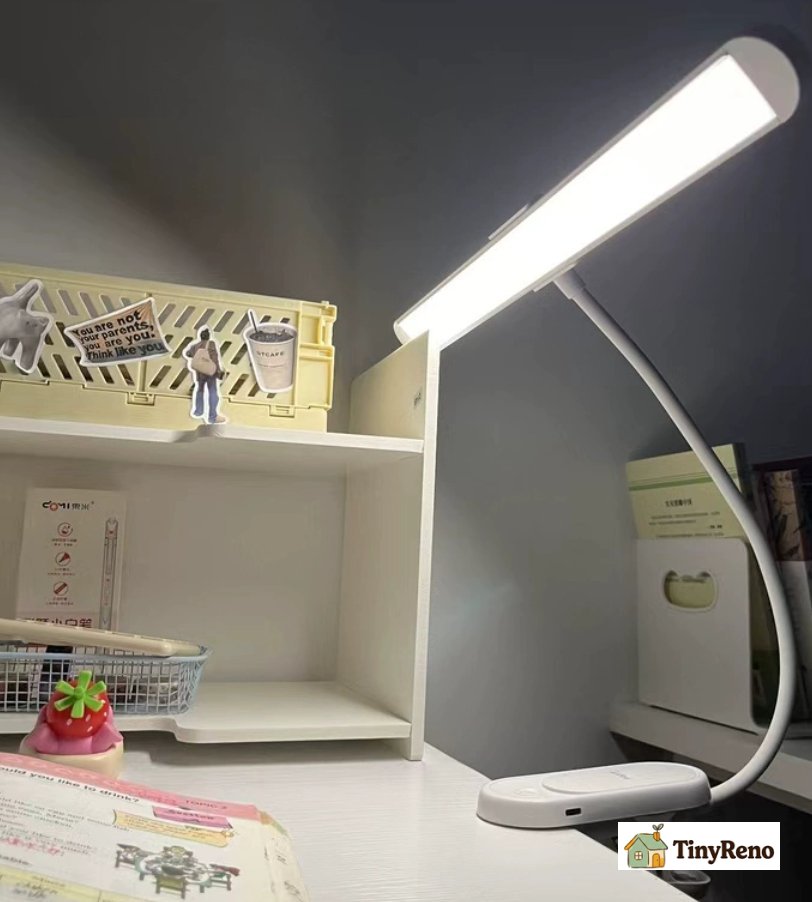
So I bought a second lamp. This time a clamp-mounted one, because my desk is too small for a base and I'd read somewhere (okay, in a forum thread I can't find anymore) that clamp lamps don't leave marks. Six months later both lamps are still on the desk. The magnetic one has migrated — it now lives on the wall above my bed. The clamp one took over the desk. They both still work. Neither one is perfect, but they cover different problems, and that's the whole point of having two.
This isn't a "best desk lamp" list. There are plenty of those. This is what it's actually like to live with one of each, and which one I'd tell a friend to buy depending on what kind of renter they are.
Why I ended up with two of them
I already wrote about the magnetic strip lamp when I first got it — that three-month review is here if you want the deep dive on that one specifically.
Here's the short version of how I got here: I bought the magnetic one first because I was tired of lamps eating my desk. I bought the clamp one six months later because I needed something that didn't move when I shoved my chair back. That's it. No dramatic reason. No gadget-collection obsession. Just one lamp had a job the other lamp couldn't do.
The mounting problem nobody warns you about
The first thing that surprised me wasn't the light — it was the residue.
I'd been moving my magnetic lamp's base around every few weeks trying different spots (over the desk, beside the bookshelf, on the wall above the bed). Each time I peeled the little adhesive disc off the wall, it took a faint sticky ring with it. Not catastrophic. Not the kind of damage that costs you a deposit. But the kind of damage that, when you stack four moves in six months, starts looking like a constellation of pale circles your landlord will absolutely notice.
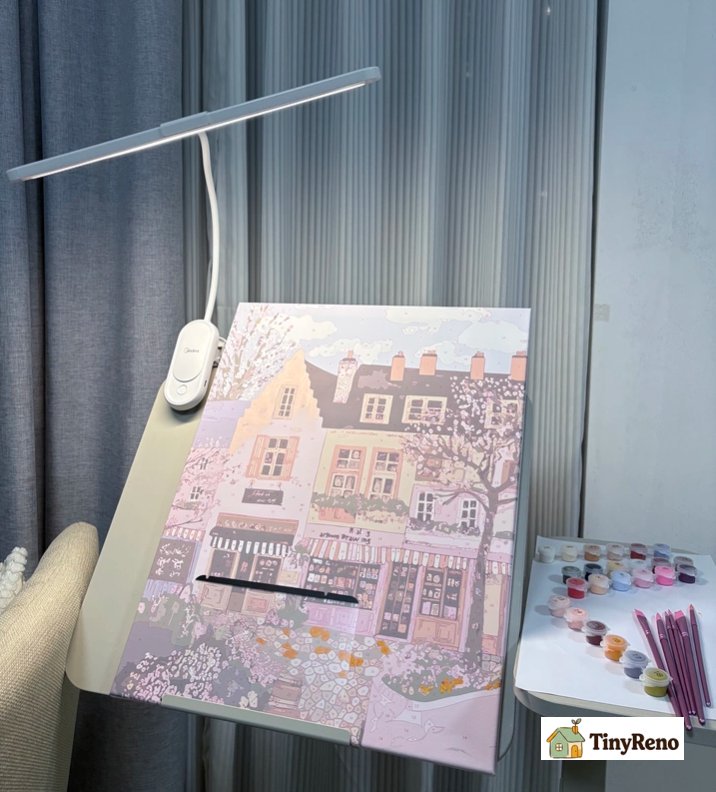
The clamp lamp has the opposite problem — and the opposite solution. There's no adhesive anything. There's a spring-loaded clamp that you pinch open with two fingers, slide over the edge of something thick enough to grip — my desk, a bookshelf, the back of a chair — and release. The spring does the work. When you move, you pinch it again, lift it off, drop it in a drawer. No residue. No marks. No screwdriver. No apology letter to write when your lease ends.
But here's the catch I didn't see coming: the clamp works because there's an edge. My apartment is mostly open plan, and there's a surprising number of places I wanted to put a lamp that just don't have a clampable edge. The top of a tall bookshelf. The inside of the closet. Above the kitchen sink. The magnetic lamp went up in all of those spots in about three seconds flat. The clamp lamp just sat in the closet for three months before I gave it a permanent home on the desk.
If you're renting and you change your mind about where things go every few weeks: magnetic wins for flexibility. If you're renting and you're terrified of wall damage more than you care about flexibility: clamp wins, no question.
Brightness: more settings doesn't always mean more light
Both of my lamps have three brightness levels. On paper, that's the same. In real life, it isn't.
The magnetic strip lamp throws light across the whole desk in one even wash. Because the light source is long and close to the wall, the spill covers about 60cm of usable desk without a hotspot. The brightest setting is genuinely bright — bright enough that I can read small print in a paperback without leaning in.
The clamp lamp focuses. The head is a smaller, rounder fixture that points where you point it. The brightest setting on mine is… fine. It's fine. But "fine" is not "I can read the footnote on page 200 of this paperback at 11pm." I've been caught reaching for my phone flashlight to read tiny text on a label more times than I'd like to admit. The clamp lamp covers about a 30cm circle of usable brightness on its top setting, which sounds small but is actually plenty for a book or a laptop screen — just not both at once.
Here's the thing nobody tells you about LED brightness: the spec sheet says "X lumens" and what that actually means in your apartment at 11pm is wildly different from what it means in a product photo studio. The clamp lamp on its highest setting, in a small dark bedroom, feels about as bright as the magnetic lamp on its middle setting. That gap shows up when you're doing detail work — sketching, sewing, reading tiny labels, doing a jigsaw. For everyday laptop work and casual reading, the clamp lamp is fine.
What I didn't expect: the clamp lamp started flickering about two months in. Not all the time — just on the highest setting, after it had been on for more than 20 minutes. Faint, fast, only visible if you wave your phone camera at it. The magnetic lamp never flickered once. If you're buying for a kid who's going to use this for homework every night, that flicker thing matters more than the brightness numbers on the box.
Battery life: the spec sheet is a fantasy
I'm just going to say this out loud: every rechargeable desk lamp I have ever owned has a battery that runs out faster than the box claims. The clamp lamp is no exception.
Out of the box, the clamp lamp promised me something like six or seven hours on the lowest setting. What I actually get is closer to three hours on the lowest setting if I'm not actively reading on it. On the highest setting, it dies in roughly an hour and a half. I stopped trusting the lowest setting around month three because I'd set it up for a long writing session thinking I had plenty of battery, and then it would just quietly turn itself off mid-sentence.
The magnetic lamp is worse on paper. Its battery is smaller. But — and this is the part I didn't expect — the magnetic lamp charges via a regular USB cable. Any USB cable. I have seven of them. The clamp lamp charges via a slightly different port, and the cable it shipped with is now somewhere in a drawer I can't find. So when the clamp lamp dies, I have to hunt for the right cable. When the magnetic lamp dies, I grab whatever's nearest.
The other thing nobody tells you about rechargeable lamps: the battery indicator is rarely accurate. Both of mine have a tiny LED that goes from green to red to "totally dead with no warning." I have learned to charge both lamps every Sunday afternoon whether they need it or not. Treat them less like appliances and more like phones.
The "national AA eye-safety" sticker is not actually on the lamp
Both of my lamps were advertised with eye-safety certifications. The clamp lamp's product page proudly listed "national AA-grade illumination" and a color rendering index above 90. The magnetic lamp's listing mentioned an "RG0" rating and no blue-light hazard. Both sounded great. Both had the right certification logos in the product photos.
On the actual lamps? Nothing.
I'm not talking about the box. I'm talking about the lamp body itself. No sticker. No laser-etched mark. No QR code you can scan to look up the certification number. The only number anywhere on the clamp lamp is a model number on a tiny label that peels off if you breathe on it wrong. I can find the magnetic lamp's safety mark on the back of the light strip — small, but legible.
Is this a deal-breaker? For me, no. Both lamps have behaved fine in daily use, my eyes haven't complained, and I trust the brands enough to keep using them. But if you're shopping specifically because your kid gets headaches from bad lighting, or you need to claim the certification for some reason (insurance, landlord dispute, picky optometrist), the absence of a physical mark on the lamp matters. Look for the certification number printed on the lamp itself, not just listed in the product photos.
Who should buy which (and who should skip both)
Here's how I split it after six months:
| Situation | Pick | Why |
|---|---|---|
| Bedside reading | Magnetic strip | Peels off when you change rooms, no edge required |
| Homework on a small desk | Clamp lamp | Focused beam, easy to angle at the page |
| Kitchen counter task light | Magnetic strip | Sticks to the side of the fridge or a cabinet, no counter space lost |
| Music stand / piano | Clamp lamp | The clamp doubles as a way to mount it where you need it |
| Closet lighting | Magnetic strip | No edge to clamp onto, and you don't want to drill into closet walls |
| Living-room ambient glow | Either | Both work; clamp if you have a side table, magnetic if you don't |
| Rental with strict "no damage" clause | Clamp lamp | Only the clamp leaves zero residue if you choose your surfaces carefully |
Now, the part the lists don't tell you: who should skip both.
If your apartment is so small that your bed is also your desk (a real situation for a lot of renters in studio apartments), neither lamp is right. A magnetic strip mounted above your head while you sleep is asking for the adhesive to fail at 3am. A clamp lamp gripping the edge of a bed frame will shake every time you move. Get a wall-mounted plug-in sconce that the landlord installed, or save up for a freestanding floor lamp that lives in one corner and does double duty.
If you're a heavy reader — three or more hours a night — both of these will leave you squinting by hour two. The focused beam of the clamp lamp is fine for the book itself, but the rest of the room goes dark and your eyes do that strain thing. The magnetic strip's even wash is gentler on your eyes, but the brightness ceiling is lower than what serious extended reading wants. If this is you, neither. Look at a floor lamp with an adjustable boom arm, or accept that you'll be reading with both a desk lamp and a room light on.
And if you share a wall with a roommate or neighbor, neither of these is silent. Both have a faint high-frequency transformer whine on certain brightness levels — the kind of sound you can't hear during the day but absolutely can hear at 1am when the apartment is otherwise dead quiet. Test this in a quiet room before you commit.
I'm writing this down because I keep getting asked by friends which lamp to buy, and the answer is always the same: it depends on the apartment, not on the lamp. The magnetic one fits my chaos. The clamp one fits my desk. Neither one is the "right" answer for anyone else.


Discussion (0)
Sign in to join the discussion