

I had been in the apartment for three weeks before I realized I was actively avoiding going into the bathroom. Not because anything was broken. Because the room felt depressing to be in, and I was spending money on coffees and books that felt better than being at home.
I did not renovate it. I cannot renovate it. The lease forbids it, and even without the lease, the work would have taken weeks and cost more than my rent. What I did instead was spend about fifty dollars on a small set of changes that turned the same bathroom into a place I actually looked forward to using. None of them were structural. All of them were reversible when I move out. The room looks completely different and the lease looks exactly the same.
What "spa bathroom" actually means
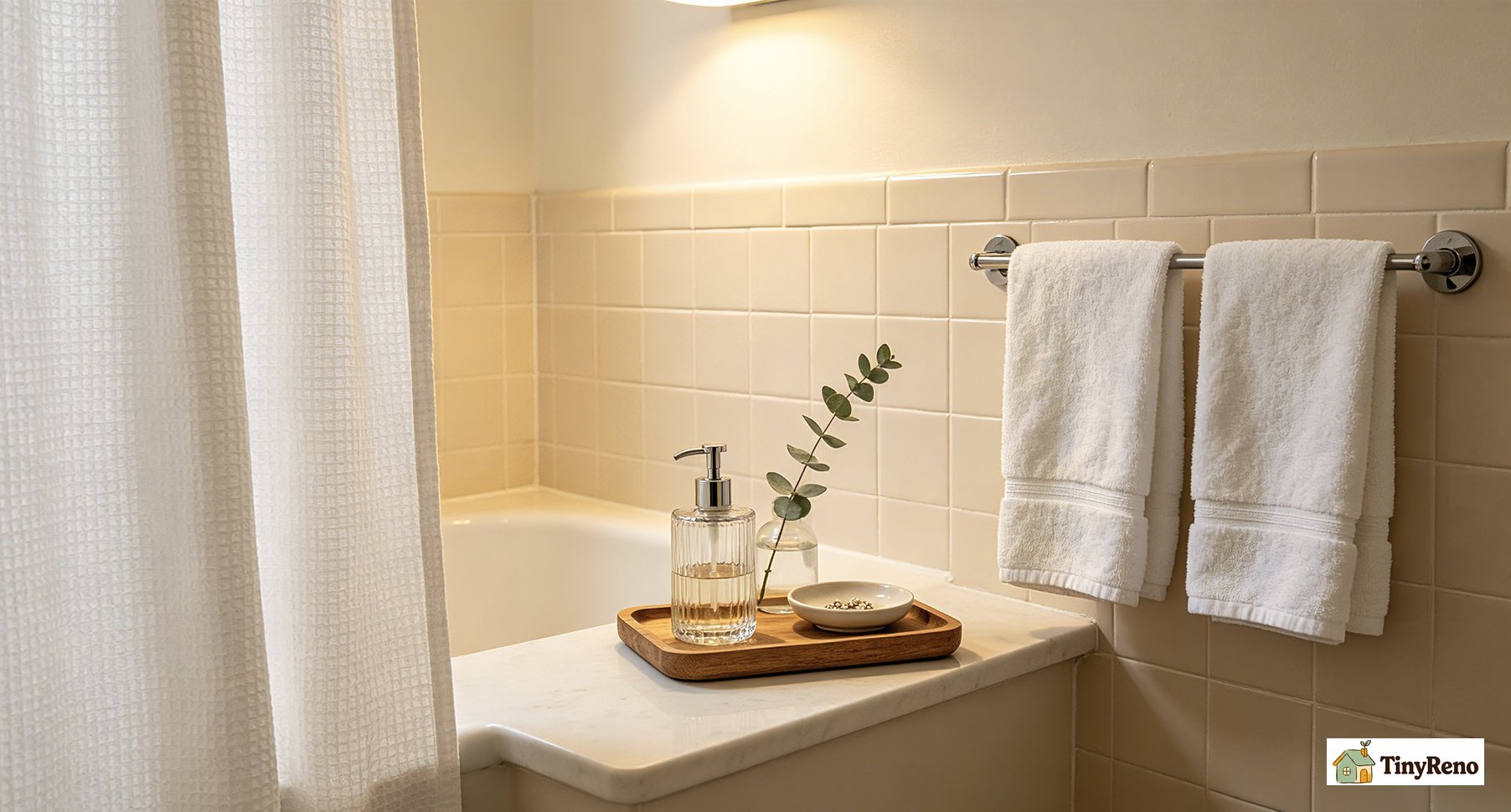
The phrase gets thrown around in design magazines and Pinterest boards, and the associations tend to be expensive: marble, oversized soaking tubs, custom glass enclosures, brass fixtures, recessed lighting. None of that is available to someone renting a basic apartment with a beige tile bathroom.
What actually makes a bathroom read as spa-like is much simpler, and almost nothing about it is structural. It is the absence of clutter. It is matching linens in a single color. It is warm light rather than cool light. It is one or two objects on the counter that look chosen rather than accumulated. It is the absence of plastic drugstore packaging. None of these require a contractor or a deposit at risk.
The list below is what I actually did. Six changes, fifty dollars total, ordered by how much each one moved the feel of the room.
The change that mattered most: lighting
If I had to pick one change and discard the other five, this is the one I would keep. The bare bulb the apartment shipped with was a daylight 5000K bulb, the kind that makes every color in the room look slightly blue and slightly washed out. Switching it for a warm 2700K bulb with a CRI of 90 or above cost me four dollars at the hardware store and took two minutes.
CRI is color rendering index. Higher means colors look closer to how they look in natural daylight. Most apartment bulbs have a CRI in the 80s, which is fine for hallways and kitchens but unforgiving on skin and on warm materials. The 2700K temperature with high CRI makes skin look healthier, towels look softer, and the cream tile look more like the color it was probably meant to be rather than the color it had become under bad lighting.
I also added a small rechargeable puck light under the sink cabinet. It cost about twelve dollars and runs for a week on a single charge. It throws soft light upward onto the counter, which makes the bathroom look like it has more than one light source without me touching the wiring. Landlords do not care about a magnetic puck stuck under a cabinet. Most leases do not even mention it.
Together, the two changes cost sixteen dollars and did more for the bathroom than every other item on this list combined.
Change two and three: matching white towels
The towels I moved in with were three different colors, none of them matching, all of them a few years old. They hung from the three-prong bar in a way that made the bathroom look like a dorm room.
I bought two matching white bath towels, two matching white hand towels, and four matching white washcloths. The total came to about eighteen dollars from a basic home goods store. The brand does not matter. The matching matters. White towels in the same size and same texture look like hotel or spa linen because they read as a set, and white reflects whatever warm light is in the room rather than absorbing it.
White also has the practical advantage of being bleach-friendly. After a few months they start to look a little gray, especially the washcloths. A soak in oxygen bleach once a month brings them back. I have been using the same set for almost a year and they still look new.
The third change is one most people skip: rolled washcloths in a small basket on the counter, or stacked on a tray. Rolled looks intentional in a way that folded-and-stacked does not, because it is the way towels are presented in spa settings and nicer hotels. The folding takes about thirty seconds per towel. It is the kind of detail that nobody notices specifically but everybody registers as "different."
Change four: one wood tray with three objects
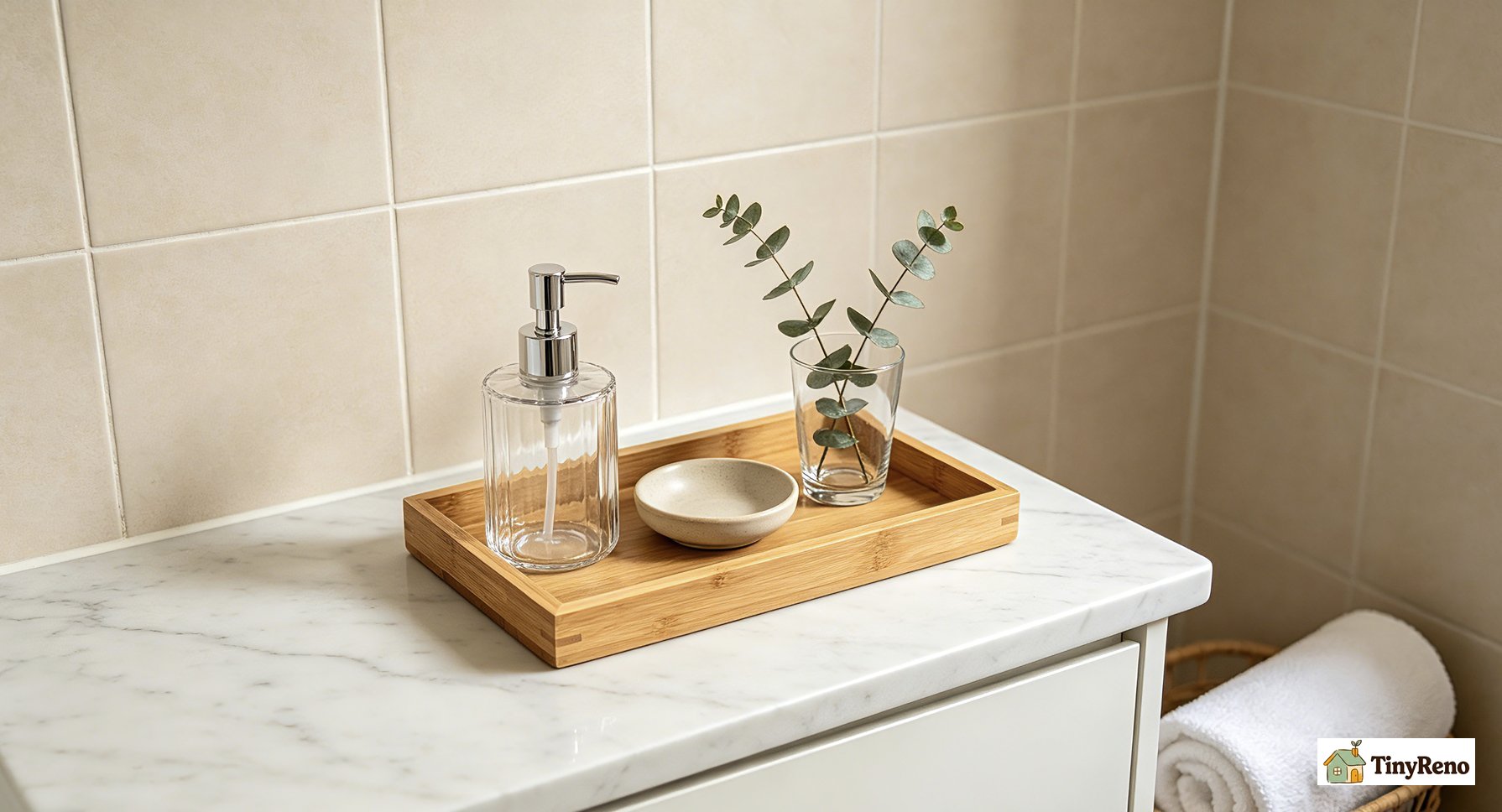
Before this, my counter had a drugstore shampoo bottle, a bar of soap on the shower ledge, a tube of toothpaste, a toothbrush in a plastic cup, a bottle of contact solution, a hairbrush, and a tube of hand cream. The combined visual effect was busy and cheap.
I moved everything except one item into the cabinet under the sink. The exception was a single glass soap dispenser, which I bought for seven dollars and filled with hand soap from a regular bottle. The glass dispenser looks like an object that was chosen, where the plastic drugstore bottle looked like an object that had been purchased in a hurry.
The tray itself is bamboo, twelve inches long, eight inches deep, purchased for about fourteen dollars. On it sit the soap dispenser, a small ceramic dish that holds my rings and earrings, and a small eucalyptus sprig in a tiny glass that I change out once a week. That is three objects. The total visual weight on the counter went from seven plastic items to one piece of wood with three things on it.
Counter space is a fixed thing. The feeling of the counter depends on what is on it. Less is more, and wood beats plastic almost every time.
Change five: the shower curtain
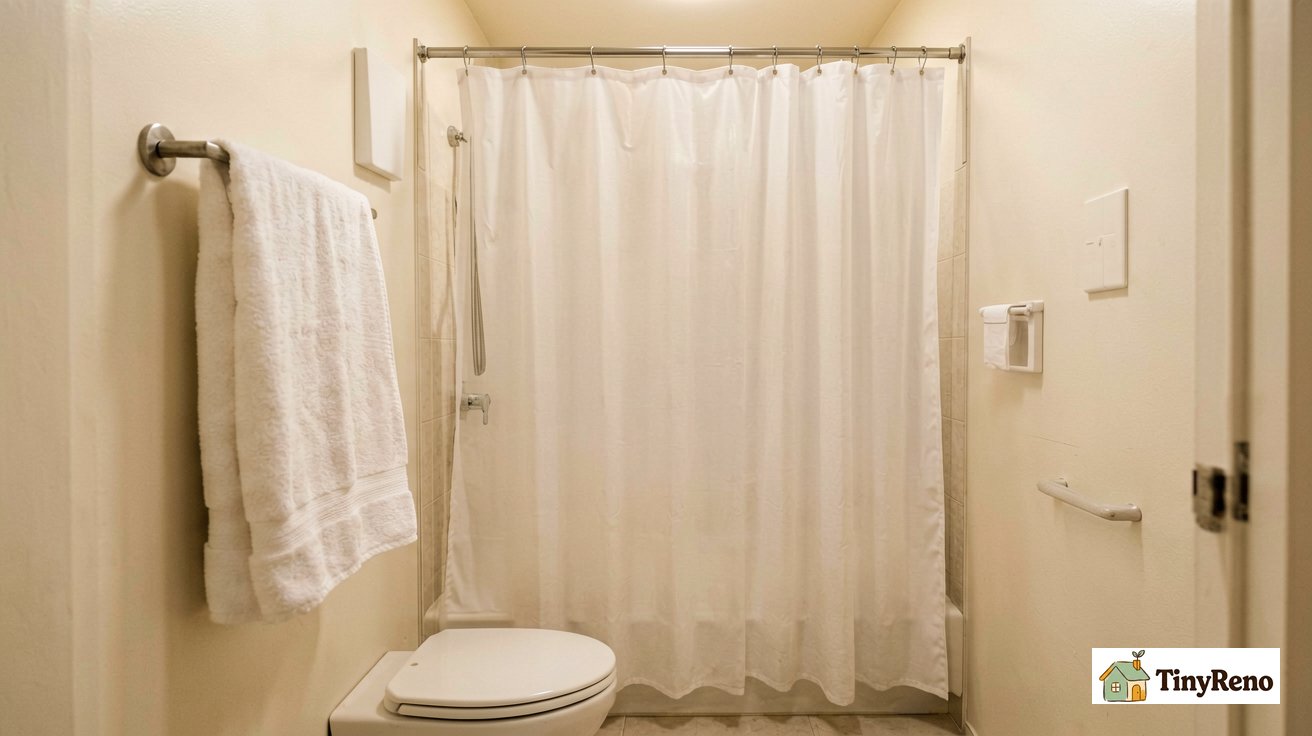
The clear plastic curtain that came with the apartment had yellowed at the bottom and had visible mold spots I could not get out no matter how many times I sprayed it. Replacing it with a white fabric curtain was the single most dramatic visual change in the bathroom, because the shower curtain covers the largest single area of the wall.
I bought a basic white fabric curtain with a waffle weave for about fourteen dollars. Fabric curtains do not yellow the way plastic does, and they drape rather than stick, which immediately reads as softer and more expensive. I also bought a white curtain rod to replace the basic tension rod the apartment had, because the new rod matched the curtain and the old rod had a slight bow in it that nobody else would notice but I would.
The rod cost another six dollars. Total for curtain plus rod: twenty dollars, which is the most I spent on a single change. It also did the most visible work.
Change six: scent, but very lightly
Scent is the change most people get wrong. The instinct is to buy a strong candle or a plugin and let it fill the bathroom with fragrance. The result usually smells like a perfume counter, not a spa.
Spa bathrooms smell almost like nothing. The fragrance, when it is there, is faint and from natural sources: a sprig of eucalyptus in water, a candle made from actual essential oils rather than synthetic perfume, or just clean towels and clean water.
I use a small soy candle that costs about six dollars and burns for maybe fifteen hours. I light it only when I am taking a bath, which is twice a week, and the room smells like it for about an hour after. The rest of the time the bathroom smells like clean water and not much else. That is the point.
The total spend for scent, including the candle and the eucalyptus I swap weekly, runs about eight dollars a month. The eucalyptus is from the grocery store produce section, where it costs a few dollars for a bunch that lasts ten days in a glass of water on the counter.
What this actually cost
The whole list, itemized.
- Warm high-CRI light bulb: four dollars
- Rechargeable puck light for under-cabinet: twelve dollars
- Two white bath towels, two white hand towels, four white washcloths: eighteen dollars
- Glass soap dispenser: seven dollars
- Bamboo tray, twelve by eight inches: fourteen dollars
- White fabric shower curtain: fourteen dollars
- White shower rod: six dollars
- Small soy candle: six dollars (one-time purchase, lasts months)
- Eucalyptus, ceramic ring dish, small glass for stems: around ten dollars total, all reusable
That comes to about eighty-one dollars at full retail, but the eucalyptus and the dish are reusable and the candle and bulb last for months. The one-time spend on the actual transformation was closer to fifty dollars, which is the budget I started with.
None of the items were expensive individually. The total effect came from choosing each one to coordinate with the others, rather than buying whatever was on the shelf nearest the bathroom aisle.
What I bought and then stopped using
A few things I tried that did not earn their place.
A small bluetooth speaker for music. The sound quality at low volume in a small bathroom is not different enough from a phone speaker to justify the charging and the clutter. The phone on the counter plays the same music and charges there anyway.
A wall-mounted towel rack. My lease forbids wall mounting in the bathroom, and the over-the-door version I tried made the door close awkwardly. The three-prong bar the apartment came with, which I had originally wanted to replace, ended up being fine once the towels matched.
Two different "spa-like" reed diffusers. They smelled like fake lavender for about three days and then like nothing. The eucalyptus-on-the-counter trick did the same job with a more honest scent and no packaging waste.
Total wasted spend: about thirty-five dollars. Not catastrophic, but avoidable if I had started with a list rather than impulse-buying over a few weekends.
The honest summary
Spa feel in a rental bathroom comes from three things: lighting, matching linens, and removing visual clutter. The expensive decor items in design photos are doing less work than those three things. A fifty-dollar budget focused on the three fundamentals changes a basic bathroom more than a five-hundred-dollar budget spread across random decor.
The key insight I had not expected when I started was that the work was mostly subtractive. The bathroom did not get better because I added things to it. It got better because I removed the plastic, removed the labels, removed the visual noise, and then added a small number of items that all coordinated with each other.
Three months in, the room still looks the way it did after the first week. The eucalyptus changes weekly. The candle runs down and gets replaced. The towels get bleached back to white every few weeks. The tray stays where it is, the dispenser stays full, and the puck light comes on every evening when I walk in. None of it took more than an hour total to set up, and none of it required touching the apartment itself.
Discussion (0)
Sign in to join the discussion