

The wall above my desk stayed empty for the first three months I lived here. Not because I liked it that way — it was a blank strip of white that made the room feel unfinished — but because I could not figure out what to put there without committing to holes. A heavy frame needed a nail. A canvas needed a hook. A poster needed a frame, which needed a nail. Everything circled back to drilling, and I was tired of patching holes.
A friend suggested a fabric wall hanging. I had seen them on social media — woven textures, nature prints, boho-style tapestries — but I assumed they needed a rod and brackets, which meant more holes. Then I looked closer. A fabric tapestry weighs almost nothing. A single adhesive hook can hold it. Some do not even need that — you can clip them onto a tension rod that sits between the wall and the ceiling, or use magnet strips that leave zero trace.
I ordered one to try. Here is what I found.
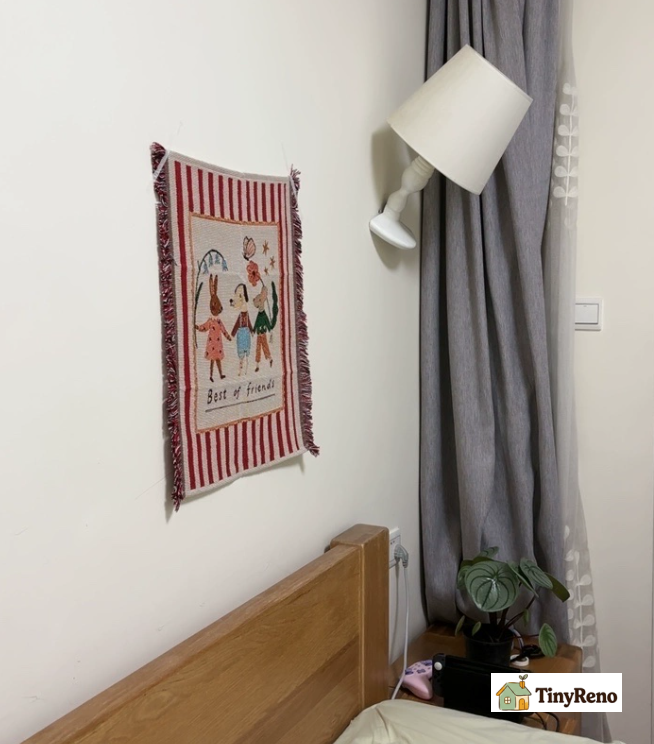
Three ways to hang it without a single nail
Adhesive hooks. The easiest option. The fabric is light — mine weighs maybe half a pound. Two clear hooks rated for one pound each, spaced the width of the tapestry apart, and it stays up fine. I used the hooks that came with the tapestry (most include small clear hooks and clips), but any adhesive hook works. The trick is to hang it slightly loose — the fabric should drape, not stretch.
Clip-on curtain rings + tension rod. If you want a cleaner look, use a small tension rod (the kind that goes inside a window frame) and curtain clips. The rod sits between two walls or inside a window recess — no adhesive, no holes, no anything. The tapestry clips onto the rod. Looks intentional, takes two minutes to set up, and leaves when you leave.
Magnetic strips. If your wall has a metal surface (some kitchen backsplashes, metal closet doors), magnetic strips are the cleanest option. Two thin magnets hold the fabric flat against the wall with no visible hardware. This works especially well for small tapestries in kitchens or entryways.
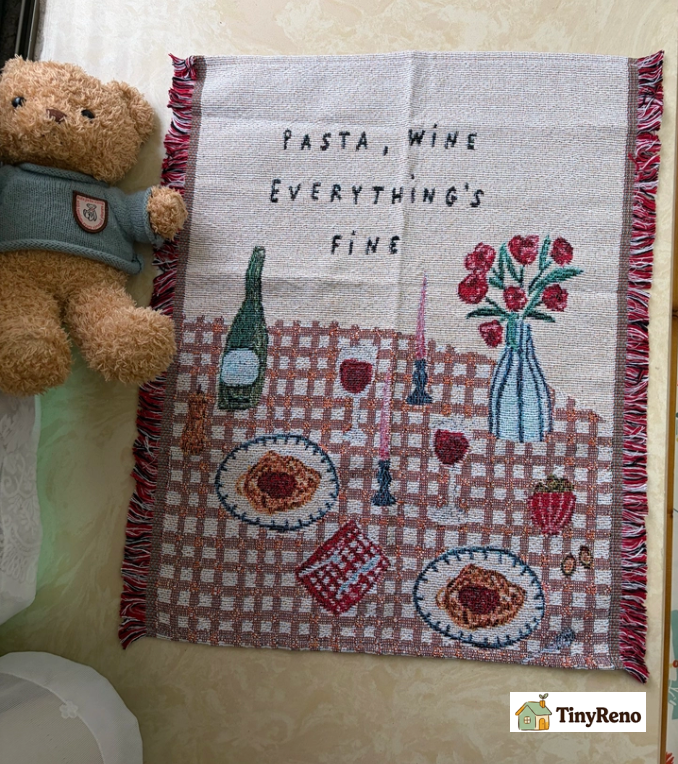
What the fabric actually feels like
The one I got is a polyester-cotton blend — soft to the touch, not scratchy, with a slight woven texture that gives it a handmade look up close. It is thinner than I expected (about the weight of a lightweight tablecloth) but the print is sharp and the colors are warm. Not all are created equal though — a few people I talked to said theirs came stiffer than expected, with less drape, and needed ironing before they looked good on the wall.
The biggest surprise was how much it changed the feel of the room. A 60 cm by 80 cm piece of fabric turned a bare white wall into a focal point. People notice it when they walk in. It softens the sound in the room a little, too — fabric on a hard wall absorbs more echo than you would expect.
Small things I did not think about beforehand
It collects dust. Not badly, but fabric is fabric, and a vertical piece of it attracts the same dust a curtain would. Every few weeks I take it down, shake it outside, and put it back up. Takes about thirty seconds.
Color accuracy depends on the seller. Most of the tapestries I looked at looked good on screen but a handful of people mentioned the actual colors were darker or less vibrant than the listing photos. The one I got was close enough — slightly warmer in tone, but in a way that actually looked better on the wall than on my phone screen.
The edges can fray if the stitching is not tight. Mine was fine, but I have seen reviews where people mentioned loose threads along the edges after a few months. A quick run along the edge with a lighter or a dab of clear nail polish stops it from spreading.
And the multi-use factor is real. When I rearranged my living room, the tapestry moved from the wall to the back of the couch. Worked just as well there. A few people mentioned using theirs as a table cover, a bed runner, or even a picnic blanket in a pinch.
Bottom line
If you have a bare wall and do not want to drill into it, a fabric wall hanging is one of the easiest fixes. Light enough for adhesive hooks, cheap enough to replace if you get bored, and surprisingly effective at making a room feel finished. I spent about four minutes installing mine and it has been up for months without issue. When I move, it will come down in about five seconds and the wall will look exactly like it did before.
Discussion (0)
Sign in to join the discussion