

Okay, real talk — if you're anything like me, you've got that one drawer (or cabinet, no judgment) overflowing with those flimsy plastic produce bags. You know, the ones onions and peppers come in, or those thin delivery bags that multiply in your kitchen. We're all supposed to be bringing reusable totes now, but somehow these things keep accumulating. I used to feel guilty tossing them, but I also didn't want to hoard them forever.
So I started experimenting. And honestly? Using them to cut through kitchen grease has been a total game-changer. No fancy sprays, no $6 disposable wipes, no greasy rags to deal with later. Just the bags you were probably going to throw away anyway.
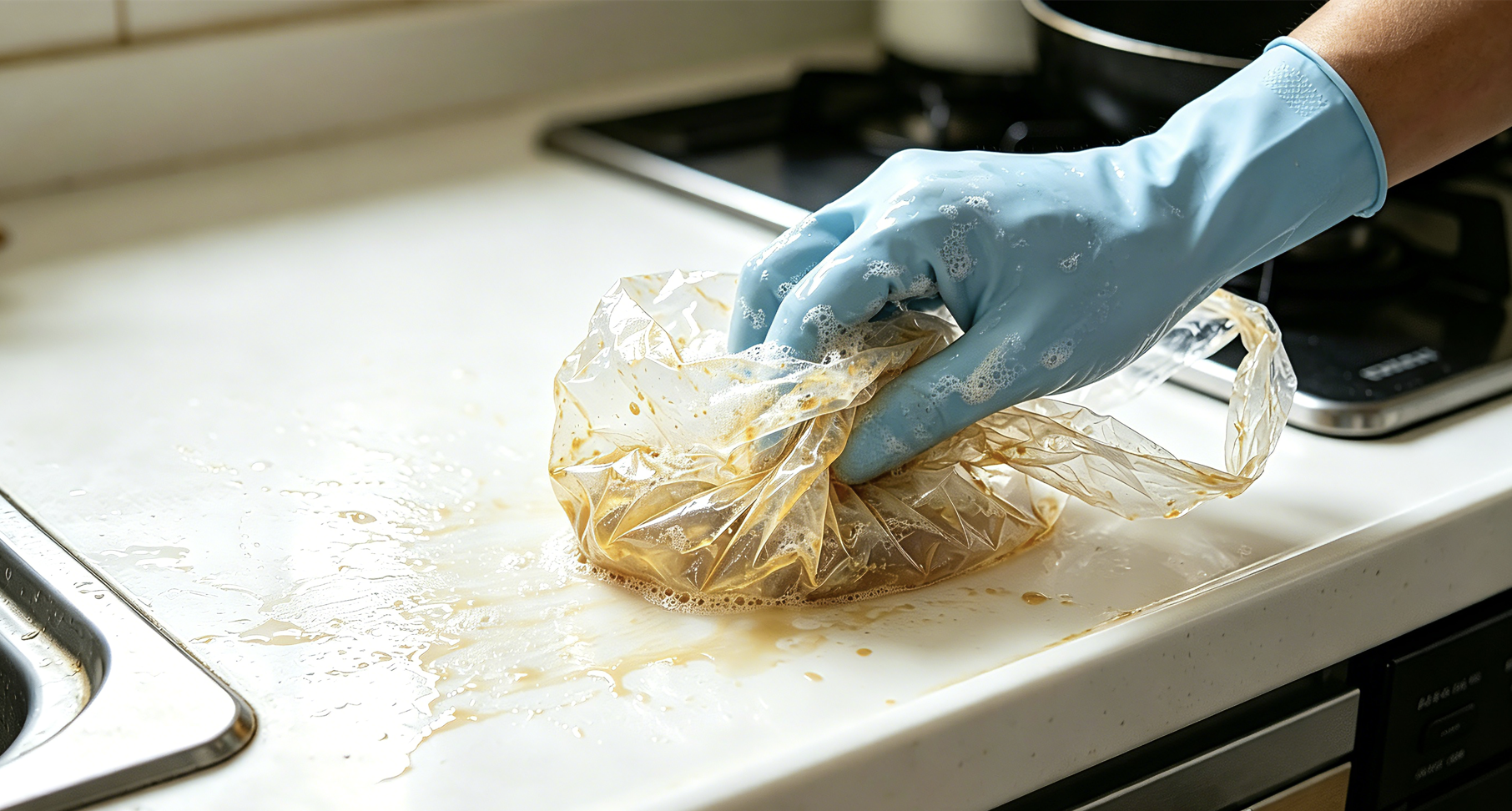
Here's why it actually works (and why I'm slightly mad I didn't try this sooner):
Plastic doesn't soak up grease the way paper towels or cloth rags do. The oil just kind of smears onto the bag's surface instead of sinking in. Plus, when you crumple the bag, all those little wrinkles create just enough texture to scrub without scratching your stainless steel or glass top. When you're done, you just toss the bag. That's it. No laundry, no stained towels.
How I do it (depending on how bad the mess is):
For everyday splatters (stovetop, counters):
Just grab a clean bag — I usually use ones that held produce or bread, nothing that had raw meat or anything sketchy. Crumple it into a loose ball (don't pack it too tight; those creases are doing the work). Wipe your greasy spots with slow, straight swipes. You'll literally see the grease transfer onto the plastic. Once it's covered, chuck it in your plastic film recycling bin at the grocery store. Done.
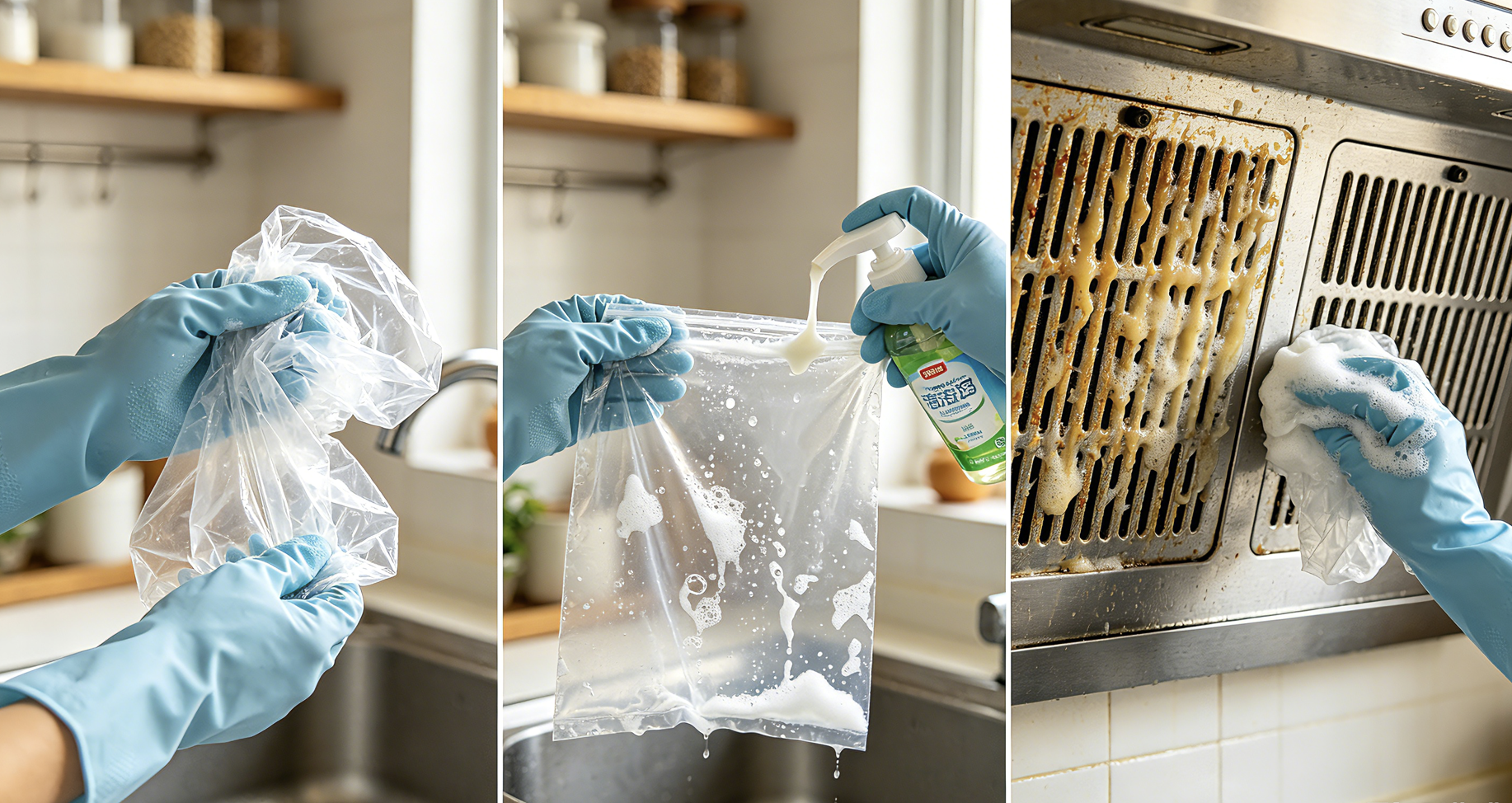
For the nasty stuff (range hood, burnt pans, caked-on hood filters):
-
Put a tiny drop of dish soap on the bag and rub it around to make a little foam.
-
Lay the foamy bag right over the gross spot and walk away for about 10 minutes. Maybe longer if it's really baked on — I've let it sit while I folded laundry and it was fine.
-
Scrub gently with the crinkly side. The grime basically slides off. It's weirdly satisfying.
-
Hit it with a damp cloth once to rinse off any soap left behind.
If something is seriously burnt-on (like my pan bottoms that I definitely forgot about for a few days), I'll sprinkle a tiny bit of baking soda on the bag before scrubbing. It adds a little grit without wrecking the finish.
Why I'm never going back:
-
Costs literally nothing. You're using trash to clean trash.
-
No more greasy rags piling up by the washing machine, staring at you.
-
Gentle on everything I've tried it on — glass cooktop, tile backsplash, stainless sink. Zero scratches so far.
-
Less plastic in the landfill (I take the used bags to the film recycling drop-off at my supermarket).
-
Haven't bought a bottle of degreaser in months.
A few quick warnings (learned the hard way or just common sense):
-
Don't leave a bag sitting on a hot burner. It'll melt, and then you've got a whole new problem. Ask me how I know. 🙃
-
Only reuse bags that held dry stuff — produce, bread, packaging. If it touched raw chicken or fish, just toss it. Not worth the bacteria risk.
-
Don't go out and buybags for this! The whole point is using what you already have.
-
Super thin bags tear easily and leave little plastic bits everywhere, so use something with a little heft to it.
I've been doing this for weeks now and it's just... stupidly effective. My partner walked in last night while I was scrubbing the range hood with a celery bag and gave me the weirdest look. Worth it. The hood looks brand new and I didn't spend a dime.
If you've got a stash of these bags lying around, give it a shot. Worst case, you waste 10 minutes and a bag you were going to throw away anyway.
Discussion (0)
Sign in to join the discussion