

TL;DR
Water pressure dropped out of the blue in my place last spring. Before you call a plumber and drop a couple hundred bucks, run through these five checks in order. Took me about 12 minutes total, and I didn't need any tools for the first three steps. The fix ended up being a clogged aerator — cost me nothing and maybe 4 minutes with a paper towel.
Why I'm writing this
Three weeks into living at my current apartment, I noticed the bathroom sink was taking forever to fill up. Then the kitchen faucet started doing the same thing a few days later. Not a complete loss of water — just this sad, annoyed trickle that made washing dishes feel like a test of patience. I spent an afternoon reading forum threads, asked around at work, and was this close to booking a plumber. Then a coworker told me about the time he paid someone $150 to show up and tighten a single valve. That story stuck with me.
So I decided to try a few things on my own first. Turns out I didn't need any special skills or expensive tools. Here's exactly what I did, in the order I did them.
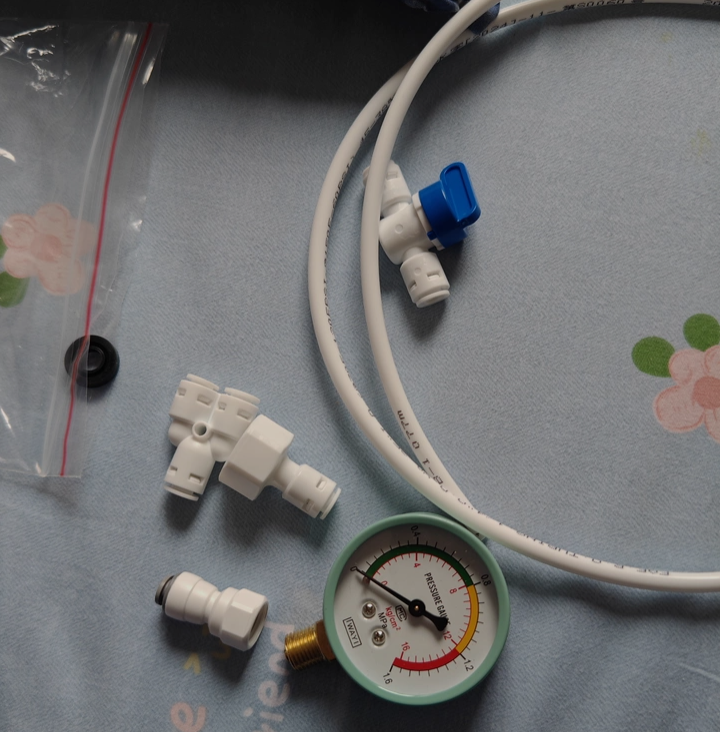
Tools & Materials
- Adjustable wrench (about $12–15, but you might already have one)
- Aerator key or pliers (most faucets come with a little plastic key tucked somewhere)
- Water pressure test gauge (around $10–13 at any hardware store — dead simple to use)
- Old towel or small bucket (for drips)
- White vinegar and a small brush (for cleaning the aerator)
The 5 Things I Checked (In Order)
1. I knocked on my neighbor's door
This sounds way too obvious, but it's the fastest way to narrow things down. I texted the person downstairs and asked if their water was acting strange too. If the whole building has low pressure, it's probably a street-level issue or something the landlord needs to handle — not worth grabbing your toolbox over. In my case, my neighbor said hers was fine, which meant the problem was somewhere inside my unit.
2. I unscrewed the aerator
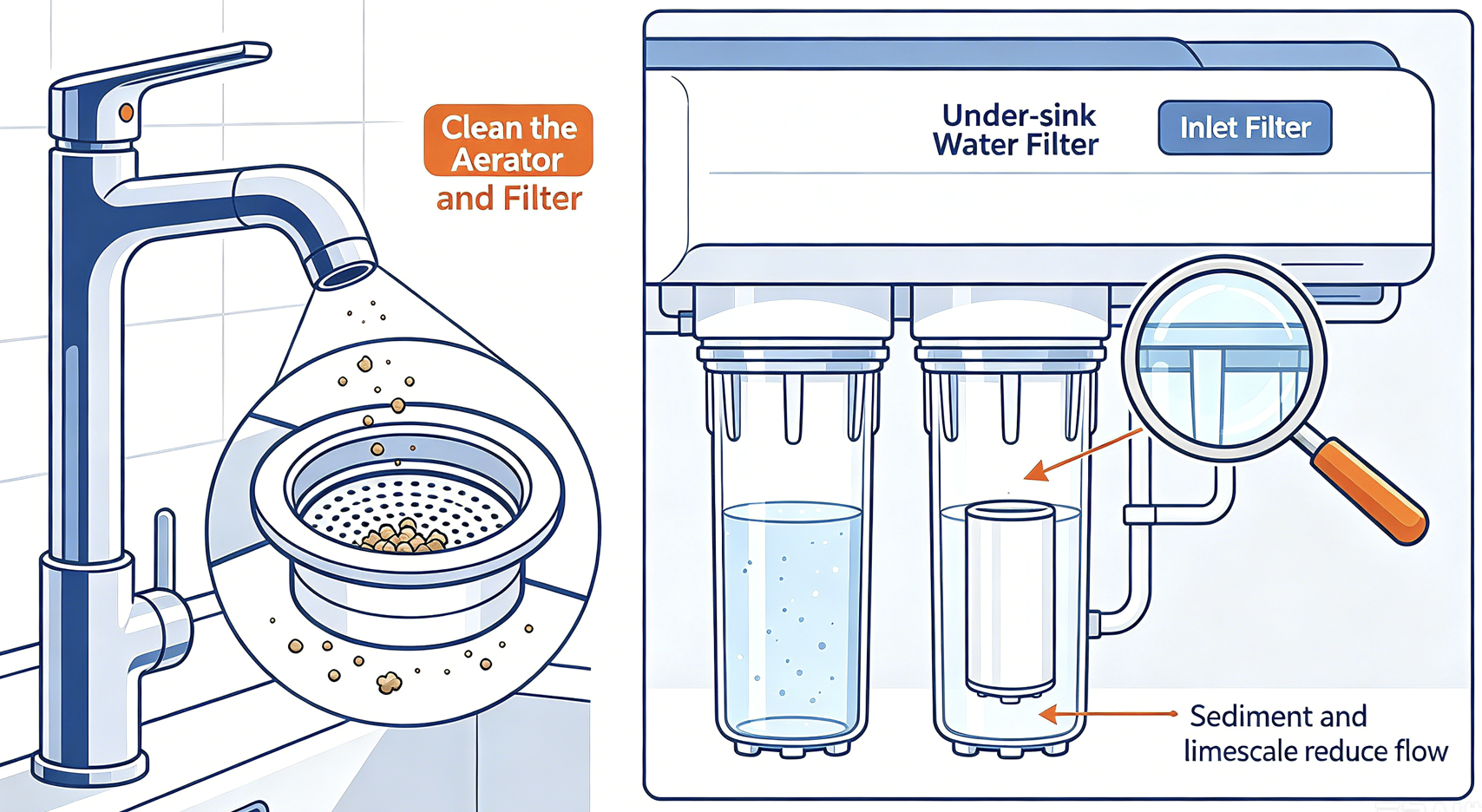
This turned out to be the culprit. The aerator is that little mesh screen at the tip of your faucet — it breaks up the water stream but also catches sediment. I unscrewed mine (most twist off by hand, some need that little plastic key that came with the faucet), and sure enough, it was packed with what looked like tiny bits of sand and calcified mineral deposits. I soaked it in white vinegar for around 8 minutes, scrubbed gently with an old toothbrush, rinsed it, and screwed it back on. The pressure came back immediately. Took maybe 12 minutes total and cost exactly nothing. If you've already browsed other Quick Fixes around the apartment, this is the one that takes the least effort.
3. I checked the shut-off valves under both sinks
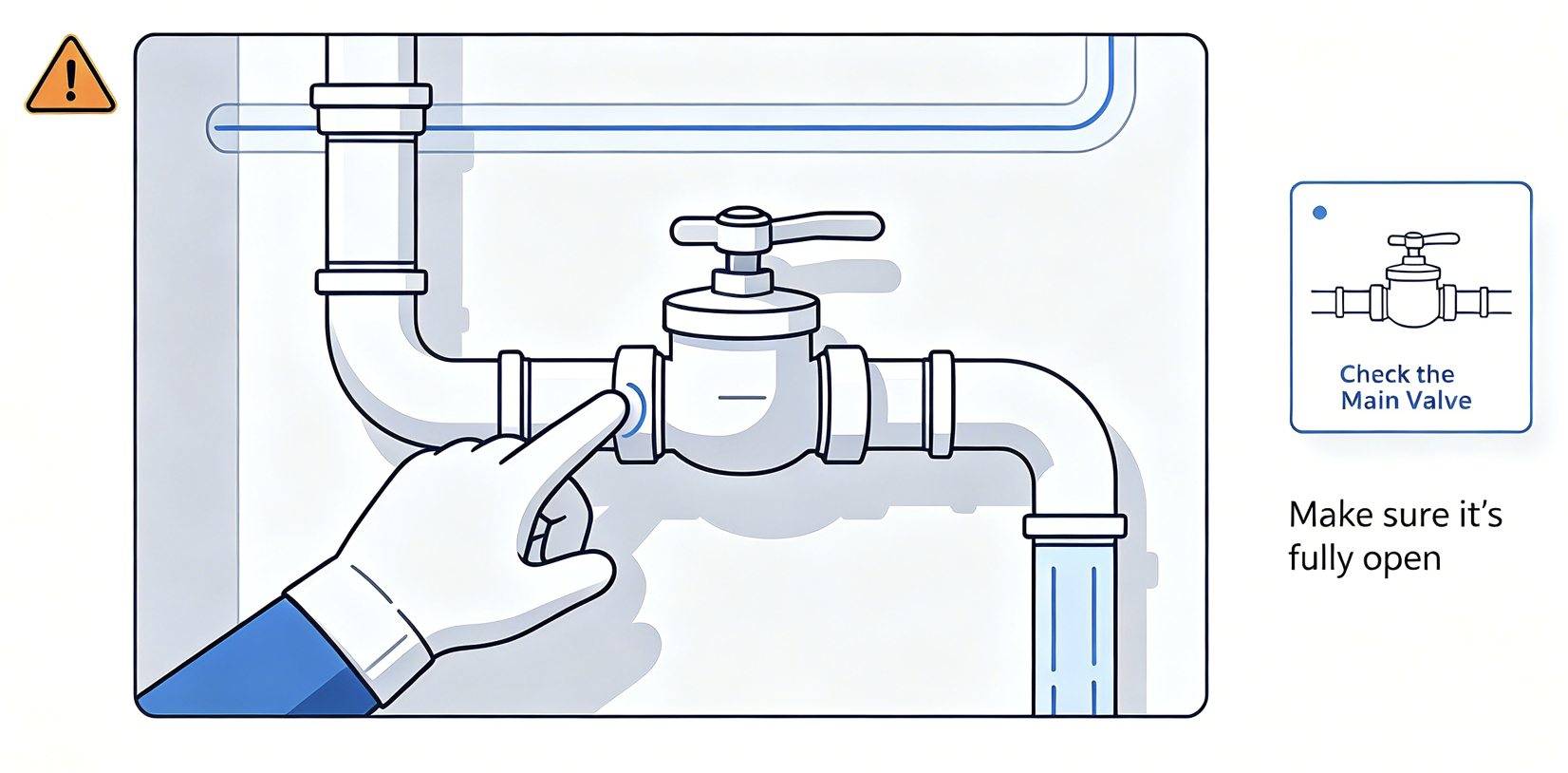
If the aerator was clean and the pressure was still off, the next spot I would have looked is under the sink. Those little quarter-turn valves that control water flow to your faucet — sometimes they get bumped when you're shoving cleaning supplies around, or a previous tenant turned them down for some reason and never mentioned it. They should be fully open: turned counterclockwise until they stop. Mine were fine, but I've heard plenty of stories where this was the whole problem — kind of like when a drain seems clogged but just needs a quick clean rather than heavy work.
4. I looked at the water heater
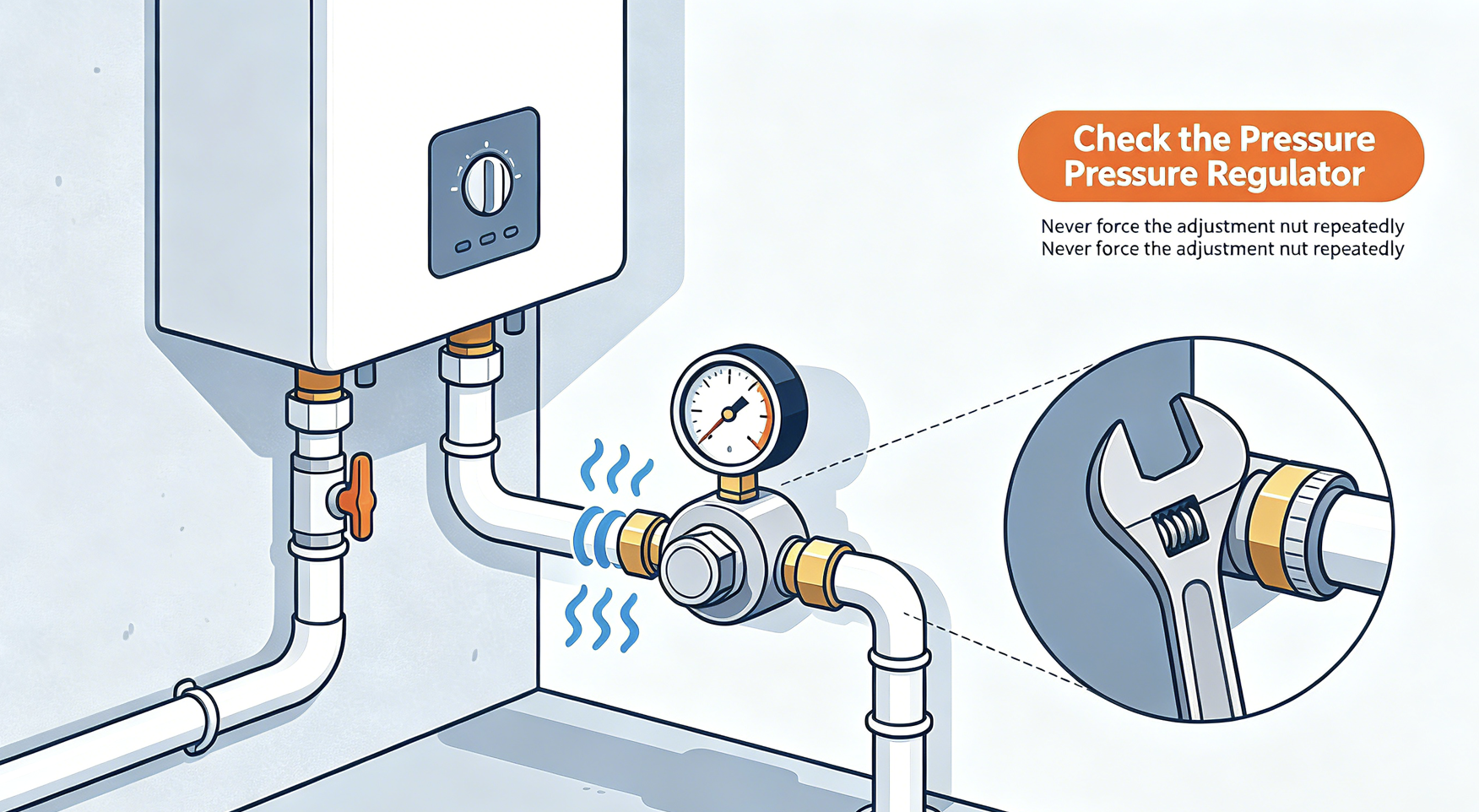
This only applies if your hot water pressure is lower than cold, or if only one side of the system is acting up. Sediment builds up at the bottom of water heaters over time, and that can choke the flow on the hot side. If that's what's happening, flushing the tank might sort it out — but that's a bigger project (and worth a separate article). In my case, both hot and cold were equally weak, so I figured the water heater wasn't the issue.
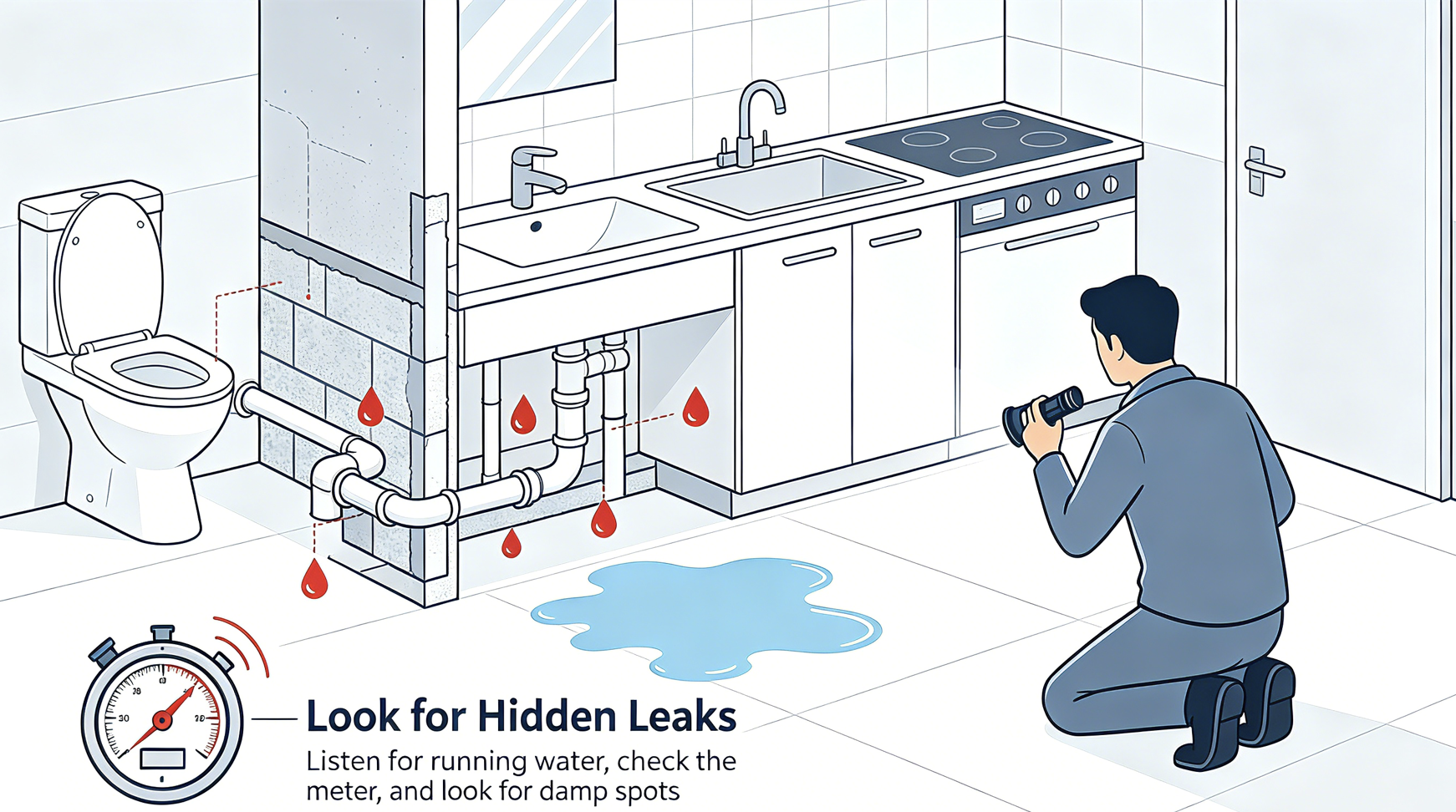
5. I checked for hidden leaks
This was the one I was dreading, but it's worth ruling out. If you have got a leak somewhere behind a wall or under the floor, the pressure can drop because water is escaping before it reaches your faucet. Signs to look for: unexplained damp spots on walls or ceilings, a musty smell in certain rooms, or your water bill suddenly going up without explanation. I checked a few spots around the apartment — under the sink cabinets, around the toilet base, near the water heater — and everything was bone dry. That ruled out the worst case, and I knew it was down to something simpler — like that time I fixed a running toilet and felt ridiculous it was so easy.
Frequently Asked Questions
What would cause water pressure to drop all of a sudden?
Most of the time it's one of three things: a clogged aerator (the most common by far), a partially closed shut-off valve that got bumped, or sediment buildup in the water heater if only the hot water is affected. Less common causes include a leak somewhere in the pipes or a problem with the municipal supply — which is why you ask your neighbors first.
How do I fix low water pressure in just one faucet?
If only one faucet is acting up while the rest of the place has normal pressure, the aerator is almost certainly the issue. Unscrew it, take it apart, clean the mesh screen with vinegar, and put it back. I would guess this solves about 7 out of 10 single-faucet pressure problems. If that does not do it, check the shut-off valve under that specific sink — it might be turned down partway.
How can I tell if my low water pressure is from a leak?
The big clues are: a damp spot on the wall or ceiling that you cannot explain, a musty smell in one area of the apartment, or a water bill that is noticeably higher than normal. You can also turn off all the faucets and appliances that use water, then check your water meter — if it is still ticking over, something is running somewhere it should not be.
Is low water pressure in an apartment my problem or the landlord's?
If it is only in your unit and it is something simple like a clogged aerator or a bumped shut-off valve, that is usually a tenant-level fix. If the whole building is affected, or if you suspect a pipe leak inside the walls, that is landlord territory. I would say try the simple checks first — you might save both of you a service call.
What is considered normal water pressure for a home?
Most plumbing systems run between 40 and 80 psi. Below 40 and everything starts feeling sluggish — dishes take longer to rinse, showers feel weak. You can pick up a pressure gauge for about $10 and screw it onto an outdoor spigot or washing machine hookup to get a reading. Anything under 40 psi is worth looking into.
Can a water heater really cause low water pressure?
Only on the hot water side. If your cold water comes out fine but the hot water dribbles, sediment at the bottom of the tank could be restricting the flow. Flushing the tank once a year usually prevents this. If both sides are equally weak, your water heater probably is not the one to blame.
When should I just call a plumber?
If you have run through these five checks — asked the neighbors, cleaned the aerator, checked the shut-off valves, investigated the water heater, and looked for leaks — and the pressure still has not improved, it is probably time to bring in someone who knows more than I do. But I would put money on the fix being in the first two steps. In my case, step 2 was all it took.
To wrap it up
Low water pressure is one of those problems that feels bigger than it usually is. I spent an afternoon worrying before I spent 12 minutes actually looking at the faucet. If your situation is anything like mine was, you will probably find the issue before you finish reading this article. And if not, at least you will know exactly what to tell the plumber when they show up.
Discussion (0)
Sign in to join the discussion