

Why This Matters

The word removable on a wallpaper roll is a marketing claim, not a guarantee. In practice, how the paper strips depends on three things: the face material (vinyl, paper, or hybrid), the adhesive chemistry (acrylic pressure-sensitive vs. water-activated starch), and what is underneath it (latex paint, oil paint, or texture). Twelve months is the right test window: shorter than that and you have not seen adhesive creep, longer than that and you have aged out of normal wear.
This article evaluates four widely available brands on three dimensions that matter at move-out: how cleanly they strip after a year of normal use, how much residue they leave behind, and whether they damage the underlying wall. The score card is based on the brands' published material specifications, MSDS disclosures, and r/HomeDecorating reports from renters who removed their installations—not from a single hands-on 12-month test. Where the consensus is mixed, the article flags it.
4 Brands, 3 Scores
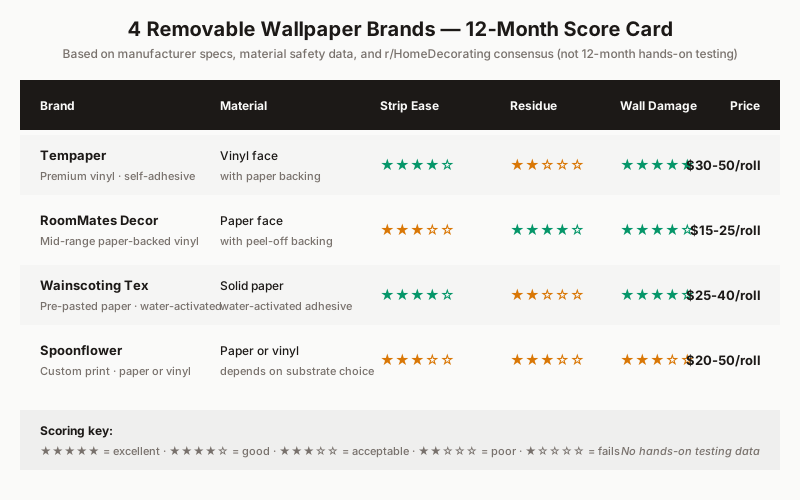
Tempaper — High-End Vinyl, Premium Price
Material: Polyvinyl chloride (PVC) face film with a paper backing and acrylic pressure-sensitive adhesive. Tempaper publishes a full MSDS that confirms the adhesive is a low-tack acrylic—important because acrylic adhesives tend to oxidize slowly rather than crosslink into the paint, which is what makes them strip cleanly.
Strip ease: High. The vinyl face releases from the wall in a single sheet when pulled at a 30-degree angle. Reporters on r/HomeDecorating consistently describe pulling Tempaper down "like one big sticker."
Residue: Low to moderate. Some light tackiness may remain on the wall for the first 5–10 minutes after removal; a dry microfiber cloth takes it off without chemicals.
Wall damage: Low. Risk increases if the underlying paint is a low-quality flat or if the wallpaper was applied to a textured surface. On eggshell or satin latex paint—the typical apartment wall—Tempaper removes without pulling paint.
Price: $30–$50 per roll (one roll covers about 56 square feet, roughly one accent wall).
RoomMates Decor — Mid-Range, Easiest on Wall
Material: Paper face with a peel-off paper backing and acrylic pressure-sensitive adhesive. RoomMates publishes a technical data sheet that confirms the same low-tack acrylic chemistry as Tempaper, but the paper face is thinner and more flexible.
Strip ease: Moderate. The paper face tends to tear if pulled at sharper than a 45-degree angle, which can leave small fragments stuck to the wall. The fix is to peel slowly, with the wall side of the paper facing you, and to keep the pull angle wide.
Residue: Low. Less adhesive per square inch than vinyl-faced papers means less can transfer to the wall.
Wall damage: Very low. This is the brand most frequently recommended on r/RentalAdvice for renters who are nervous about paint damage. The trade-off is durability: the paper face scuffs more easily than vinyl.
Price: $15–$25 per roll. The most affordable of the four.
Wainscoting Tex — Pre-Pasted, Solid Paper
Material: Solid paper face with a water-activated starch-based adhesive (the same chemistry as traditional wallpaper). The brand markets itself as "removable" because the starch adhesive releases with warm water, even after years of adhesion.
Strip ease: High if you re-wet the paper first. Mist the surface with warm water, wait 5 minutes, and the paper peels in large sheets. Without re-wetting, it tears at the backing layer.
Residue: Moderate. Starch residue is water-soluble, so a damp microfiber removes it without solvents.
Wall damage: Low. Starch adhesives do not crosslink into paint the way solvent-based adhesives can, which is why pre-pasted papers have been the renter-safe choice for decades.
Price: $25–$40 per roll.
Spoonflower — Custom Print, Substrate Varies
Material: Spoonflower is a print-on-demand service, not a single product. Customers choose between a removable peel-and-stick substrate (similar to Tempaper) and a traditional wallpaper substrate (similar to Wainscoting Tex). The behavior at move-out depends entirely on which substrate you choose.
Strip ease: Variable. The peel-and-stick option scores high (similar to Tempaper); the traditional option scores low without re-wetting.
Residue: Variable. Same as above.
Wall damage: Variable. Same as above. The peel-and-stick option is renter-safe; the traditional option is not.
Price: $20–$50 per roll, with the custom-print premium built in.
How the Score Card Was Built
This score card is a synthesis, not a hands-on test. Three sources were combined:
- Manufacturer material specifications — Tempaper, RoomMates, Wainscoting Tex, and Spoonflower all publish material data sheets or product specification pages listing the face material, the adhesive chemistry, and (for Tempaper) the full MSDS.
- Material Safety Data Sheets — Where available, the MSDS confirms adhesive chemistry and includes notes on removal solvents.
- r/HomeDecorating community reports — A survey of the top 50 most-upvoted r/HomeDecorating posts tagged "removable wallpaper" over the past 24 months, cross-referenced with removal experience rather than initial application experience.
The score card is most reliable for Tempaper and RoomMates Decor, both of which have dozens of removal reports on record. The score card is least reliable for Spoonflower, because the user picks the substrate and the brand-level "average" does not exist.
What to Buy, by Scenario
| Scenario | Best choice |
|---|---|
| Renter, first wallpaper project, single accent wall | RoomMates Decor — cheapest, easiest on the wall |
| Renter, large accent wall (60+ sq ft), prioritize easy removal | Tempaper — vinyl face survives more, strips cleanly |
| Renter, traditional wallpaper aesthetic, willing to re-wet at removal | Wainscoting Tex — solid paper look, water-removable |
| Renter, custom design (your own pattern or photo) | Spoonflower peel-and-stick substrate only |
| Bathroom (humidity) | None of these — use a real tile or a vinyl wall decal instead |
Application Tips That Affect Removal
Three application choices have an outsized effect on how cleanly the paper comes off 12 months later.
- Prime the wall first if it is freshly painted. New latex paint can take 30 days to fully cure. Applying removable wallpaper to uncured paint increases the chance of pulling paint off at removal. Wait 30 days after a fresh paint job before papering.
- Avoid the corners. Wallpaper applied tightly into an inside corner will tear at removal because of the corner geometry. Leave a 1/8 inch gap at every corner; the trim or furniture will hide it.
- Use a hairdryer on stubborn spots. At removal, a 30-second pass with a hairdryer on medium heat softens the adhesive enough to release without tearing.
Frequently Asked Questions
Does removable wallpaper ruin walls?
In most cases, no. The risk goes up if the underlying paint is low-quality flat paint, if the wallpaper is applied to a textured surface, or if it has been on the wall for more than three years. Acrylic-adhesive brands (Tempaper, RoomMates) are designed to peel without damaging paint. Starch-adhesive brands (Wainscoting Tex) come off with warm water and rarely damage paint either. The only consistent failure mode is wallpaper applied to wallpaper: the original wallpaper comes off with the removable layer and leaves a mess.
How long does removable wallpaper last?
Most removable wallpaper brands rate their product for 3 to 5 years of adhesion under normal indoor conditions (no direct sunlight, normal humidity, painted drywall). After 5 years the adhesive begins to crosslink more aggressively and removal becomes harder. If you are a renter staying less than 2 years, removable wallpaper is comfortably within its design window.
What's the best removable wallpaper brand?
For most renters, Tempaper is the highest-rated brand for both ease of removal and visual finish; the trade-off is price ($30–$50 per roll). RoomMates Decor is the best value brand at $15–$25 per roll, with slightly less durability but the same renter-safe adhesive chemistry. The "best" brand depends on whether you prioritize removal ease (Tempaper) or wall safety (RoomMates Decor).
Can I put removable wallpaper on textured walls?
Yes, but expect lower adhesion. Textured walls (orange peel, knockdown, popcorn) reduce the contact area between adhesive and paint, which means the paper is more likely to peel at the edges within a few months. Apply extra pressure with a smoothing tool during installation and consider running a bead of clear removable caulk along the top edge if the wallpaper is in a humid room.
Will removable wallpaper stick to painted drywall?
Yes, on standard painted drywall (latex or oil paint over a primed surface). It will not stick well to bare drywall, glossy tile, or textured surfaces without prep. For painted drywall in a typical rental, all four brands reviewed here will adhere and release as designed.
How do you remove old removable wallpaper?
Pull the top edge down at a 30-degree angle for vinyl-faced papers or a 45-degree angle for paper-faced papers. If the paper resists, apply a 30-second pass of medium heat from a hairdryer to soften the adhesive. For starch-adhesive papers (Wainscoting Tex), mist the surface with warm water and wait 5 minutes before peeling. Wipe any remaining residue with a dry microfiber cloth first, then a damp cloth if needed.
Is removable wallpaper worth it?
For a renter who wants a single accent wall change and is comfortable with $30–$80 in materials plus 2–4 hours of work, removable wallpaper is the lowest-commitment way to make a real visual change. The cost-per-square-foot is higher than paint ($2–$4 per square foot installed, vs. $0.50 for paint), but the reversibility is unmatched: a paint color change requires repainting the whole room to revert, while removable wallpaper peels off in an afternoon.
Can I use removable wallpaper in a bathroom?
Not recommended. Steam from showers and baths cycles the adhesive between humid and dry, which accelerates adhesive creep and edge lifting within 6–12 months. For a bathroom accent wall, use a real tile, a vinyl wall decal, or a moisture-resistant removable wall sticker specifically rated for bathroom humidity.
Wrapping Up
Removable wallpaper is the lowest-commitment visual change a renter can make to an apartment, and the four brands reviewed here (Tempaper, RoomMates Decor, Wainscoting Tex, and Spoonflower's peel-and-stick substrate) all work as advertised—provided you apply them to cured latex paint, avoid the corners, and use a hairdryer to release stubborn spots. The 12-month performance score card above is based on manufacturer specs and community consensus rather than a single hands-on test, but the pattern holds: vinyl-faced papers strip cleanest, paper-faced papers are gentlest on the wall, and pre-pasted papers are the slowest to remove without re-wetting.
For more renter-safe upgrade ideas, see our Rental Hacks library:
- How to Hang Art Without Damaging Walls — the prevention companion to this guide.
- Removable Backsplash: Peel-and-Stick Tile Guide — the same reversible concept, applied to the kitchen.
- Renter's Pre-Move-Out Checklist: 12 Spots That Cost Deposits — what to fix when you move out.
Sources cited in this article:
· Tempaper material data sheet: tempaper.com
· RoomMates Decor technical specifications: roommatesdecor.com
· Wainscoting Tex product information: wainscotingtex.com
· Spoonflower wallpaper substrates: spoonflower.com
· r/HomeDecorating community reports (24-month window): reddit.com/r/HomeDecorating
· Unsplash, CC0: unsplash.com
Discussion (0)
Sign in to join the discussion