

Why This Matters
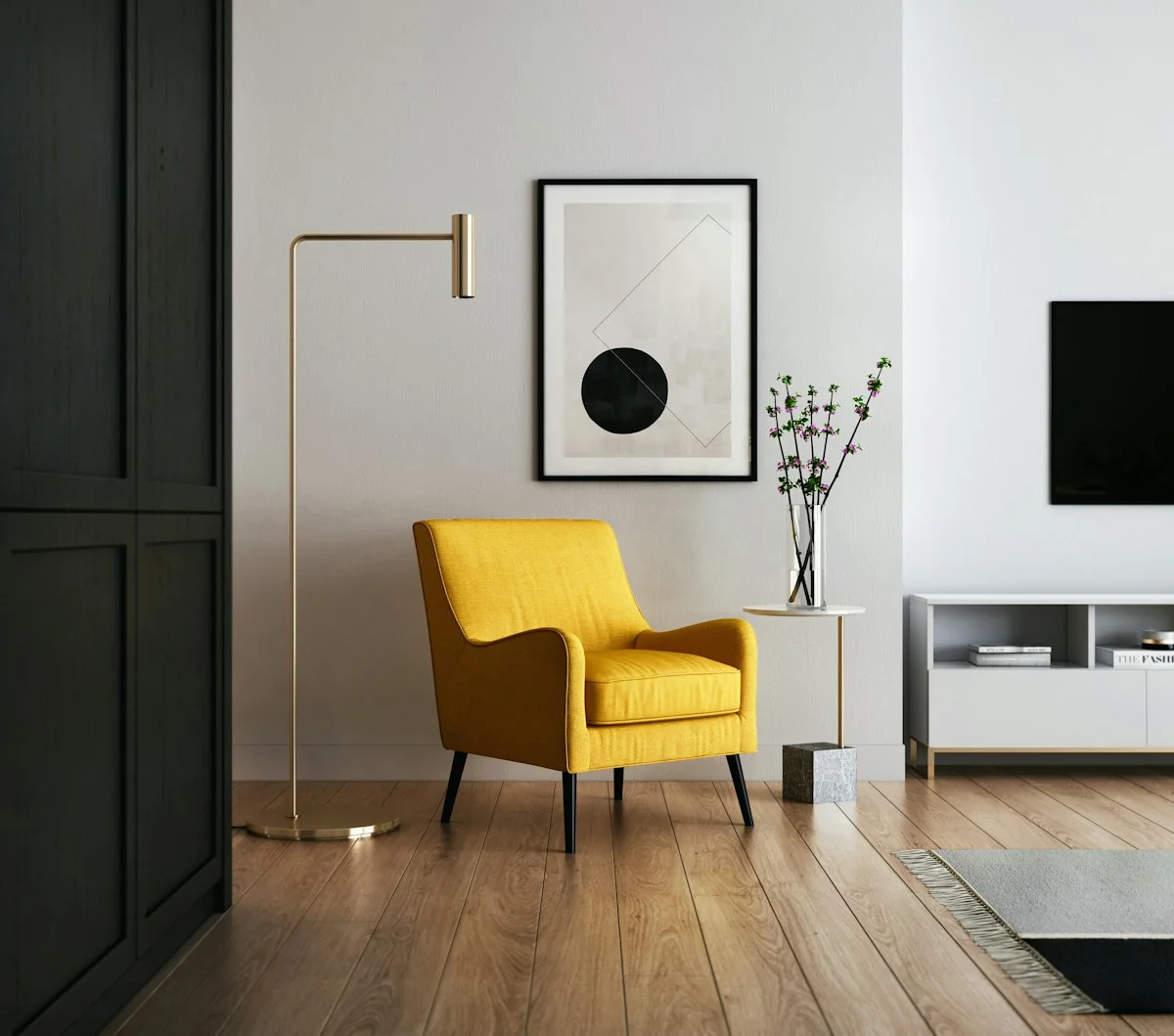
Most small-space styling fails for the same reason: every individual piece is fine, but the room as a whole reads as cluttered, low, or flat. The fix is not better furniture—it is five rules applied together, each one doubling the previous effect.
Interior designers describe this as layering: building depth from the floor up by stacking texture, scale, height, color, and a focal point in the same room. The same 600 sq ft apartment, photographed before and after layering, looks like a different property in real estate listings. The technique is well-documented in ApartmentTherapy's small-space decorating series and IKEA's live-in-a-small-space guide.
The 5 Layering Rules
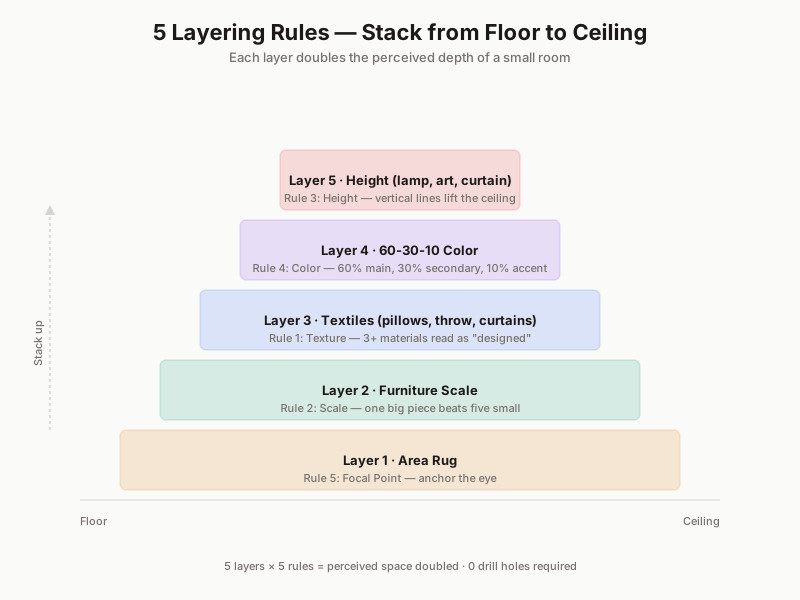
Rule 1 · Texture: 3+ Materials in the Same Room
A room with one material (say, all cotton) reads as soft but flat. A room with three or more distinct textures (linen + wood + metal, or velvet + jute + ceramic) reads as designed. Designers call this the texture stack: each layer adds a different surface for the eye to land on. The most reliable combination for small apartments is linen + wood + metal + one soft accent (a wool throw, a velvet pillow). All four fit in a 600 sq ft living room without crowding it.
Rule 2 · Scale: One Big Piece Beats Five Small Ones
The single most common mistake in small spaces is choosing small furniture because the room is small. A 6-foot sofa in a 12-by-12 living room reads as intentional; five small chairs in the same footprint read as thrift-store overflow. The rule is counterintuitive but consistent in design writing from Architectural Digest to Domino: one piece of furniture should occupy 50–60% of the largest wall. Everything else stays small to support it.
Rule 3 · Height: Vertical Lines Lift the Ceiling
Three cheap additions make a 7-foot ceiling feel like 9 feet: (1) a floor lamp 60+ inches tall placed behind or beside the sofa; (2) curtains hung at ceiling height (not at the window frame) with the rod extending 4 inches beyond the window on each side; (3) one piece of vertical wall art—a tall canvas, a narrow mirror, or a stack of three small frames arranged vertically. The eye reads vertical lines as tall room, even when the geometry does not change.
Rule 4 · Color: The 60-30-10 Rule
Interior designers use a simple ratio that holds across price points and styles: 60% dominant color (walls + large furniture), 30% secondary color (curtains, rug, accent chair), 10% accent color (pillows, art, plant pot). The 60-30-10 rule is taught across the trade (Designers' Guild and the New York School of Interior Design both reference it) and prevents the most common small-space color failure: too many equal-weight colors competing for attention.
For a renter-friendly version: keep walls at whatever your landlord painted, count the largest sofa and the rug as your 60% and 30%, and put the 10% into two or three small pieces you can swap or take when you move.
Rule 5 · Focal Point: One Visual Anchor
A room without a focal point reads as scattered. Pick one statement piece and let everything else play a supporting role. The focal point can be a large piece of art, an oversized floor lamp, a tall plant, a brightly colored chair, or a media console with intentional styling above it. Everything else in the room should be lower-contrast, smaller, or further back. Designers call this the visual hierarchy; without it, every object competes for the eye and the room reads as busy.
Five Common Mistakes to Avoid
Knowing the rules is half the work; knowing what breaks them is the other half.
- Pushing all furniture against the wall. This kills the floor's sense of scale. Pull the sofa 6–12 inches forward and add a console behind it—the room immediately reads deeper.
- All-white everything. White reads as bigger but also as flat. You need the 60-30-10 contrast to create depth.
- One overhead light. A single ceiling fixture flattens the room. Add at least one floor lamp or table lamp at a different height.
- Mirrors hung too high or in random spots. A mirror should reflect the room's depth (a window, a long wall), not the ceiling.
- Curtains hung at the window frame. Hang them at ceiling height with the rod 4 inches past the window frame on each side. The window appears twice as wide.
Frequently Asked Questions
How do I make my small apartment look bigger?
Five rules, applied together: stack 3+ textures (linen + wood + metal + soft), choose one large piece of furniture instead of five small ones, add vertical lines through a tall lamp, ceiling-height curtains, and vertical wall art, follow the 60-30-10 color ratio, and pick a single focal point. Together these rules make a 600 sq ft room read as if it were roughly twice the size—without changing square footage.
What is layering in interior design?
Layering is the practice of stacking depth-building elements—texture, scale, height, color, and a focal point—in the same room so the eye reads each tier as a deliberate composition. The technique is taught across interior design programs and shows up in nearly every editorial feature on small-space styling from ApartmentTherapy to Architectural Digest.
How do you layer furniture in a small room?
Start with one large piece—a sofa, a bed, or a media console—that occupies 50–60% of the largest wall. Then add supporting pieces at different heights: a low coffee table in front, a floor lamp behind, a console along another wall. Vary the depth so the room has near / middle / far layers. The eye reads depth, not square footage.
What colors make a small apartment look bigger?
Cool tones (soft blue-gray, sage, off-white) reflect more light and read as further away, which expands the perceived walls. But contrast matters more than hue: a 60-30-10 ratio with one dominant cool tone, one warm accent (a wood floor lamp, a terracotta pot), and one saturated pop (a single velvet pillow) gives the room depth. All-white rooms read as bigger but also as flat.
What is the 60-30-10 rule in decorating?
The 60-30-10 rule is a color-ratio guideline taught across interior design programs: 60% of the room's color comes from the dominant tone (walls + largest furniture), 30% from a secondary color (curtains, rug, accent chair), and 10% from an accent color (pillows, art, plant pot). The ratio prevents the most common small-space mistake—too many equal-weight colors competing for the eye.
Do mirrors make a small room look bigger?
Yes, but only when hung to reflect depth. A mirror placed opposite a window reflects the outside light and effectively doubles the room's apparent depth. A mirror hung too high reflects the ceiling, which adds no depth. The same rule applies to leaning floor mirrors—angle them toward the longest sightline, not toward the door.
How do you style a small living room on a budget?
All five layering rules are free. The cost is rearranging what you already own: pull the sofa forward, hang curtains at ceiling height, add a floor lamp from a thrift store, and pick a single piece of art or a tall plant as a focal point. The ApartmentTherapy editorial team and IKEA's small-space guides both teach this version first—it works in any rental.
What is the focal point of a room?
The focal point is the single element the eye lands on first when entering a room—a large piece of art, an oversized floor lamp, a tall plant, a brightly colored chair, or a media console with intentional styling above it. Everything else should be lower-contrast, smaller, or further back. Without a focal point, every object competes for the eye and the room reads as busy.
Renter-Friendly Wrap-up
None of the five rules require drilling holes, painting walls, or removing fixtures. Every change here is a rearrangement of pieces you already own, plus a floor lamp and curtains if you do not have them. For more renter-safe styling reads, see our Smart Styling library and these related articles:
- Lighting Layers: The Designer Trick Nobody Talks About — the light-only version of layering.
- Color Theory for People Who Rent — the 60-30-10 rule, applied to rentals.
- Gallery Wall Arrangements That Actually Work — the focal-point rule, demonstrated.
Wrapping Up
The single highest-leverage change you can make to a small apartment is to apply all five layering rules at once. Pick one weekend, walk through the room, and audit each layer: textures, scale, height, color, focal point. Most rooms can be transformed in under an hour, with the only purchase being a floor lamp or curtains if you do not have them.


Discussion (0)
Sign in to join the discussion