

Why This Matters
Household leaks waste nearly 1 trillion gallons of water annually nationwide, according to the EPA’s Fix a Leak Week program. The same source notes that fixing easily corrected household leaks can save homeowners about 10% on their water bills. The most common leak source, by a wide margin, is a worn toilet flapper.
A running toilet is not just noise. Each cycle of the fill valve pushes a few gallons of fresh, treated water straight into the bowl and down the drain. If your tank refills every five minutes, you are paying for hundreds of gallons a day that you never used. The fix takes less time than ordering takeout.
Diagnose in 60 Seconds
Lift the tank lid and look. Match what you see to the most likely cause:
| What you see | Most likely cause | DIY? |
|---|---|---|
| Water runs constantly right after a flush | Worn flapper (~80% of cases) | Yes — this guide |
| Tank refills every 2–10 minutes | Float set too high (water level above overflow tube) | Yes — adjust float |
| Steady hissing even when not in use | Fill valve failing to shut off | Yes — replace fill valve ($15–$25) |
| Water pooling around the toilet base | Wax ring seal failed | Call a plumber |
EPA recommends a food-coloring dye test to confirm a flapper leak: drop a few drops of food coloring into the tank, wait 10 minutes without flushing, and check the bowl. If color appears in the bowl, the flapper is leaking. This guide focuses on the flapper because it is the single most common cause and the cheapest fix.
Tools and Materials
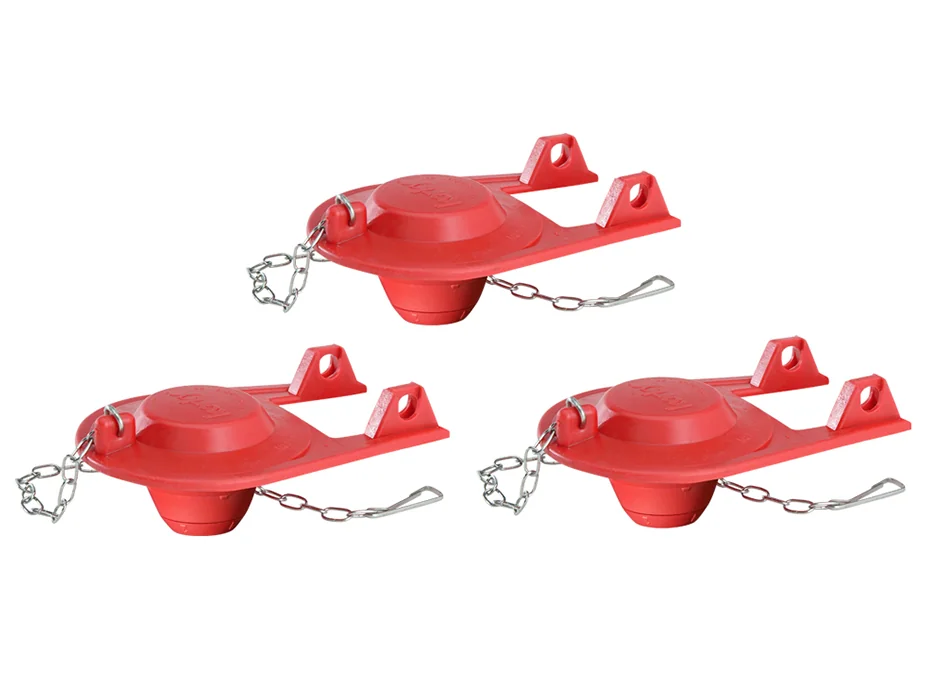
| Item | Approx. cost | Notes |
|---|---|---|
| Korky 100TP (or 2023BP for Toto) universal flapper | $7–$12 | Fits ~90% of toilets made since 1994 |
| Phillips screwdriver | $0 (already in your kitchen drawer) | Only needed if the flapper is clipped rather than chained |
| Old towel or sponge | $0 | Some water will spill when you remove the flapper |
Total budget: $7–$15. The plumber alternative is typically $100–$250 including the service-call fee, so this fix pays for itself the first time you avoid one visit.
Step-by-Step: Replace the Flapper in 10 Minutes
How to Replace a Toilet Flapper
1Turn Off the Water

Locate the small oval handle on the supply line behind the toilet, where the flexible hose meets the wall. Turn it clockwise until it stops. You will feel resistance—do not force it past the stop. The handle now points perpendicular to the pipe.
2Drain the Tank

Flush the toilet and hold the handle down so as much water as possible drains out. Use the towel to soak up the remaining inch or two at the bottom of the tank. You are not aiming for bone-dry—just low enough that the flapper sits clear of the water.
3Unhook the Old Flapper
The flapper is the rubber (or silicone) disc sitting at the bottom of the tank over the drain hole. Two small rubber ears on the flapper hook onto two pegs on either side of the vertical overflow tube. Lift the ears off the pegs, then unhook the small chain from the lever arm at the top. Set the old flapper aside—it is the one part you are replacing.
4Match the New Flapper
Korky’s universal 100TP fits most 2-inch flush valves (manufactured since 1994). If you have a Toto or a 3-inch flush valve, use the Korky 2023BP instead. Both are about $7–$12 and stocked at Home Depot, Lowe’s, and Amazon. The package shows a measurement guide—eyeball the old flapper against the new one to confirm the chain attachment point is in roughly the same place.
5Install the New Flapper
Hook the two rubber ears of the new flapper back onto the pegs at the base of the overflow tube. The flapper should sit flat over the drain opening with about 1/4 inch of slack on each side. Reconnect the chain to the lever arm, leaving about 1/2 inch of slack when the lever is at rest. Too tight and the flapper will not seal; too loose and the lever will not fully open the flapper on flush.
6Adjust the Float Height

Turn the water supply back on (counterclockwise). Let the tank fill. The water should rise to about 1 inch below the top of the overflow tube. If it rises higher, water will trickle into the overflow tube and the toilet will keep running. Most floats are adjusted by either squeezing a clip on the rod (older style) or turning a screw on top of the fill valve (newer style). Lower the float incrementally until the water line sits at the right level.
7Test and Verify
Flush three times in a row. After each flush, listen for any sound of water entering the tank after it has finished refilling. There should be silence within 30 seconds of the flush completing. If you hear periodic refills every few minutes, the float is still set too high—go back to Step 6 and lower it another notch.
Frequently Asked Questions
Why does my toilet keep running after flushing?
In about 80% of cases the flapper valve is no longer sealing against the drain hole at the bottom of the tank. The flapper is a small rubber disc that wears out every 4–5 years. Once it warps or stiffens, water leaks past it continuously. The fix is replacing the flapper—not jiggling the handle, which is just a temporary patch.
Why does my toilet randomly start running?
If the toilet starts running at random intervals rather than after a flush, the float is set too high. Water slowly rises past the overflow tube, and the fill valve kicks in to refill the tank. Lower the float by about 1/4 inch—the water line should sit 1 inch below the top of the overflow tube.
Can a running toilet increase my water bill?
Yes, significantly. According to the EPA, the average household’s leaks can account for more than 9,300 gallons of water wasted every year, and 9% of homes have leaks that waste 50 gallons or more per day. Fixing easily corrected leaks can save homeowners about 10% on their water bills.
Is a running toilet an emergency?
It is not a plumbing emergency in the sense of imminent damage, but it is a financial emergency: you are paying for water you are not using. Fix it within a week to avoid a noticeable spike on your next bill. If you cannot get to it immediately, turn off the supply valve behind the toilet to stop the leak until you have 10 minutes for the repair.
How do I know if my flapper is bad?
Two quick tests, both recommended by the EPA. Visual test: lift the flapper—if the rubber is warped, cracked, or no longer flat, it is bad. Dye test: put a few drops of food coloring into the tank water. Wait 10 minutes without flushing. If color appears in the bowl, the flapper is leaking. Both tests confirm the same diagnosis: replace the flapper.
How much does a plumber charge to fix a running toilet?
Plumber pricing varies by region, but most homeowners report $100–$250 for a single flapper replacement visit, including the diagnostic fee and 30–60 minutes of labor. The flapper itself costs $7–$12, which means about 80% of what you pay is for the trip and the labor. If the issue is a fill valve replacement, expect $150–$300. The DIY version of both fixes takes 10–45 minutes.
What is the most common cause of a running toilet?
The flapper. The EPA lists worn toilet flappers as one of the most common types of household leaks. Industry surveys and plumbing forums consistently show that a worn flapper accounts for roughly 80% of running-toilet diagnoses. Fill-valve issues come in second at about 15%. Less than 5% of cases are something more serious—a cracked tank, a failed seal, or a problem with the bowl itself.
How long should a toilet flapper last?
The EPA recommends checking the flapper periodically and replacing it at least every five years to ensure a good seal. Standard rubber flappers typically last 4–5 years on average; silicone flappers last longer—7 to 10 years—and are worth the small upcharge ($2–$3 more) if you can find one that fits your model. Hard water shortens flapper life; if you live in an area with mineral-heavy water, expect closer to 3 years before the next replacement.
Why is my toilet making noise every few minutes?
That periodic hiss-and-fill sound means the tank is losing water slowly, and the fill valve is topping it back up. The cause is almost always one of three things: the flapper is leaking (Step 3 above), the float is set too high (Step 6), or the fill valve itself is failing and needs replacement ($15–$25 part, 30 minutes to swap).
When to Call a Plumber Instead
DIY covers the 95% case. Call a professional if you see any of these:
- Water pooling at the base of the toilet (wax ring failure—requires lifting the toilet).
- Hairline cracks in the tank or bowl (replacement, not repair).
- The flush handle is loose and the mounting nut inside the tank is corroded in place.
- The toilet rocks or shifts when you sit on it (floor flange issue, not a tank issue).
Wrapping Up
A running toilet is one of the few home repairs where the math is unambiguous: a $7 part, 10 minutes of work, and you skip a $150 service call. If you have completed all 7 steps and the toilet still runs after 24 hours, replace the fill valve—same process, one extra step, total time about 30 minutes. That covers about 95% of every running-toilet case a homeowner will ever face.
For more quick fixes by symptom, see our complete Quick Fixes library organized by noise, leak, damage, and electric issues. Related reads:
- Unclog Any Drain Without Chemicals — another 15-minute fix that costs nothing.
- Patch Drywall Holes Like a Pro — the same kind of renter-safe small repair.


Discussion (0)
Sign in to join the discussion