

Sarah bought a DeWalt. Mike bought a Milwaukee. Carl bought a Ryobi. All three of them moved within a year. All three of them owned drills they didn't need anymore. All three asked me the same question: "If I had to buy one again, which would I get?"
The answer isn't brand loyalty. It's a real question about how many projects you actually do over the next 2 years, how much storage space you have, and whether you'll be in the same apartment 3 years from now. Once you answer those, the brand choice is obvious. The hard part is admitting that one of the three — probably the most expensive one — is the wrong answer for any renter.
3 Real Reasons a Renter Needs a Cordless Drill
Not every renter needs a drill. But some do, and pretending otherwise wastes your time. Here are the 3 cases where a cordless drill is genuinely useful in a renter setup.
1. You hang things more than twice a year. Curtain rods, wall shelves, TV mounts, towel bars — these are all things that need a drill if you're not using adhesive strips. Strips work for light loads (under 5 lbs), but anything heavier needs an anchor, and anchors need a drill. If you hang something every 2 months, the drill pays for itself in time saved versus the landlord's handyman or the hardware store install fee.
2. You assemble or disassemble furniture regularly. IKEA furniture, disassembled bed frames, modular shelving — these all need either an Allen wrench (slow) or a drill with a hex bit (fast). If you change your mind about furniture layout every 6 months, the drill is a 10-minute time saver per move.
3. You have a small fix-it project list that never ends. Loose cabinet hinges. A door that doesn't close. A stripped screw that won't come out. A wall anchor that needs replacing. These are all 5-minute fixes if you have a drill, and all-day projects if you don't. If you find yourself putting off small repairs because you don't want to borrow a tool, get a drill.
3 Real Reasons a Renter Doesn't Need One
Equally, a lot of renters think they need a drill and don't. Here's the test.
1. You only need a drill for one specific project. If you're buying the drill to hang one mirror and the drill will sit in a closet for 18 months after, rent one. Home Depot rents drills for $20-30 per day. The math works out unless you have 5+ projects queued.
2. You have storage space anxiety. A full drill kit with battery, charger, drill bits, and case takes up a 2-foot-by-1-foot shelf. If your apartment is already at the storage edge, the drill kit will become the thing you resent. Borrow instead.
3. You're leaving the city within 12 months. Cordless drills hold value, but they decrease in resale value by 30-50% within 2 years. If you're moving cross-country, the drill becomes a thing you have to ship, store, or sell at a loss. For a 6-month lease, renting wins.
The 1 Question That Decides
How many projects do you actually do in the next 2 years? Count them. Be honest. Don't count "things I might do." Count things you're actively planning.
1-2 projects: Don't buy. Rent one from a hardware store for $20-30/day, or borrow from a neighbor. Use the savings for something that lasts longer than 2 years.
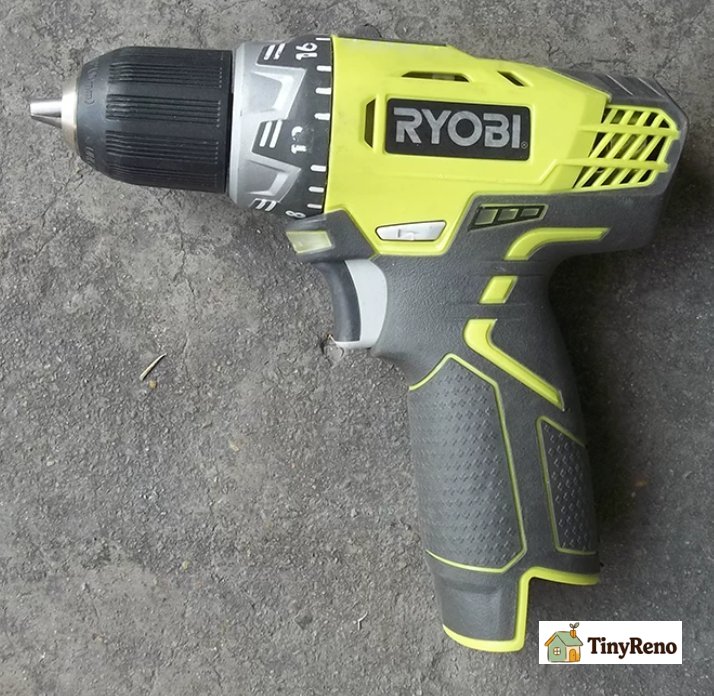
3-5 projects: Ryobi 18V kit. The $99-149 starter kit includes a drill, battery, charger, and a small bit set. The 18V battery platform is stable across 25+ years of tools, so a battery you buy today will still work in a new Ryobi tool in 2031. The drill itself is "good enough" — not as smooth as DeWalt or Milwaukee, but reliable for homeowner use.
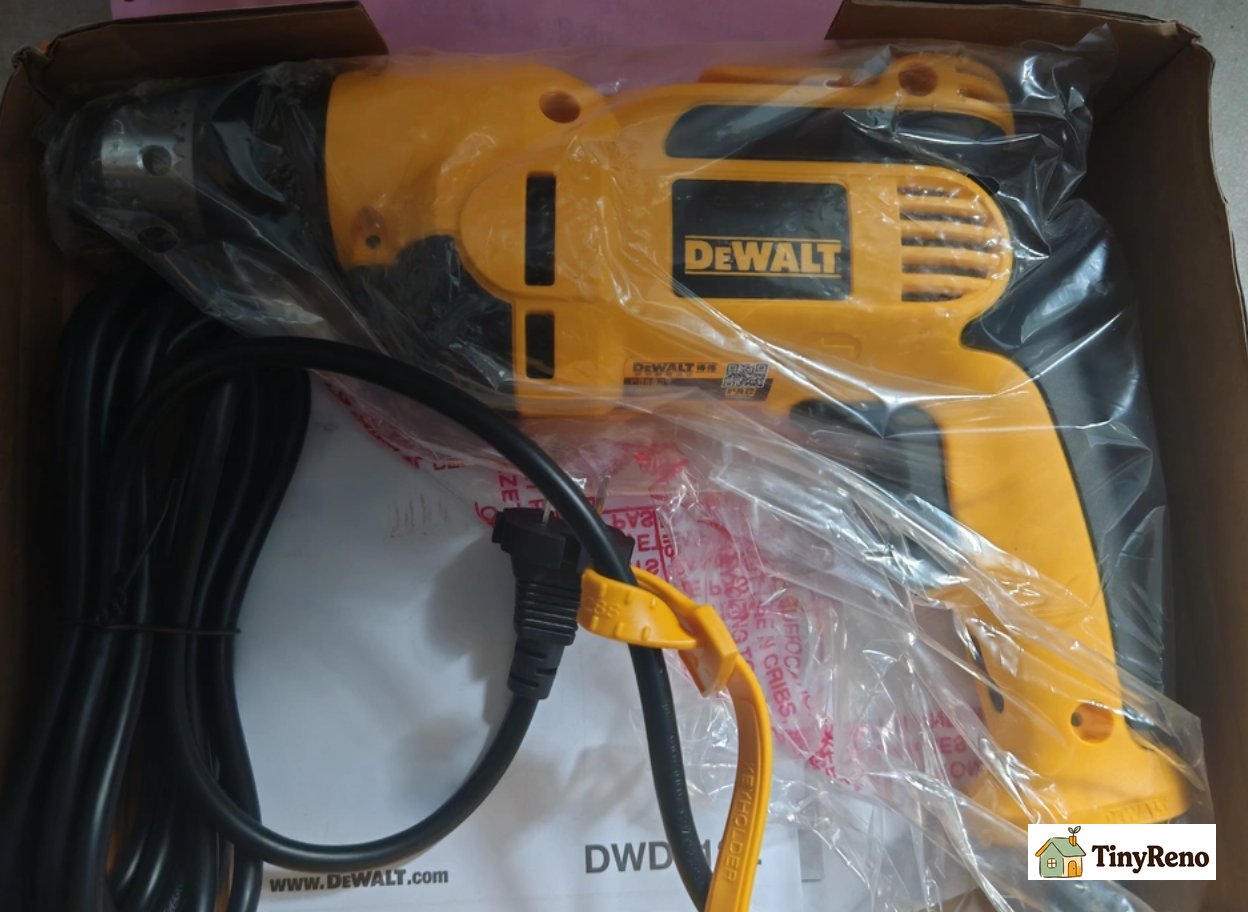
6-10 projects: DeWalt 20V. The $99-199 starter kit is the same price as Ryobi's premium kit, but the build quality is better and the resale value holds at 50-60% after 2 years (vs 30% for Ryobi). If you think you'll sell the drill when you move, DeWalt is the better investment. The batteries are also more reliable in cold weather, which matters if you have a garage or unheated storage.
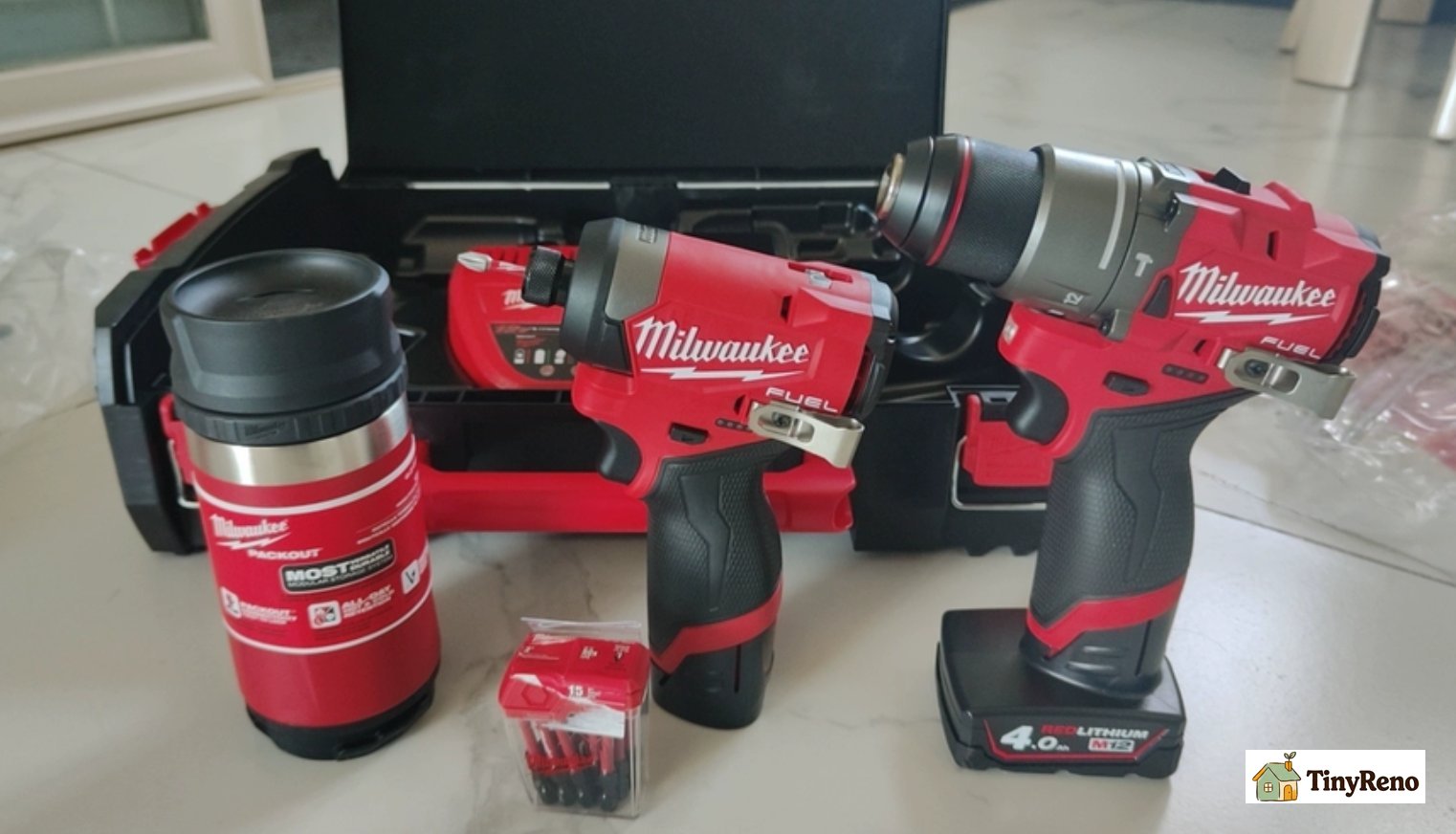
11+ projects or contractor use: Milwaukee M18. $129-199 starter kit. The build quality is professional-grade, the tools are heavier but more durable, and the warranty is 5 years vs 3 years for DeWalt and Ryobi. This is the right answer if you actually use the drill weekly. For anything less, you're paying for capability you won't use.
DeWalt vs Milwaukee vs Ryobi on 3 Renter Dimensions
The brand comparison articles online usually focus on torque, RPM, battery amp-hours, and weight. None of that matters for a renter. Here are the 3 dimensions that actually do matter.
Renter cost (kit + batteries + resale). Ryobi $99 starter kit is the cheapest entry. After 2 years, you'll sell it for $40-50 (40-50% retention). DeWalt $99-199 starter kit is slightly more expensive, but resale value is 50-60% ($50-120). Milwaukee $129-199 starter kit is the most expensive entry, resale value is 60-70% ($80-140). If you factor in resale, the lifetime cost of owning the drill for 2 years is roughly equal across all three, but the upfront cost is lower for Ryobi and DeWalt. Battery replacement is where the brands diverge: a Ryobi 18V battery is $40-60, a DeWalt 20V battery is $60-90, a Milwaukee M18 battery is $80-120. If you need a second battery, Milwaukee is the priciest.
Storage footprint. All kits come in a hard plastic case. The Ryobi case is the smallest (about 12x8x4 inches), the DeWalt case is medium (14x10x5 inches), and the Milwaukee case is the largest (15x11x6 inches). For renter apartments where shelf space is at a premium, the Ryobi case wins. The Milwaukee case is heavy enough that some people store it in a garage instead of a closet.
Lease-friendly use. All three are similar in noise level (around 75-80 dB at the drill point, like a hair dryer). The vibration is also similar — none of these will damage a wall. But the battery indicator LED is useful: DeWalt and Milwaukee have a 3-LED battery gauge on the tool itself, so you always know how much charge you have left. Ryobi's battery indicator is on the battery pack, which is less convenient. If you have a project that requires 2 batteries and you can't tell which one is full, you'll find out the hard way halfway through a project.
3 Things Most Reviews Won't Tell You
Reading drill reviews on YouTube or Reddit, I keep finding the same 3 oversimplifications. Here's what the reviews leave out.
"Just buy the cheapest one." This is wrong for one specific reason: cheap drills have cheap batteries. A Ryobi battery that costs $40-60 holds 1.5-2.0 amp-hours. A DeWalt or Milwaukee battery at $60-120 holds 3.0-5.0 amp-hours. The runtime on a 1.5 Ah battery is maybe 30-40 minutes of active drilling. The runtime on a 3.0 Ah battery is 60-90 minutes. If you have a project that takes 2 hours, the cheap battery will die mid-project, and you'll spend 30 minutes waiting for it to charge. The better battery is worth the extra $20-40 if you have multi-hour projects.
"Pro tools last forever." Pro tools do last longer under heavy use, but a renter doesn't subject a drill to heavy use. A renter uses a drill for 5-10 minutes per project, maybe 20-30 minutes total per month. The DeWalt 20V motor that lasts 10 years in a contractor's truck will last 20+ years in a renter's closet. The lifespan difference doesn't matter for your use case.
"Battery platforms last forever." This is partially true (Ryobi 18V has been stable for 20+ years), but it's also misleading. The new "40V" or "60V" systems from each brand are not compatible with the older 18V/20V batteries. If you buy a 40V tool, you need new batteries. If you're investing in a long-term platform, stick to the 18V/20V system, not the 40V/60V system. The 40V tools are marketed for lawn care, where the higher voltage actually matters for higher-power tools like chainsaws and leaf blowers.
FAQ
What if my landlord provides a drill? Can I borrow it?
Yes, but landlord-provided tools are often old, missing batteries, or missing the bit you need. If you have 3+ projects lined up, owning your own drill is more reliable than borrowing. If you have 1 project, just borrow and don't buy.
Is 18V vs 20V a real difference?
No. 18V nominal and 20V max are the same battery, just marketed differently. Ryobi uses 18V (the nominal voltage), DeWalt uses 20V (the max voltage). They're equivalent in practice. Don't pay more for "20V" branding.
Can I use the same battery for other tools (saw, sander, etc)?
Yes, within the same brand. Ryobi 18V batteries work with all Ryobi 18V tools (over 100 tools in the lineup). DeWalt 20V works with all DeWalt 20V. Milwaukee M18 works with all Milwaukee M18. If you buy a Ryobi drill and later want a Ryobi impact driver, you don't need to buy a new battery — the same battery fits both. This is the real case for ecosystem lock-in: one battery, many tools.
What's the cheapest drill that won't break in 6 months?
In the 3 brands above, the entry-level Ryobi 18V drill is $99 and has a 3-year warranty. The cheapest drill that won't break in 6 months is whatever you can return to Home Depot within 90 days if it does. Don't buy any drill that doesn't have a return policy. Avoid the no-name brands from Amazon (the $39 random drill with 4,000 reviews) — they're built to fail at the 7-month mark, just outside the return window.
The Renter's Drill Decision
Before you buy, count your projects. If the count is 1-2, rent or borrow. If it's 3-5, the Ryobi 18V starter kit is the best move. If it's 6-10, the DeWalt 20V. If it's 11+ or you actually use the drill weekly, go Milwaukee. For everyone else, the brand doesn't matter as much as the battery. Get a 3.0 Ah battery (or higher) and you'll have all the runtime you need.
For the small holes you make hanging things, patch the anchor holes with super glue when you move out, instead of repainting. And if you're storing small things without drilling, 7 no-drill storage tricks covers the cases where a drill isn't the right tool.


Discussion (0)
Sign in to join the discussion